Our favorite Paris Workspace Expo 2025

Our favorite Paris Workspace Expo 2025

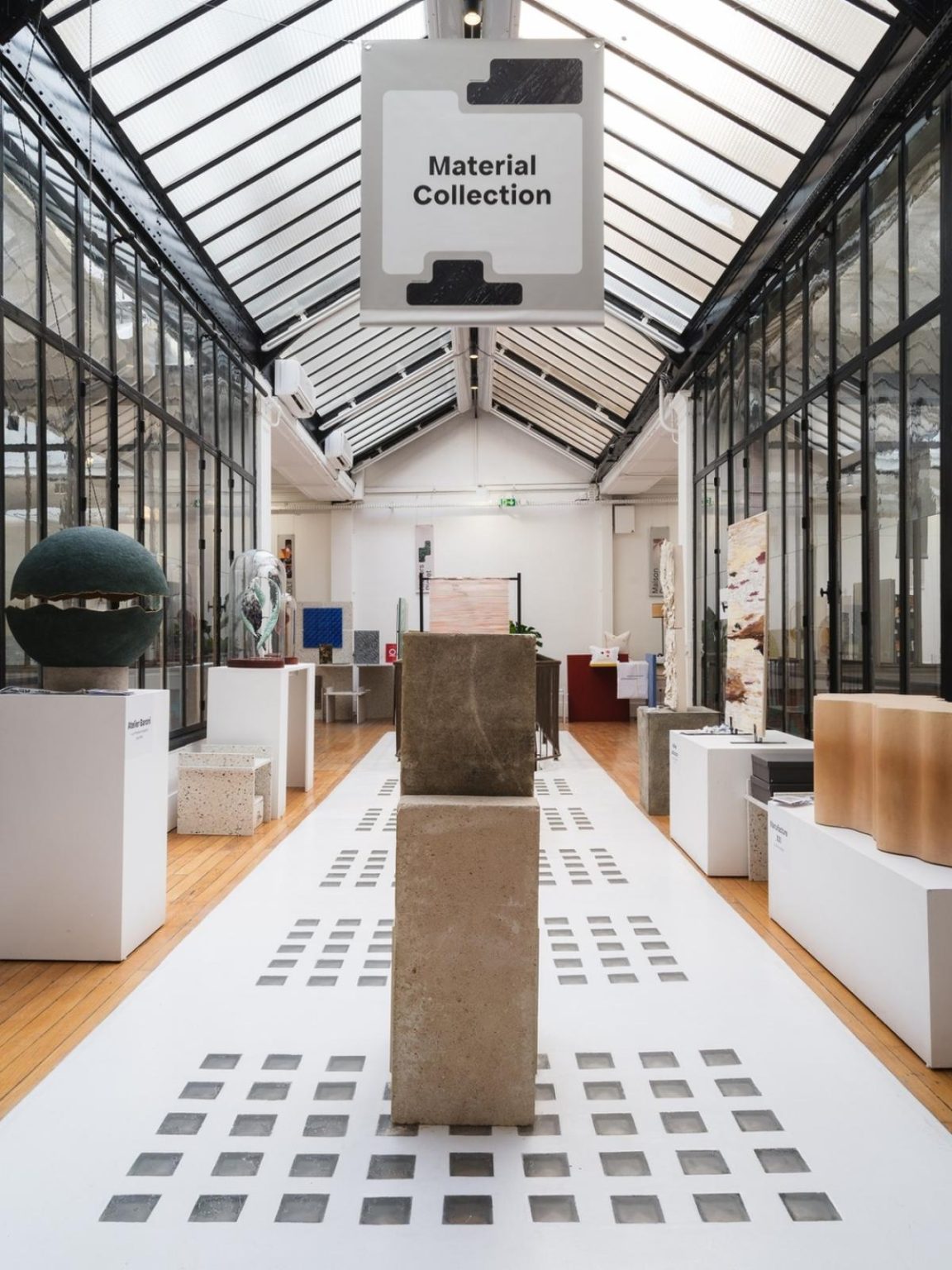
Parella at the forefront of innovation at the Paris Workspace Expo 2025.

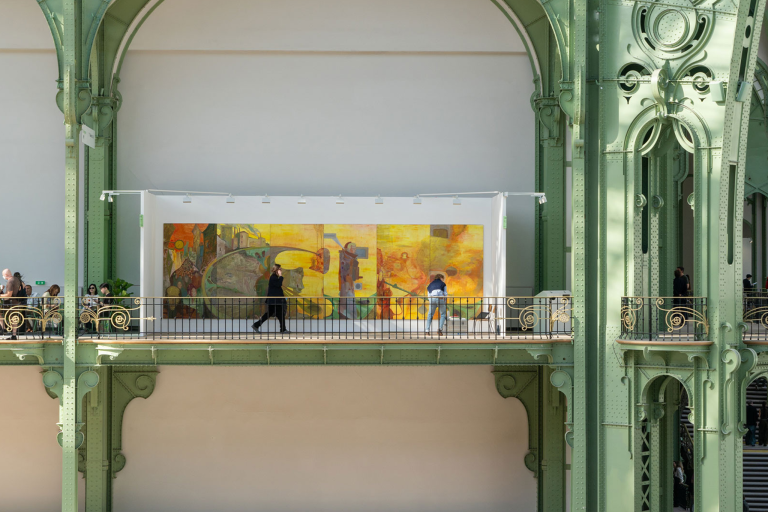
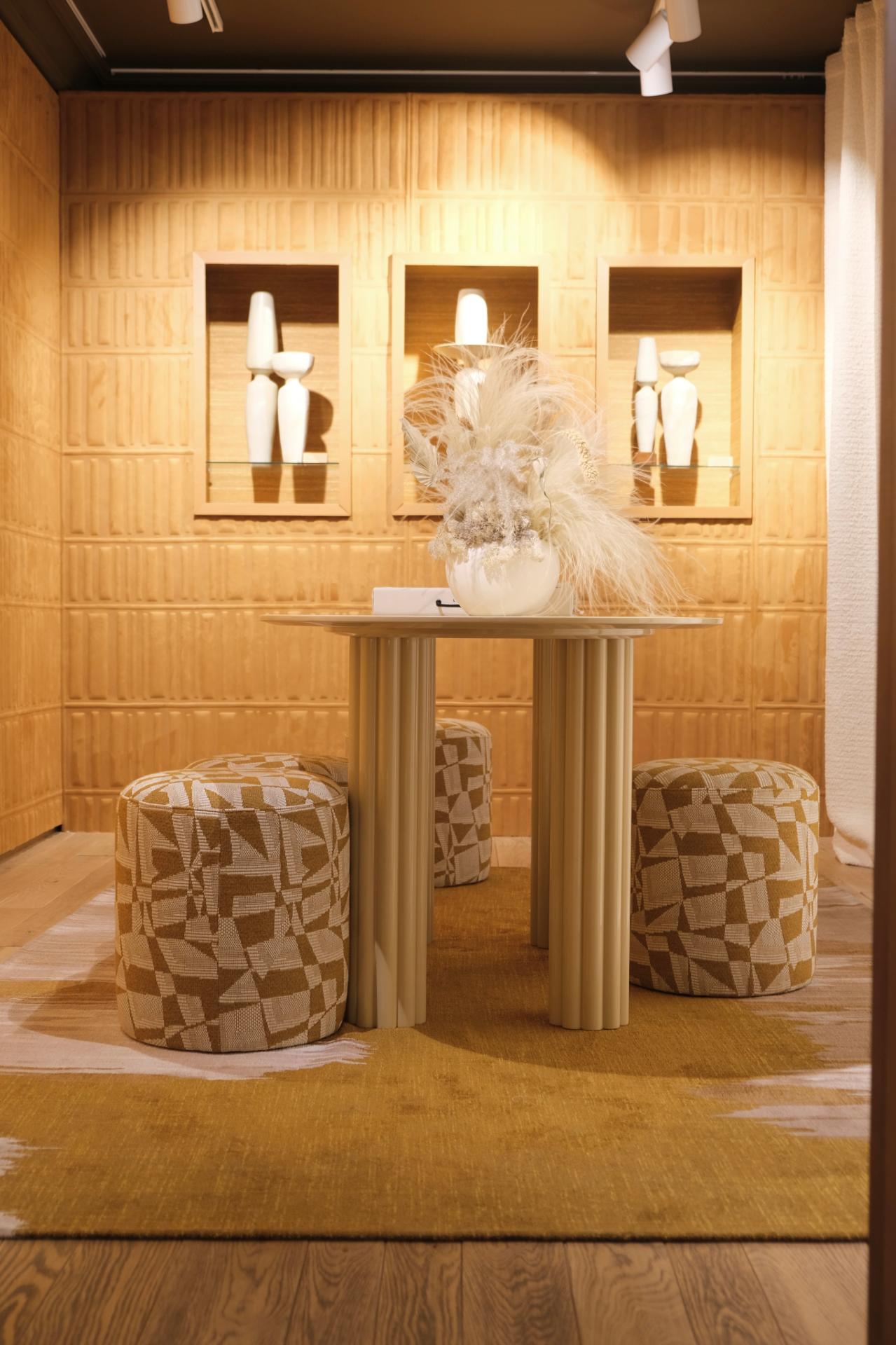
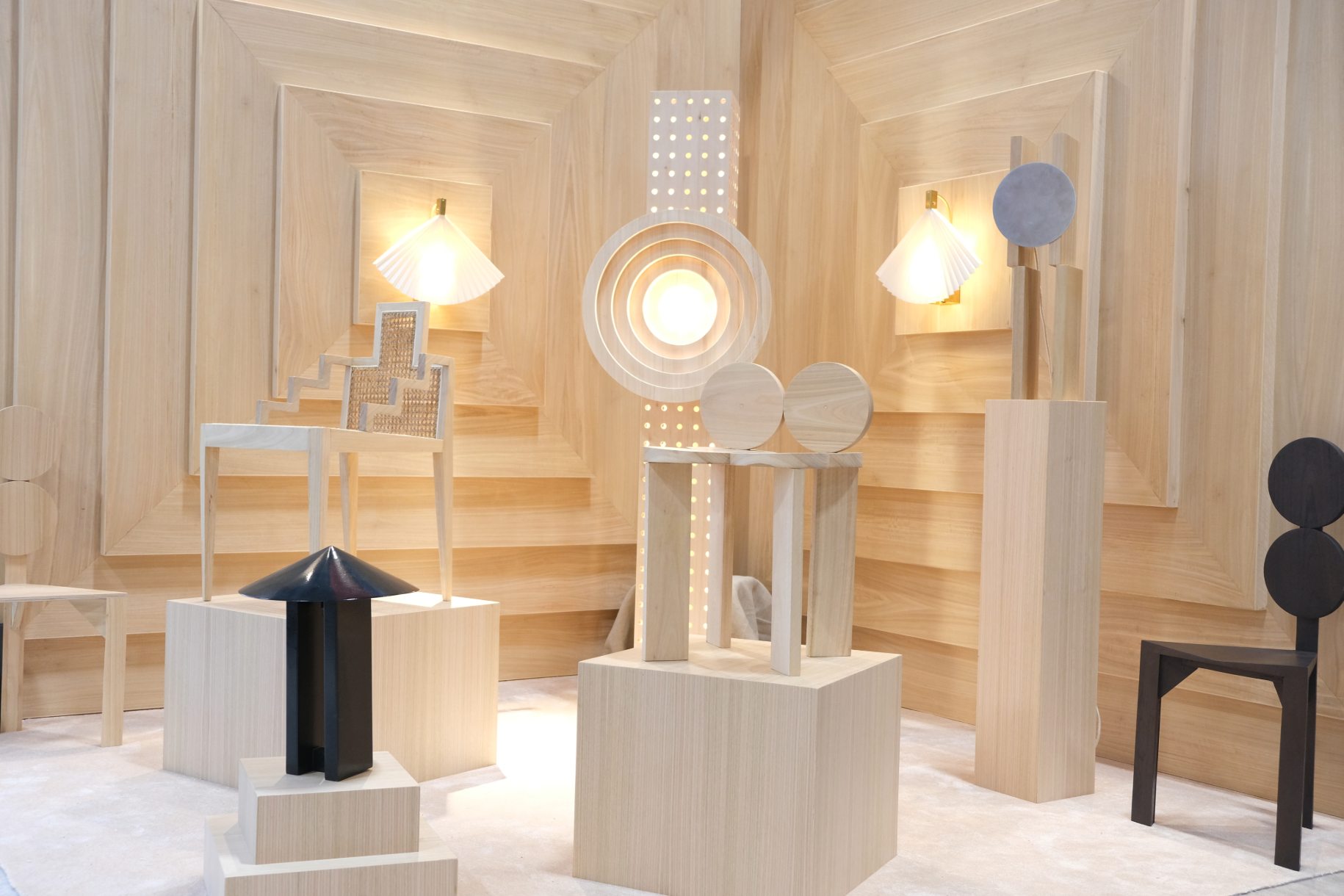
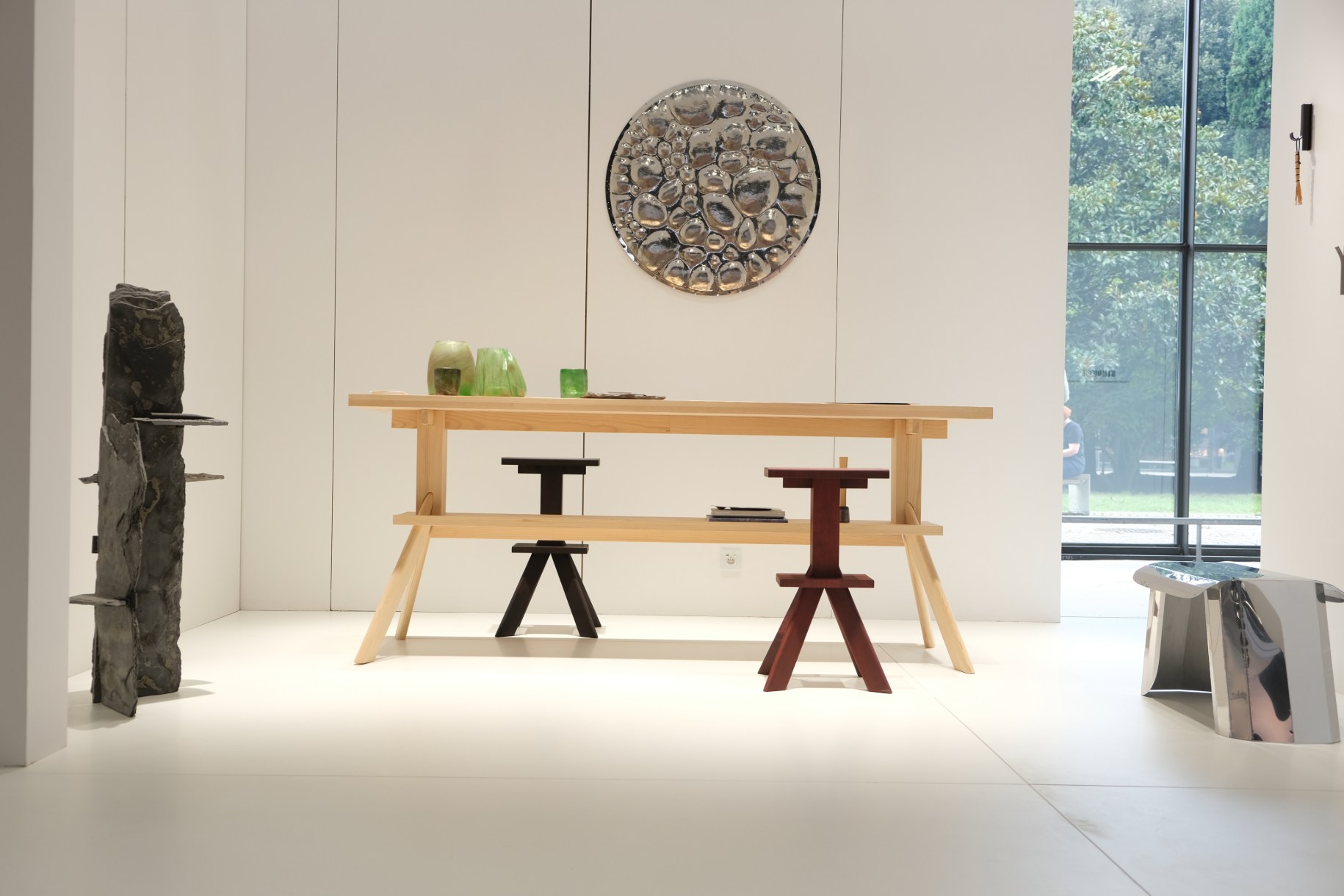
Strolling the aisles of Workspace Expo, you'll discover an array of innovations, concepts and bold designs that are redefining our work and living spaces.

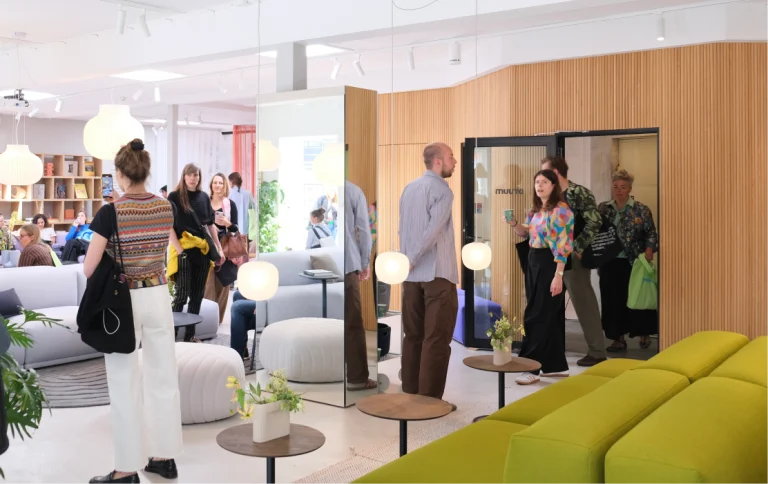
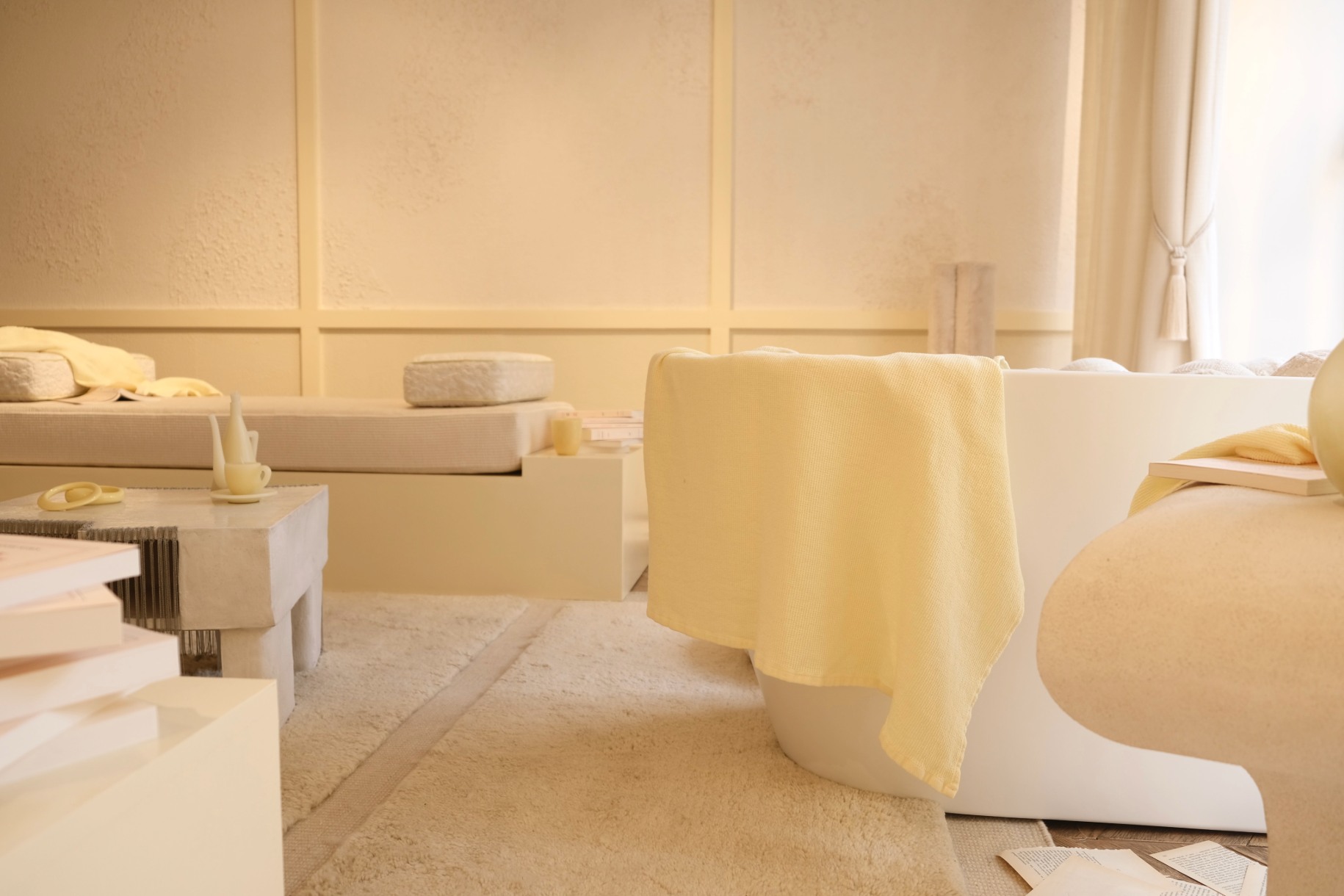
Cosy living room Insula studio

Europe's leading trade show for workspace furniture and fittings took place from March 25 to 27 in Paris, Porte de Versailles.

The 2025 edition, bringing together over 300 French and international brands, and attracting more than 20,500 visitors, confirmed what we are already observing among our customers: the workspace has become a lever for strategic transformation.

Our teams were on hand to pick up on weak signals, explore strong trends... and confront our convictions with those of designers, manufacturers and industry experts.

The opportunity to highlight three key issues for our customers:

- The quest for increased flexibility.
- The importance of well-being and biophilic design.
- Commitments to responsibility and circularity.

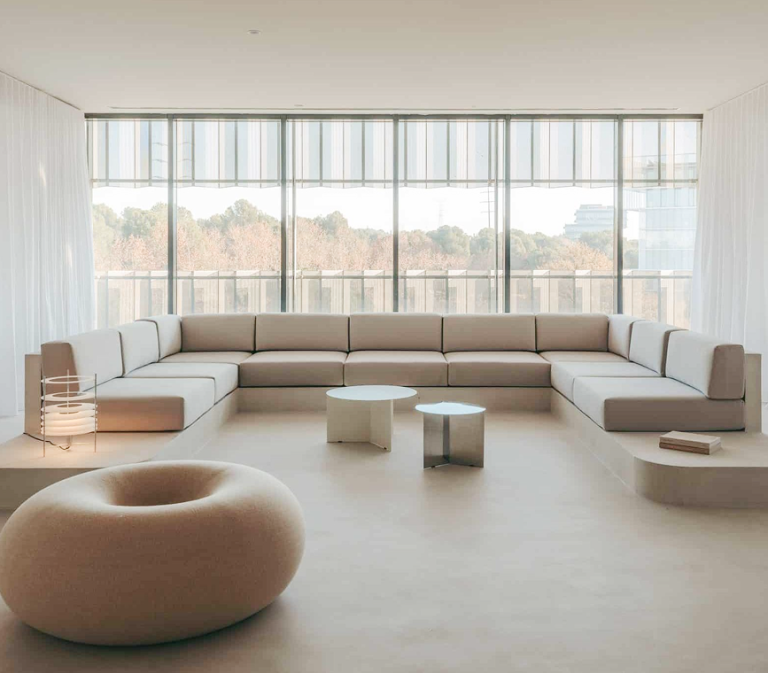
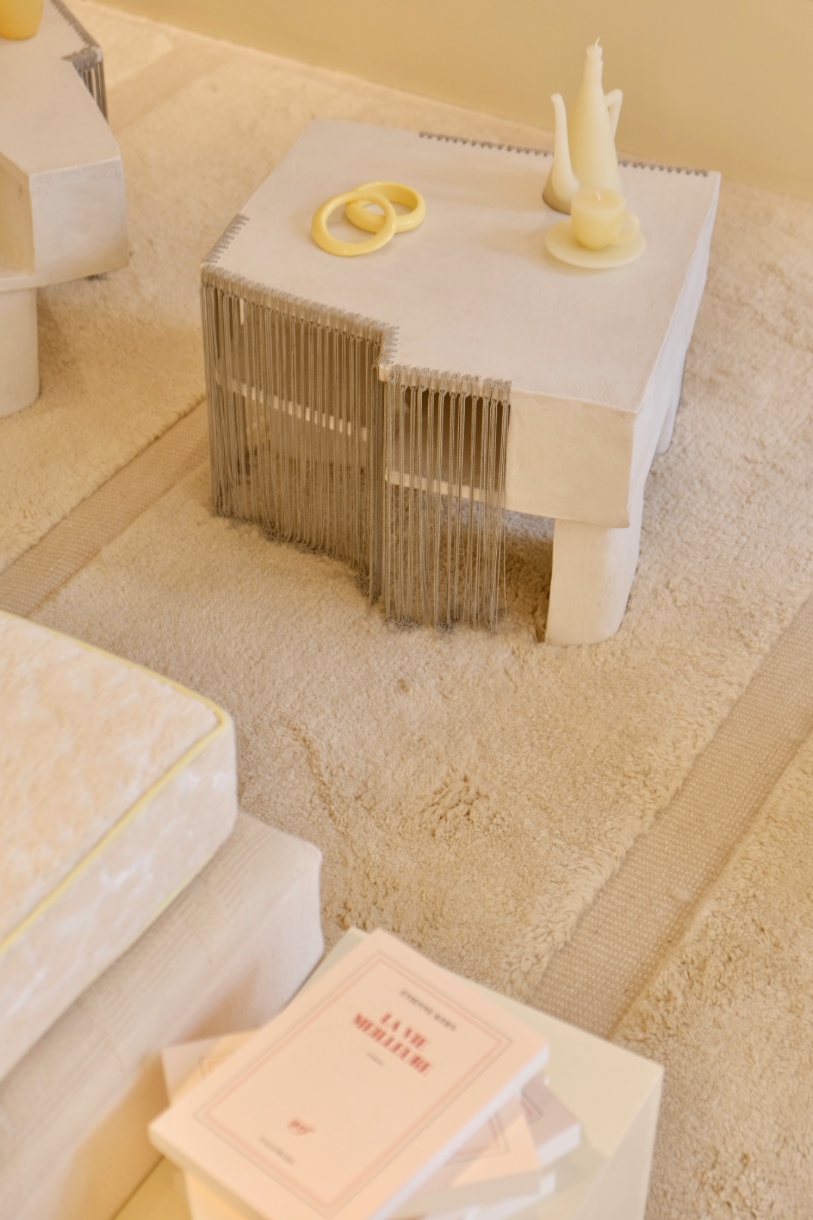
Insula studio sofa-beds

This year, our absolute favorite is the Insula modular sofa, edited by Kettal and designed by the talented Patricia Urquiola.

From the very first glance, Insula is striking for its subtle blend of softness and architectural rigor. Its fluid composition, punctuated by generously proportioned modules, evokes an invitation to conviviality and well-being.

l'Insula instantly took me back to the authentic, immersive atmosphere of my last trip to Morocco. Right in the heart of Marrakech, in a lounge where low cushions and refined textiles invited relaxation and exchange, I let myself be enveloped by the voluptuousness of the materials and the warmth of the welcome.
Like a contemporary reinterpretation of these spaces for sharing, Insula transforms each place into an invitation to meet and dialogue. Its low, horizontal structure reinforces a sense of proximity, while its organic shapes and scrolled backrest add a touch of fluidity and sensory comfort.

What particularly appealed to me was its modular, adaptive aesthetic. Insula lends itself to an infinite number of configurations, adapting to the needs of a professional lobby, a domestic living room or a sun-drenched outdoor space.

Its delicately textured upholstery and palette of natural hues sublimate the space without ever weighing it down. A manifest piece, at the crossroads of design and sensory experience, that reenchants the way we inhabit our interiors.

Insula green sofa

You may also like...

Eco-responsible offices: which certifications to choose?
- Faced with growing environmental challenges and regulatory requirements, companies are increasingly...
Maison & Objet 2025
Once again present at the Maison & Objet trade show, Parella continues to fuel its thinking by exploring...
Anticipating the future of office design
― At Parella, we have always sought to design spaces that not only meet the needs...

Building a B Corp legacy - our journey to certification

Building a B Corp Legacy: Our Journey to Certification

In an industry often criticized for its impact on the environment, Agilité - a Parella company, was founded with the ambition to bring about positive change within the construction sector.
From the outset, Agilité- a Parella company, aimed to offer an optimal customer experience while reducing their environmental impact, which led them to apply for B Corp certification and adopt a responsible business approach.

As we reach the halfway point of B Corp 2025 month, we spoke to our Director of Operational Excellence, Kirsty Shearer, one of the founders of Agility - a Parella company and the driving force behind our B Corp certification, to find out what it means to be part of this forward-thinking, Generation B collective. 

Kirsty Shearer - Founder of Agilité

Kirsty Shearer

Director of Operational Excellence at Agilité - a Parella company

When Agilité - a Parella company was founded in 2018, the vision was clear: to create a company that prioritizes both customer satisfaction and environmental and societal stewardship. With a small team, getting everyone on board with this vision was straightforward. However, as we expanded into Europe, this became more difficult, as each country we work in has its own standards for social and environmental responsibility.

In 2019, we began exploring potential certifications to formalize Agility - a Parella company's commitment to responsible business practices, but it was difficult to find something that covered all elements of ESG. B Corp was the only framework that comprehensively addressed the company's objectives, although admittedly it was a real mountain to climb.

In 2019, we began exploring potential certifications to formalize Agility - a Parella company's commitment to responsible business practices, but it was difficult to find something that covered all the ESG elements. B Corp was the only framework that comprehensively met the company's objectives, although admittedly it was a bit of a mountain to climb.

In partnership with B Corp consultancy, A Beautiful Green, we carried out an in-depth assessment of our performance in five key areas - governance, workers, community, environment and customers - to establish a baseline, and therefore a foundation for measuring, managing and improving the company's social and environmental impact.

The journey to B Corp certification was a rigorous one, requiring two years of sustained effort to ensure that Agilité - a Parella company's long-term vision and values matched its external actions, a process that involved changes at both micro and macro levels.In December 2023, Agilité - a Parella company proudly achieved its B Corp certification, marking an important milestone in its journey towards responsible business practices. But the work doesn't stop there. In fact, we're already starting to think about our recertification in 2026.

The knowledge gained during the certification process has enabled us to implement responsible practices in everything we do. Since certification, I've taken on the role of Director of Operational Excellence, and it's my responsibility to ensure that our goal remains front and center as we continue to grow. I am building a team in the key areas of sustainability, quality, health and safety, operations, IT, governance and communications, to ensure that we continue to "walk the talk".

We work hard to surround ourselves with like-minded partners, and Agilité - a Parella company's commitment to sustainability extends beyond its projects to its entire supply chain. Our responsible purchasing program seeks out partners who share our long-term guiding principles, and with data-driven decision-making tools like Airtable, we're able to track regulatory compliance, performance and sustainability scores to ensure we're working with the right people.

With an exciting pipeline of projects in new geographies and collaborations with innovative customers, supply chain engagement is a real priority. Last year we introduced supplier forums in the UK, and we aim to extend these to all our sites by 2025. In the longer term, we are aiming for carbon neutrality by 2050, and are working with Neutral Carbon Zone (NCZ) to monitor, report and reduce emissions across our value chain. Currently a gold-certified member of the NCZ certification program, Agilité - a Parella company is aiming for platinum certification.

I truly believe that by continually raising its standards and adopting innovative practices, Agilité - a Parella company remains, as it always has been, dedicated to creating a better future for people, the environment and the global community.

You may also like...

THE UNYCK HOUSE
- On the 8th floor, with a view over the rooftops of Paris, these spaces invite you to let go...
Our favorite Paris Workspace Expo 2025
- Parella has placed the end-user at the heart of its business model. Through its three divisions...
Company removals: mistakes to avoid to optimize your budget
- A company move is a strategic step that involves significant costs and organization...

Isabel Llano: "Working for users means connecting with their real needs".

ISABEL LLANO: "WORKING FOR USERS MEANS CONNECTING WITH THEIR REAL NEEDS".

Isabel Llano,Senior Consultant at Parella | The New TTS, is convinced thatlistening tounderstanding the client is essential to proposing strategic solutions that optimize workspaces. 

In this interview, she discusses her career, the benefits of a tenant-centric, impartial model, and the major trends that are transforming the way we design offices. 

She also shares her perspective on diversity in the industry, and the importance of empathy and adaptability.

Photo Isabel Llano

Isabel Llano

Senior consultant atParella | The New TTS

Isabel, what attracted you to exclusive tenant representation?

My real estate career began by working with landlords and investors, but I've always been drawn to the role of consultant representing tenants.

A few years ago, I had the opportunity to join Parellaa company that exclusively defends the interests of users corporatea model that allows me to concentrate fully on their needs.

What do you enjoy most about your job?

What I find most rewarding is listening to customers, understanding their issues, and supporting them in major strategic decisions, such as choosing their head office.

Knowing that our recommendations have a direct impact on their image, optimize their costs and improve employee satisfaction makes each project unique and exciting.

What are the advantages of this exclusive model?

Our independence enables us to offer truly impartial advice.
We don't represent owners or promote assets, which eliminates any conflict of interest.

This enables us to design tailor-made solutions that balance costs, employee well-being and corporate culture.
This positioning positions us as true strategic partners, able to help our customers make important decisions with confidence.

Can you give a concrete example of how this works?

Yes, of course. I'm thinking of a specific case: a multinational company looking for a new headquarters with more space, reflecting the strength of its brand, while respecting precise budget and schedule constraints.

The company was located in a sector that didn't suit its needs.
Thanks to our independence, we were able to identify an ideal solution that was not on their initial radar, and was even initially ruled out for various reasons.

The operation wasn't easy, and we had to overcome several major obstacles.
But the result was highly satisfactory: the customer obtained the premises they wanted, boosted the commitment and productivity of their teams, and consolidated their position in the market.
Without our exclusive approach, this option would probably never have been considered.

What trends are you currently observing in the market?

Today, companies are looking for smaller premises that are closer to the city center, well served, flexible, with collaborative zones that encourage teamwork and socialization.

Quality of space, sustainability and employee well-being have become priorities.

What do you consider to be the key skills in this sector?

Adaptability, strategic analysis, agility and empathy are fundamental.

Understanding the customer and establishing a relationship of trust is just as important as knowing the market inside out.

How do you feel about being a woman in a sector that is still very male-dominated?

Personally, I work with both men and women.
For me, the most important thing is to surround myself with committed, respectful people with real values and transparency.

It's a demanding job, and it's true that real estate is still a traditionally masculine environment, but women are becoming more and more present.
What I remember is learning, progressing and experiencing new things - no matter who they come from, they're always enriching.

I'm convinced that diversity brings real value, and that the mix of men and women is indispensable.
Everyone brings different but complementary skills.
Empathy and collaboration are essential in this business.

How do you see the future of tenant representation?

I believe that this specialized model will continue to grow in importance.

Its impartiality and ability to adapt to changing business needs make it a standard of excellence in the real estate sector.

You may also like...

Outlook and transformation of the Spanish labor landscape
- The labor landscape in Spain, as elsewhere in Europe, has undergone a number of changes in recent years...
Milan Design Week 2025
- Every year, Milan Design Week reinvents the way we perceive space, materials and uses....
Parella in Copenhagen for 3daysofdesign 2025: KEEP IT REAL
- Like every year, Parella was in Copenhagen for the 3 daysofdesign, a not-to-be-missed event...

Parella Paris appoints three new Partners

Parella Paris appoints three new Partners

Parella, a leading player in corporate real estate consultancy and professional space planning, announces the appointments of Doriane Bettinger, Laura Seng Hazan and Clément Bach as Partners in its Paris office.  

"These appointments reflect the high ambitions of our Paris office, as well as the strength of our partnership model.

Thanks to their talents, each of these new Partners contributes to Parella's reputation. They are proof of our ongoing commitment to our clients, and bear witness to the richness of our growth, driven by multidisciplinarity and the constant quest for excellence and innovation", explains Olivier Neuman, Chairman of Parella.

Doriane Bettinger, Clément Bach and Laura Seng Hazan, Parella's 3 new partners

Doriane Bettinger

With six years' experience at Parella, Doriane heads up the People & Transformation division at Parella France.
Before joining Parella, Doriane worked for the Engie group, where she developed strong expertise in organizational transformation and change management.Her teams enthusiastically help companies to deploy modern working practices that are better adapted to their needs. Her approach is always centered on people, experience and commitment. Doriane is a graduate of Université Paris Dauphine-PSL. 

Clément Bach

Clément joined Parella France in 2015 as a consultant in the team of real estate valuation experts.
He then joined the team of consultants in the Real Estate Services department, where he has developed solid experience in a wide variety of projects: the strategic framing of real estate projects, the management of complex projects or the piloting of transactions involving leased or owned real estate assets. Clément is a graduate of ESPI.

Laura Seng Hazan

Laura joined Parella France's Real Estate Services department in 2011, after starting out at CBRE Global Investors. Since then, Laura has worked for clients in all sectors and of all sizes. Her in-depth knowledge of the real estate market and her ability to blend into organizations with diverse management cultures make her a recognized and appreciated specialist. Laura holds a Master 246 degree from the University
Paris Dauphine-PSL.

You may also like...

Green Lease: everything you need to know about green leases and their advantages
- Green Lease is more than a lease: it's a shared commitment to a more eco-responsible building....
Global Design
- Our mission: to reveal and distill the extra soul emanating from your brand, your DNA and your...
WHY SOME STORES KEEP CUSTOMERS
― For some major retail chains, the time has come to enter a new...

Conflict-free real estate consulting

WHY CHOOSE A REAL ESTATE CONSULTANT WITH NO CONFLICTS OF INTEREST?

When your company is looking fora new headquarters or renegotiating a lease, it’s common to hire a real estate consulting firm—assuming, of course, that it will put your interests first. 

But what if he also represents the owner of the building you’re considering… or if he has a financial interest in other properties owned by that same owner?

It would be a bit like playinga tennis match with a chair umpire who is on the opposing team. And in every questionable situation, guess who benefits from the decision… 

Coworking, brainstorming or meeting space

A very real bias... and a costly one

This situation, very common in the real estate market, raises a legitimate question:are you receiving truly objective adviceor a speech formatted toto serve the owner?

This lack of impartiality can benot only frustrating, but also costlyfor your company.

Parella TTS changes the rules of the game

That'swhyParella | The Tenant Solution(TTS) adopts a clear model:
Wework exclusively for users of professional spaces.
No ties, no mandates, no interests with owners.
No compromises.

How is our model different?

Our approach isentirely designed for the usersyou.

- Unbiased adviceevery recommendation is 100% aligned with your priorities.

- Tailor-made solutionsWe analyze your objectives to provide customized solutions.

- Comprehensive optimizationFrom lease renegotiation to finding your future headquarters, every action is designed to maximize your profits.

The result:
tangible savingsandspaces perfectly aligned with your corporate culture..

Concrete benefits for users

This exclusive model delivers measurable results:

- Cost reductionunbiased negotiations guarantee the best terms.

- Offices that reflect your imageWe design spaces that embody your brand and enhance the satisfaction of your teams.

- Informed decisionsYou benefit from a complete and transparent view of the market, without any external pressure.

Why opt for a conflict-free model?

By choosing a consulting company thatworks exclusively for usersyou gain:

- Total transparencyYou know that every action is in your exclusive interest.

- Clear resultssustainable savings, efficient spaces and committed employees.

-
A long-term relationshipOur approach is not transactional, it's strategic.strategic.

If you want totruly protect your company's interestscontactParella TTS.
We guarantee youindependent, committed representationexclusively at your service.

You may also like...

Real estate and sustainable development: how can you make your offices greener?
- Faced with new regulations and growing employee expectations, companies need to...
THE RISE OF ANALOG SPACES
― Our teams immersed themselves in an inspiring ecosystem, rooted in our daily lives in the 8th arrondissement...
Flexibility in your rental commitments
- Do you know how many m² will be needed to support your growth in 3, 6 or 9 years' time?

Anticipating the future of office design

Anticipating the future of office design

The major trends that will redefine workspaces in 2025

At Parella, we've always sought to design spaces that not only meet today's needs, but also those of tomorrow. As office design debates evolve - influenced by generational transformations in the ways we work, socialize and connect - Cormac O'Sullivan, Director of Operations at Agility - a Parella company, explores in this post the major trends that will shape workspaces in 2025.

Bubble and bench seat at Scalapay

Agility © Matteo Bellomo

Flexibility, always at the heart of trends

Flexibility remains a fundamental pillar as traditional offices give way to versatile environments, capable of adapting to different uses throughout the day.

Modular furniture, configurable workstations and dual-use spaces enable companies to maximize their real estate while giving employees the freedom to choose how and where they work. Our recent project for Colliers Global Investors SGR Spa in Milan, Italy, perfectly illustrates this concept.

This approach generates clear benefits for all parties: owners, companies and employees. It reflects a new relationship with the traditional office, where flexibility becomes a secure investment for businesses and an aesthetically pleasing, functional space for teams.

Take, for example, our work for The Social Hub in Glasgow, a project that embodies the key office trends of tomorrow. As a certified B Corp, The Social Hub entrusted us with the creation of a dynamic, multifunctional community environment, in harmony with its concept of "hybrid hospitality". The result is an avant-garde space, celebrating both flexibility and community spirit - values that are gradually becoming central to modern office design.

Cosy space Scalapay

Agility © Matteo Bellomo

Technology for comfort and durability

Intelligent integration of technology into office design is another major trend.

Connected systems, such as app-controlled lighting, climate control and presence sensors, are becoming essential. These innovations optimize the user experience while supporting sustainability goals, notably by reducing energy consumption.

For employees, it's essential that sustainable choices are intuitive and effortless. By facilitating these practices, we help companies and their teams to combine performance with positive environmental impact.

A focus on well-being

Supporting mental and physical health is now a priority.

Increasingly, offices are incorporating quiet areas, carefully designed acoustics and optimum access to natural light. In Scalapay's Italian offices, for example, zones dedicated to relaxation and concentration coexist harmoniously with elegant soundproofing elements, a far cry from traditional foam tiles.

You may also like...

Workspace Expo 2026
As the leading European event for the office sector, Workspace Expo brought together manufacturers, ... from March 24 to 26,
Neurodiversity in Design
― For years, workplace design has emphasized collaboration, culture...
Building Change
― Despite decades of advocacy and investment, women remain severely underrepresented...

Increase in ILAT

Increase in ILAT

a silent threat to tenant businesses in the Île-de-France region.

With the steady rise in the index of rents for commercial activities (Indice des Loyers des Activités Tertiaires - ILAT), companies renting office space, particularly in the Paris region, are seeing their service charges increase.

Although this may seem a technical subject, it is one that should be at the heart of CFOs' concerns, as it has a direct impact on cash flow and budgets.

Analysis of a phenomenon and solutions to deal with it.

ILAT logo

Michael Kaplan

Associate

Vincent Ternynck, Real Estates Services Director

Vincent Ternynck

Real Estate Services Director

An increase that weighs heavily

Since 2018, ILAT has recorded an increase of 21.62%, rising from 112.74 in the 3ᵉquarter of 2018 to 137.12 in the 3ᵉquarter of 2024.

This index, which adjusts rents for tertiary activities, follows inflationary trends and reflects the cost of construction and economic growth.

Let's take a concrete example: a company having signed a lease in 2018 for an annual rent of €300,000.

With the ILAT evolution, its rent for 2024 will reach €364,875, i.e. an increase of +€64,875.

Photo of a building with an atypical design

Why is ILAT rising so fast?

Historically, ILAT was supposed to be less volatile than ICC (Indice du Coût de la Construction), long used to index commercial leases.

ILAT is based on a mixed basket including inflation (Consumer Price Index), the cost of new construction and Gross Domestic Product (GDP) in value terms. This combination was intended to mitigate extreme variations, unlike the ICC, which is based solely on the cost of construction.

Currently, ILAT is particularly sensitive to economic fluctuations, due to the combined effect of several factors:

- Inflation, which remains high since 2021, fueled by rising energy and raw material prices.

- The cost of construction, impacted by rising materials prices and environmental constraints.

- Changes in GDP, which reflect an uneven economic recovery and influence.

This dynamic highlights a central issue for companies: how to absorb these increases while other operating expenses are also rising?

Major risks for tenant companies

The impact of the ILAT increase goes beyond rents. Several risks are looming for tenant companies:

- Increased financial pressure
An unanticipated increase in rents can reduce companies' investment capacity and affect their cash flow.

- Unpredictable budget
The high volatility of the ILAT complicates budget planning, making financial projections less reliable.

- Reduced margins
Real estate often represents the second largest expense item for companies, just after salaries. In a tense economic environment, where cost control is essential, a 20% increase in an expense item as strategic as real estate can weigh heavily.

How to adapt?

To cope with this increase, companies are well advised to adopt a proactive management approach.
Here are a few avenues to explore:

- Anticipate ILAT increases in budget forecasts

CFOs need to factor anticipated ILAT increases into their budgets. With an average annual increase of 3-4%, planning over 3 to 5 years becomes crucial.

- Negotiate leases

When signing or renewing a lease, negotiate more protective clauses, for example by capping indexation (e.g., at 2-3% per annum upwards or downwards).

- Optimize office space use

With the spread of telecommuting and hybrid ways of working, the question of leased space is essential. Reducing a €364,875 rent by 10% saves €36,487 a year in rent alone. Controlling surface area will also save on charges and taxes.

- Diversify locations

If business allows, explore locations outside the most expensive areas of the Paris region. Some locations offer more affordable rents, with lower indexations.

Back-view photo of La Défense buildings - illustrates the Strategy & real estate transactions section

A challenge, but also an opportunity

The ILAT increase is a reality that all companies have to face.

While the risks are significant, they can be transformed into opportunities. Optimizing space, renegotiating lease clauses, or even reinventing real estate organization are all levers that can be used to lighten this burden.

To remain competitive, companies need to adopt a proactive and strategic approach. Above all, they need to bear in mind that real estate, although costly, can be a lever for attractiveness and performance, if carefully managed.

IN BRIEF

- ILAT has risen by +21.62% since 2018.

- A company with an annual rent of €300,000 in 2018 could be paying €64,875 more in 2024.

- Solutions lie in anticipation, negotiation and optimization of leased space.

Acting now is essential to limit future impacts and better control costs.

You may also like...

PARIS DESIGN WEEK 2025
― For this 15th edition, the capital was transformed for ten days into a living laboratory of trends...
Active Design
- With the Olympic Games just around the corner, some of our customers are wondering about the benefits of Active Design...
Workspace Expo 2026
As the leading European event for the office sector, Workspace Expo brought together manufacturers, ... from March 24 to 26,

Olympic & Paralympic inspirations

Olympics & Paralympics: Inspiration. Memories and the Lessons They Teach

This weekend I received my souvenir tickets for the Olympic and Paralympic Games.

It took me back to the stands at the Versailles stadium during the para-dressage event, facing the palace and the reflecting pools, surrounded by greenery and supporters who were thoroughly soaked but delighted. What will remain of the vision of the future that the Olympic and Paralympic Games offered us? Was it a magical interlude, quickly overshadowed by the busy news cycle of the new school year?

Like many of us, I refuse to believe it, preferring to think that we might also be able to draw lessons and inspiration from it for our day-to-day office life.

What can we learn from these magical moments for our work environments?"

Hospitality

How pleasant it is to be greeted by an enthusiastic, smiling human being on arrival at a site!
While the volunteers demonstrated incomparable energy and good humor throughout the events that punctuated our summer, the baristas or coworking hosts were not to be outdone.

Post covid, we realized that offices would remain an essential place to work, not least because of the social ties that employees bring with them (a trend confirmed by our latest barometer).

Today, a human welcome remains a strong added value, provided you give it the means to do so. A mobile hostess, freed from her reception desk, working in a warm environment like a hotel lobby, and able to offer your visitors a cup of coffee, will put them in a much better mood.

We applauded these volunteers because, in addition to their smiles, they were the backbone of these games, some visible, others working in the shadows. Doesn't it make you think of other colleagues, whether they're called members of the work environment, or more soberly general services? We should think about celebrating them too, highlighting the actions that keep our buildings running smoothly.

Space with large staircase at Neptune Energy

Inclusion

Much has been said about this for the opening ceremonies, but I found it particularly well done on site access, removing the usual barriers around disability.

As the Versailles site requires a long walk, electric shuttles were made available for anyone who has difficulty walking, has a visible or invisible disability, or is just elderly, pregnant, etc. There was no need to show any kind of card or pass to benefit from them.

Tools developed to assist one type of disability can be used by all if they are designed with this in mind. For example, for each event, the Games' dedicated application gave you access to an audio description. While this was aimed at the visually impaired, it was also educational, and very useful for children or non-expert audiences.

In the design of spaces, inclusive design aims to take into account the physical and physiological needs specific to each person by translating them into spaces that are useful to all. A height-adjustable desk, for example, will be indispensable for an employee in a wheelchair, but will also be much appreciated by someone suffering from occasional lumbago.

Taking inclusion into account must also be reflected in communication, like this delicate attention to "Stand up, if you can, for the hymns."

Digitization

Venue management applications are still underdeveloped, implemented by lessors during the marketing phase, but often shunned by users.
During the Games, the various applications (Transport, Tickets and Olympic) were particularly used by visitors. I'll give you my positive impressions of these applications:

- Visible: Everywhere, on all the physical sites or websites, QRcodes prompted visitors to download the applications. Impossible to miss.

- Systematic: No choice for tickets, you had to go through the tickets application. I found this compulsory process very reassuring.

- Updated: The news feed was regularly updated. It's true that there was a lot of news during the Games, but there must be something to be said for regular news in our businesses.

- Ergonomics: it can't be said often enough, but the care taken over the ergonomics and design of an application makes it a success. The graphic charter, also applied to all downloadable documents, contributes to a pleasant digital experience.

- Rich content: in addition to the latest news, a wealth of educational and practical content was available, including maps, explanations of events and sites, etc.

- Personalization: the content on offer could be personalized according to your choices (which team you support, which sport you want to follow) and according to the tickets you purchased. This implies a certain interconnection.

Less concrete

"Less concrete" as Phryge would say: To reduce its ecological impact, Paris 2024 has given priority to temporary installations. We've seen ephemeral stadiums spring up right in the center of town.

This inspires me to think about 2 things: Firstly, the question of materials. In many development projects, particular attention is paid to the sourcing of local or recycled materials. This virtuous practice should be encouraged. But it also needs to be sustained over time.

As I said in my article on persistence in real estate projects, it's all very well to inform your employees at the time of the project, but it's also important to keep this information available over time. For example, a label indicating that such and such a piece of furniture was produced in France, or that such and such an acoustic wall is made from recycled materials. This way, new employees or visitors will be able to (re)discover your environmental commitment long after the project has been completed.

Then there's the question of temporary installation. We all know that the animation of a site is essential. It can also be a factor in innovation, by testing out new facilities. How can we do this? With furniture rental, which is becoming increasingly popular. For example, if your team is unsure about the type of meeting room it should use, you can test a brainstorming area with tall furniture and, after a few weeks' use, decide whether it's the right choice. You can also apply it to your common spaces, reception areas, etc.

Cosy space at Neptune Energy

Nudge addict

For the end At last but not least as our English friends say.

I loved the little messages from the phrygians.
" One two tri!" to encourage people to recycle waste, "Chou must go on" and "veni vidi veggie" to encourage people to discover vegetarian and gourmet recipes, "espace VIB (Very Important Biodiversity" to raise awareness of the need to respect the site, with each time a too-cute drawing of Phryge and a QR code to find out more.
Passing on an instruction with joy and happiness is definitely more effective than the traditional "forbidden to" and "Thank you for" methods.

So here's to your word games!

You may also like...

Isabel Llano: "Working for users means connecting with their real needs".
- Isabel Llano, Senior Consultant at Parella | The New TTS, is convinced that listening to and understanding the...
OFFICES DESIGNED TO PROMOTE WELL-BEING
― Before 2020, the office was a default location. Today, it is a destination with a specific purpose...
Eco-responsible offices: which certifications to choose?
- Faced with growing environmental challenges and regulatory requirements, companies are increasingly...

Remanence of a real estate project

The Lingering Impact of a Real Estate Project: An Important Issue.

Aftereffect: “ Partial persistence of a phenomenon after its cause has disappeared .” When managing a relocation project, there are often numerous time constraints, and the focus is on the teams’ move-in date, with all efforts concentrated on ensuring the success of this onboarding day.

This must indeed be a highlight for the teams involved, the culmination of several months of planning and hard work. But what remainsof this collectiveeffortand enthusiasm once the move is complete?

After all, a transformation project bears fruit over time, so it is important to ensure itslong-term impact.

Meeting room at Laurens, by Parella

Laurens project by Parella

Think story telling right from the start

What do you want to retain as a strong message from this move?
Certainly not the fact that you had to leave your previous location because the building was outdated or your premises were too small for your growth.

While this cause must of course be explained at the outsetthe project, it the ambition you're going to define for your target building. target building:

- the creation of a common home,

- theexpression of your values,

- the deployment of an employee experience in symmetry with your attentions to your customers ...

This ambition will guide the
programming of your building and the design of your spaces, and will need to berelayed by the communication plan.

Catering area at Laurens, by Parella

Tverything doesn't end with the move - on the contrary, it's where it all begins!

While project teams generally arrive exhausted at the end of the marathon that is a relocation project, for employees, this is where it all begins: the appropriation of new premises, the discovery of new ways of working, the establishment of new rituals...

To get the ball rolling, we feel it is necessary to bring new players into the game, second-half "finishers of the second half as Fabien Galthié in rugby.

They will be in charge of instilling this energy and promoting these new uses, making the most of the spaces and services put in place by the design team.

It's to accompany this implementation that we like to return to our projects after the move-in, to provide feedback that is much more than an assessment, it's a plan of action for the future.

Time for appropriation

During the course of your project, you may also discover a subject that you don't have the time to deal with, or for which the use is not yet complete: for example, the installation of a multi-purpose reception area.

Rather than risk setting up a layout that is not suitable, launch an experiment with salvaged or rented furniture for the test period.

In this way, you can calmly fine-tune uses with users, and continue the dynamic of progress after installation on site.

In the same way, you can leave yourself breathing space, in terms of personalization or additional space, as uses are gradually defined as the site is appropriated.

Experiment with, formalize and disseminate the development charter

In the case of a group with several sites, the deployment of newworkspaces and innovative services on one site should be considered as an experiment.

This can be an opportunity to publish a workspace designcharter , as in the case ofArkea, which presented it to its Works Council before rolling it out to the various projects in progress, or Sanofi, which has written a playbook of service references to be applied to its various sites.

This helps to unite the group and spread the employer brand. Employees who have to travel to different sites will find a familiar working environment, which reinforces the sense of belonging and collective performance.

Arkea meeting room by Parella

Include user experience din the integration process

It is essential to include two moments in thee integration process: firstly, to remind them of the ambition and the reason why we are living together in this building, and secondly to explain to them the how, the services they will be able to find, the good uses of the facilities. explain the how, the services they'll find and how to use the various spaces.

That's a lot of information for a first day, this appropriation must be staggered, as it is when you're moving in: add abuddy"to to help the new employee first discover his or her immediate working environment: team territoryteam territory, and and, of course, the restaurant..

To promote good habits, a session on the rules of life could be useful.At Parella, every 6 months, we hold a workshop on the rules of life.La Bonne Bulle© to share uses to newcomers.
Then we'll take the new employee to discover the building's building, for for example a visit to a sports class.

Time for appropriation

During the course of your project, you may also discover a subject that you don't have the time to deal with, or for which the use is not yet complete: for example, the installation of a multi-purpose reception area.

Rather than risk setting up a layout that is not suitable, launch an experiment with salvaged or rented furniture for the test period.

In this way, you can calmly fine-tune uses with users, and continue the dynamic of progress after installation on site.

In the same way, you can leave yourself breathing space, in terms of personalization or additional space, as uses are gradually defined as the site is appropriated.

Lhe eye for detail

In a development project, many ideas are put forward by project teams, debated and adjustedes, finally implemented ... but who remembers the care taken to the choice of layout?

Yet it's this detail that I feel is important to highlight and to remember - or to discover for newcomers and visitors alike.

I found interesting the little explanatory labels that Sanofi has been able to put up in its its Maison: indicating that a particular acoustic has been eco-made from recycled materials, and its contribution to workspace comfort, or that the presence of planted areas promotes the well-being of employeesand that they have have been designeds so that that 65% of employees have a direct view of the vegetation.

NAOS lockers with floral detail, by Parella

The future every day

When we ask workplace managers about the future of the office, they tell us that they are living the future on a daily basis, constantly listening to new user needs and adapting and testing their service offering accordingly.

We can lay the foundations for continuous improvement on 3 principles:

- Sponsoring / Reporting: Setting objectives and using KPIs in line with corporate strategy (space occupancy, employee satisfaction, service use, etc.).

- Transversality: Include all contributors to the user experience (Work Environment, IT, HR, Com) in a monitoring committee, and define management processes to ensure its reliability.

- Community animation: Establish a dialogue with employees and managers, based on regular workshops and surveys, to consolidate areas for improvement and identify new expectations.

You may also like...

Outlook and transformation of the Spanish labor landscape
- The labor landscape in Spain, as elsewhere in Europe, has undergone a number of changes in recent years...
ART IN THE OFFICE
― I deeply believe that art has this power: to transform the perception of a space, to stimulate...
Neurodiversity in Design
― For years, workplace design has emphasized collaboration, culture...
Article Office Paper

OFFICE PAPERS

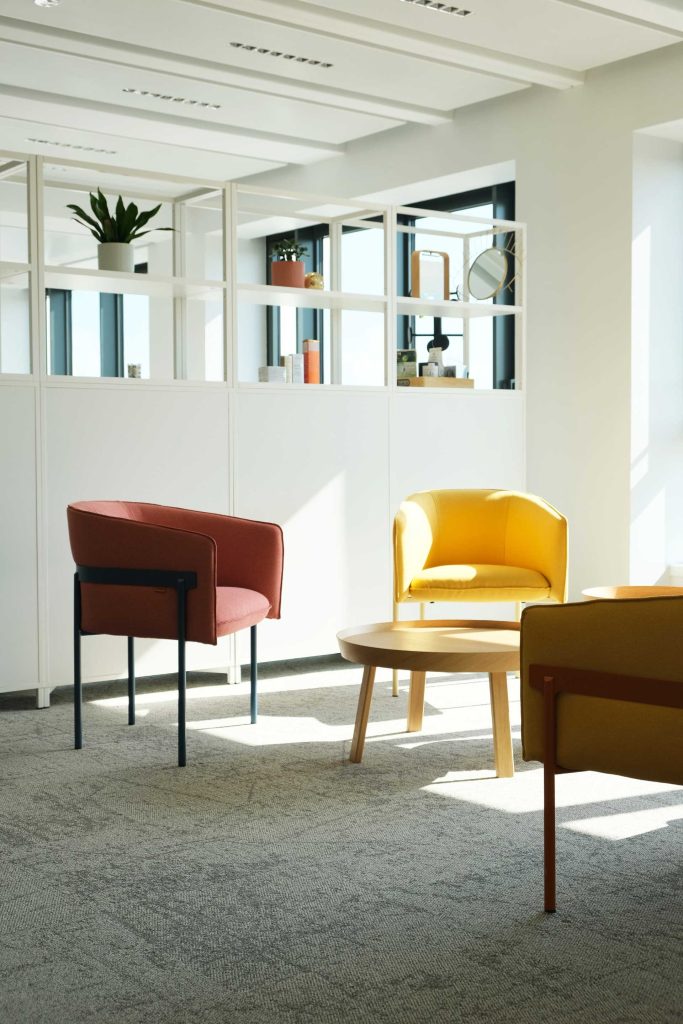
Small living room with red and yellow armchairs, light wood coffee table, at NAOS, by Parella

THANK YOU

Your message has been sent.
We'll get back to you shortly!