Flexibility in your rental commitments

Make Your Lease Terms More Flexible: 5 Tips to Help You Do It.

Flexibility is a growing need for companies, in a changing economic and social context.

Do you know how much m² will be needed to support your growth in 3, 6 or 9 years' time?

As your business evolves, so will your needs. Flexibility in your lease commitments is essential to ensure that they don't prove restrictive over time.

Here are 5 tips to help you add flexibility to your leases.

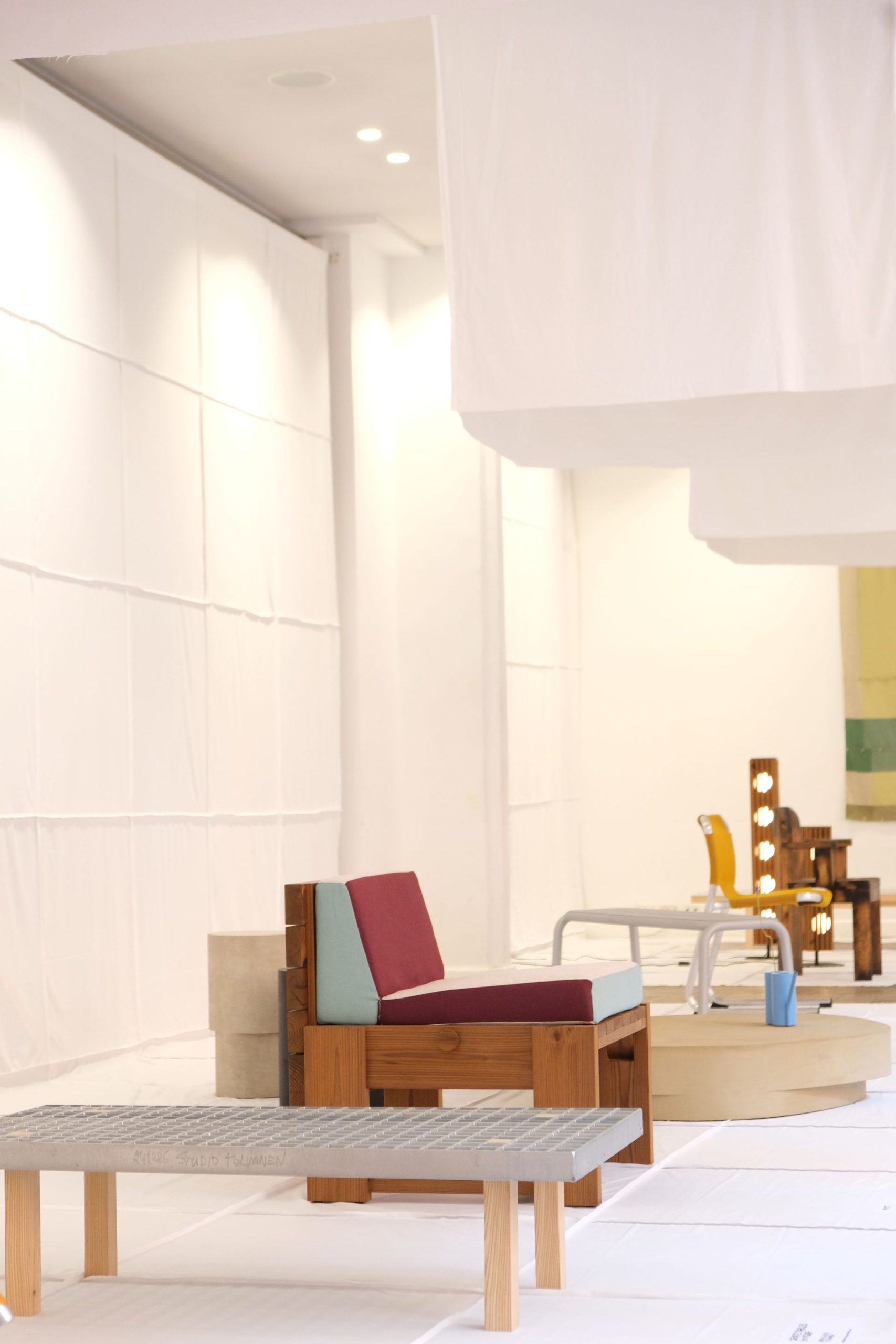
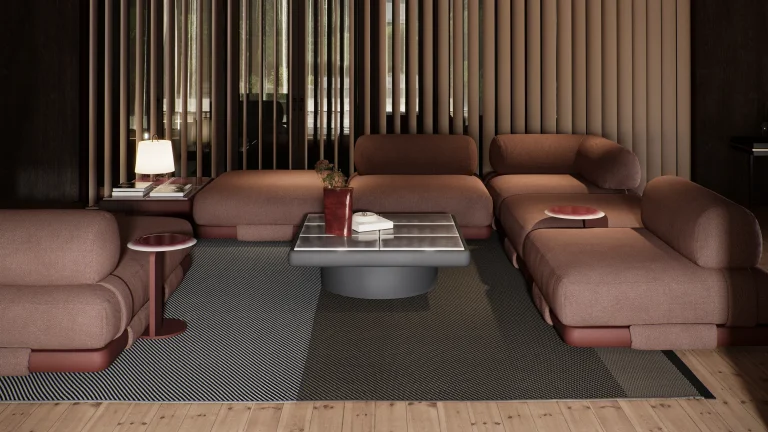
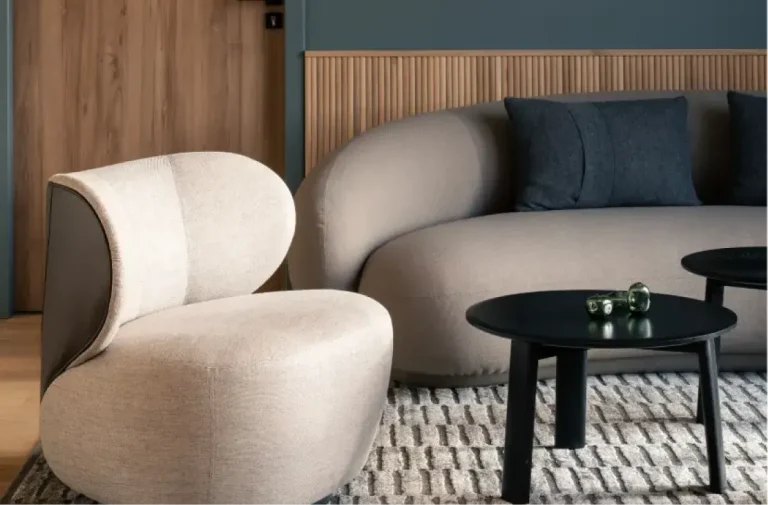
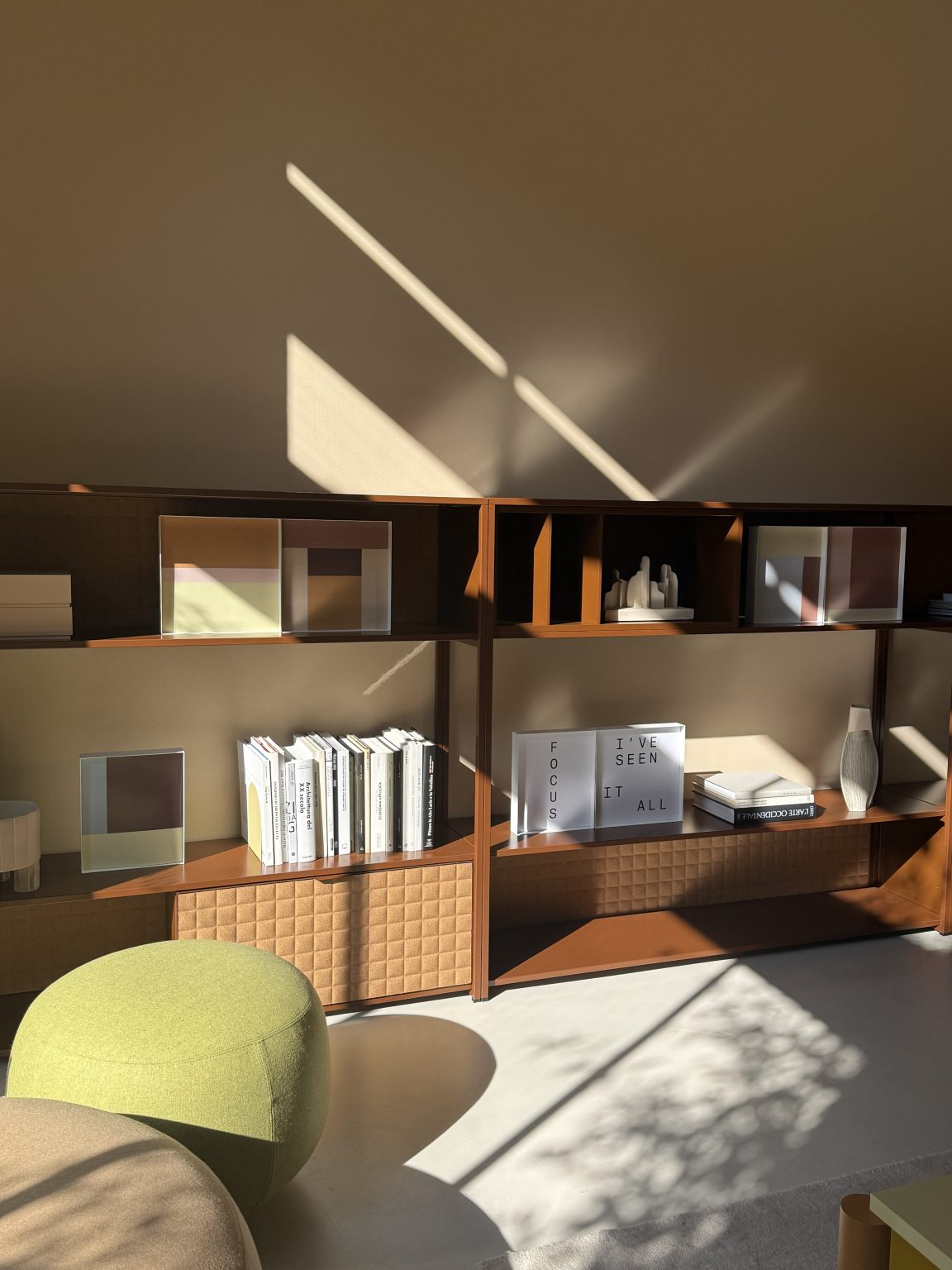
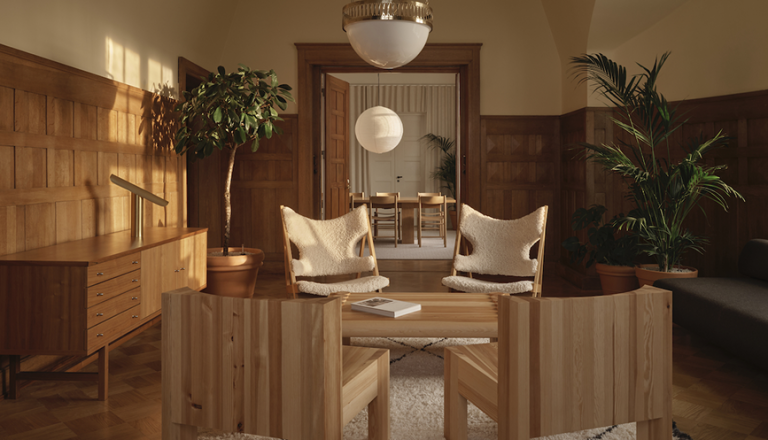
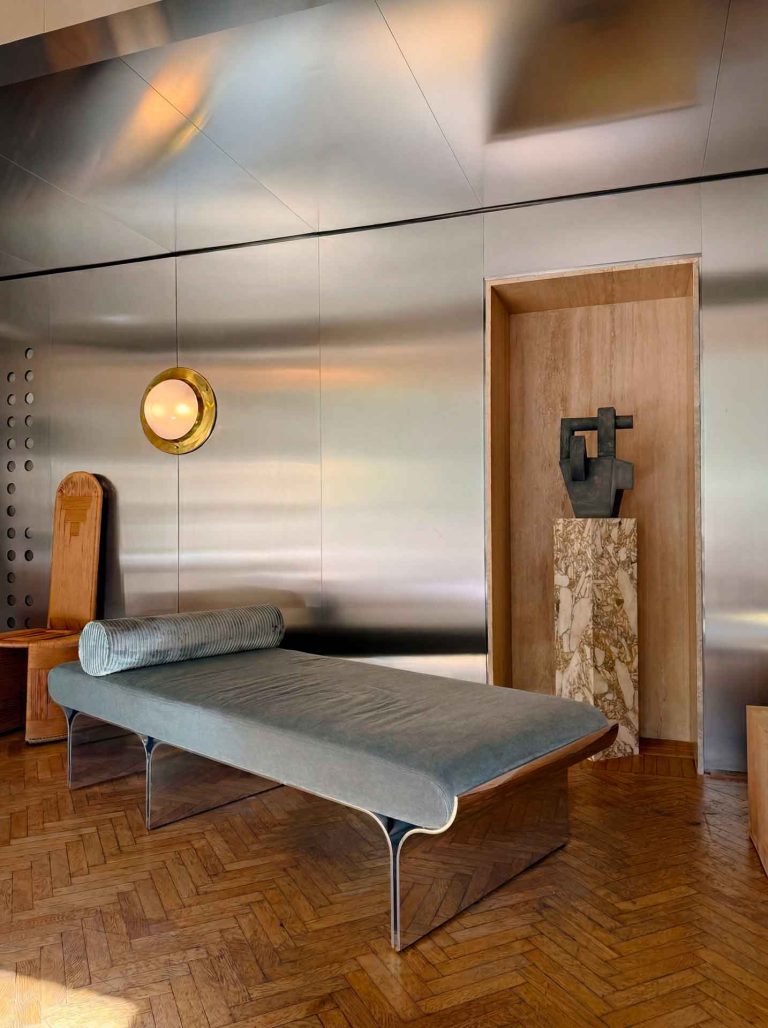
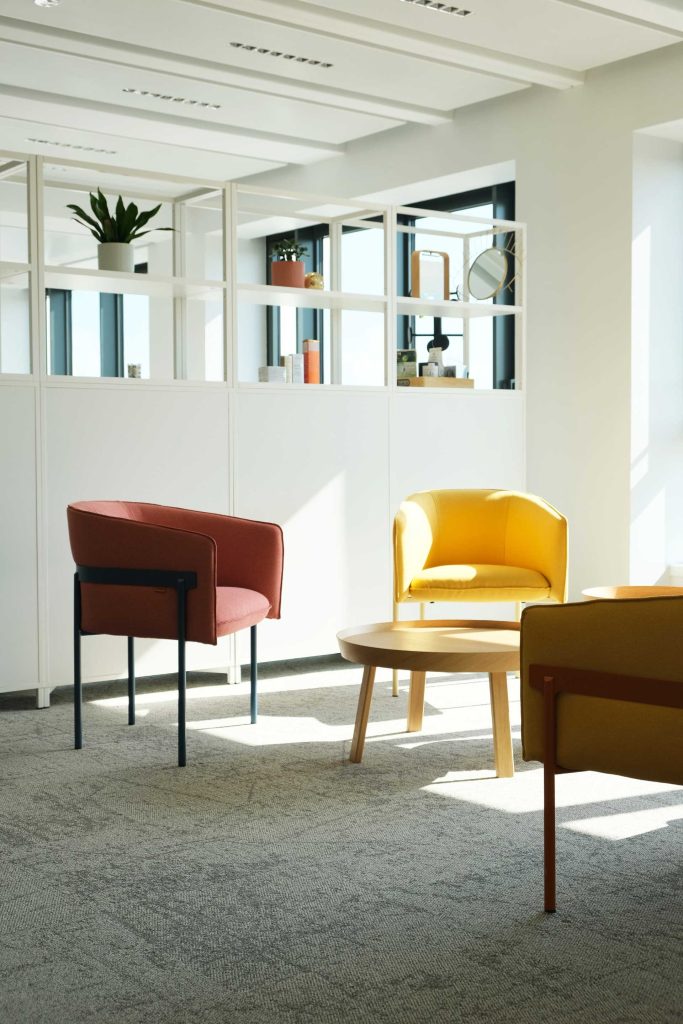
Photo of armchair and sofa at Scotto, illustrates the Design & Architecture section

Rent too big and sublet your surplus while you grow

To make your rental commitments more flexible, we recommend over-letting and subletting.
Some companies choose to take on larger surface areas than they need from the outset, and sublet the surplus.
There are several reasons for this:

- While subletting can represent a financial risk, this is limited in areas with low vacancy rates (Paris Centre, Paris QCA, etc.).

- This option enables you to absorb your growth over time by limiting the rental charge to the surface area you need.

- In in-demand and competitive rental sectors, taking on large surface areas can help your bid, and prevent the landlord from dividing up the building.

- If you opt for an entire building, which you can dispose of independently, you'll gain in ease of management. You'll also be able to create synergies that will boost your internal innovation by welcoming like-minded companies onto your premises, as in the case of corpoworking.

Catering area at Scotto by Parella

For every context, the right solution

We helped one of our customers, a major player in the tech sector, to lease a 7,000 m2 building in the CBD.
Their initial requirement was for 5,500 m2, so to position themselves in the face of strong competition for the premises that best met their needs, we negotiated a clause allowing them to sublet up to 40% to third-party companies without prior approval from the lessor, enabling them to adjust their space requirements.
Our customer chose to take the risk of subletting, a risk that paid off.

Add an additional exit option to the usual 3/6/9 maturities

Lease deadlines are not always adapted to your company's strategic stages.
To limit constraints and be able to move without delay, it is possible to negotiate one or more exit options in your lease, in addition to the usual deadlines (3, 6 and 9 years).

Depending on the geographical sector and the balance of power between lessors and lessees, a departure indemnity is usually requested. It is generally calculated in proportion to the support measures obtained at the start of the lease. It is therefore essential to negotiate them well.
You can also think in terms of flex ready, i.e. right from the start of your construction phase, design layouts to facilitate the implementation of a flex office organization, which can be deployed during the life of the lease without any additional work. In the current context, our customers are increasingly demanding this type of support.

Negotiate the possibility of surrendering or taking over additional m² during the lease term

During the term of your lease, it's a good idea to be able to increase or restore floor space in the event of a sharp change in your workforce and your requirements.

Including the possibility of reducing your m² between two terms can give you real flexibility.

In the event of unexpected growth, we recommend that you include a preferential right on floor space that becomes available in the building. This will give you priority over other applicants from outside the building.

For every context, the right solution

To support several of our customers (industry and investment funds) with medium-term external growth plans, we included a preferential right in the negotiations.
This gave them the possibility, during the lease term, of taking on additional floor space within their property complex, in the event of a third party vacating it.

For a shorter commitment, opt for derogatory leases or
subleases.

If the minimum firm term of a standard
lease (3 years) seems too long, there are other solutions that offer a shorter commitment.

Overriding leases or subleases are sometimes offered for 1 or 2 years. We recommend that you consider these options.

But beware: fitting out premises so that you can work in good conditions comes at a cost, and this must be taken into account in relation to the short commitment period.

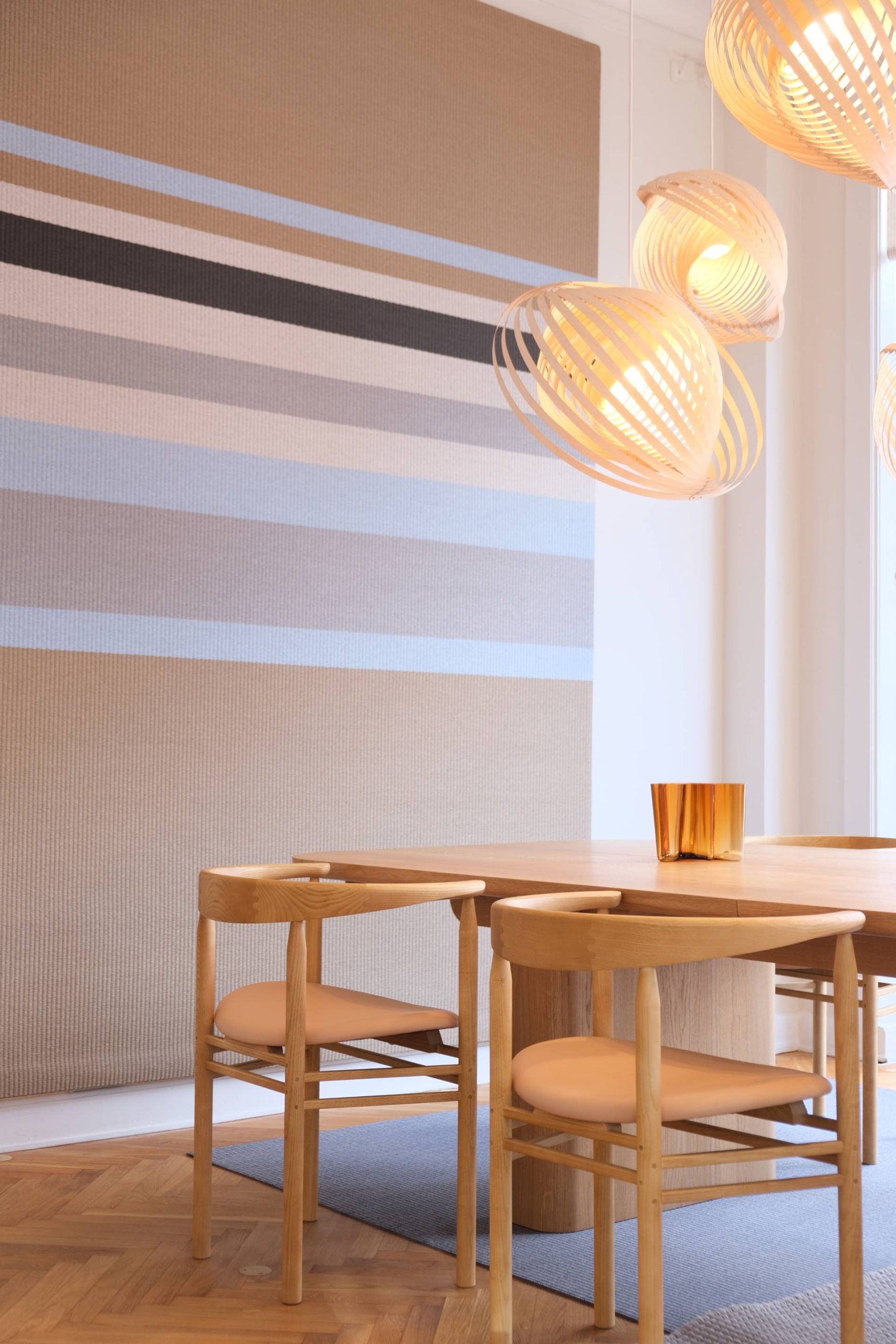
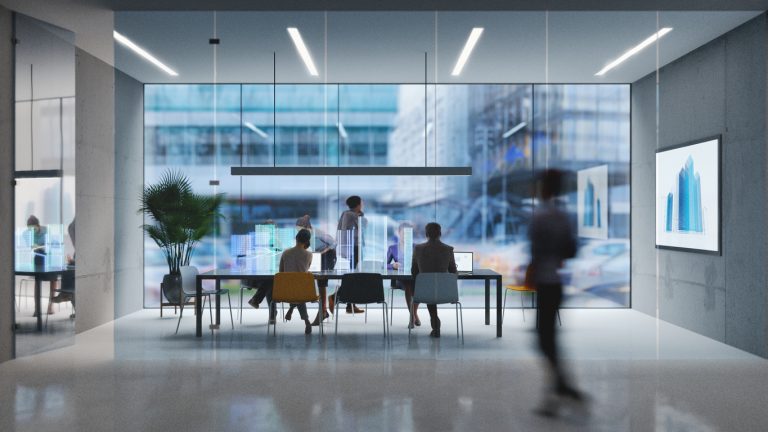
Meeting room at Scotto by Parella

For every context, the right solution

We recently assisted one of our customers in the consultancy sector with the transfer of one of their group's activities. To enable the entity concerned to take the time to build its new corporate strategy and anticipate its longer-term growth needs, the option of a 2-year sublease in plug-and-play premises was chosen after comparing the various possibilities.

To make your rental commitments even more flexible, opt for coworking.

If our previous tips don't give you enough flexibility, coworking is an option to consider.
By freeing yourself from design-build periods, you can speed up your move-in.

Once you're in the premises, flexibility works both ways:

- If your needs are shrinking, it's possible to free them up with short notice (usually 1 month). If you're expanding, it's easy to take on more workstations or space on the site.

- If, on the other hand, you're expanding, it's easy to take on more workstations or space on the site.

Of course, this flexibility comes at a cost, as coworking spaces are more expensive than traditional office leases over the long term.

For every context, the right solution

When the timing is tight, this option can be a real advantage. This was the case for one of our customers whose head office was spread over two buildings. As one of the sites had to be evicted by its owner, it became urgent to relocate the teams quickly.
As one of the sites had to be evicted by its owner, a deadline issue required rapid repositioning. We advised our client on a suitable co-working solution, while we supported the group in defining and implementing its new reunified headquarters project.

Key figures in brief

In the 1st quarter of 2022, coworking operators were back in the driving seat (5-digit numbers or more).

10%

of all volumes placed in the capital

14%

in the Paris Central Business District (CBD)

4%

of leased space in this sector

You may also like...

Increase in ILAT
- With the steady rise in the index of rents for commercial activities (Indice des Loyers des Activités Tertiaires - ILAT), companies...
THE RISE OF ANALOG SPACES
― Our teams immersed themselves in an inspiring ecosystem, rooted in our daily lives in the 8th arrondissement...
Isabel Llano: "Working for users means connecting with their real needs".
- Isabel Llano, Senior Consultant at Parella | The New TTS, is convinced that listening to and understanding the...

Recycled & made-to-measure design

"Recycled & Custom" Design: A Trend to Watch!

Fortunately, there are craftsmen today to meet these expectations, and we met one of them.

Thomas Bouzanquet is passionate about reusing materials, which he works on with love and conviction.

For the past 8 years, this entrepreneur has been offering his customers an alternative, competitive approach that enables them to contribute to protecting the environment.

Product launches, scenography, festivals, layout or the creation of personalized iconic objects - whatever the request, he will meet it by reusing materials, shaping them as he sees fit.

Boat recycled as sofa at Groupe Rochern by Parella

Groupe Rocher project by Parella

3D Kitchen and catering area at NAOS by Parella

3D rendering by Parella

Reusing materials: a question of balance

Still relatively unknown, the reuse of materials is emerging as awareness grows.

In the CSR movement, it brings real creative possibilities compatible with ERP standards.

Whether restoring or creating new parts, Thomas will maximize reuse. But beware, he has to juggle with the customer's financial constraints and timetable requirements.

"It's important to offer solutions that strike the right balance between budget, responsiveness and low carbon footprint."
says Thomas.

Colorful bags of recycled materials at the Pavé factory


Parella Group visit to Le Pavé© plant

Creating with the best eco-responsible materials

Thomas works step by step, hand in hand with his customer.

The first step is to fully understand the customer's needs, and in particular the object's use. Then comes the sourcing of the material and its possibilities, durability and quality.

Other practical aspects, such as lead times or technical standardization constraints, can influence the design.

The project is conceived in co-construction with the customer, from the sourcing of raw materials to production.

The specialties of Thomas and his team

"Each creation is unique! We design our projects around materials. Sourcing them is crucial to identifying materials that offer the optimum quality for reuse.

We have developed our own material pools, as well as joinery and metalwork workshops that enable us to be reactive without compromising on quality."

Tailor-made design

To inspire and create unique atmospheres, some companies have opted for upcycling.

This is the case of Groupe Rocher, a company with a mission, which recently refurbished its premises.
Among the iconic objects:

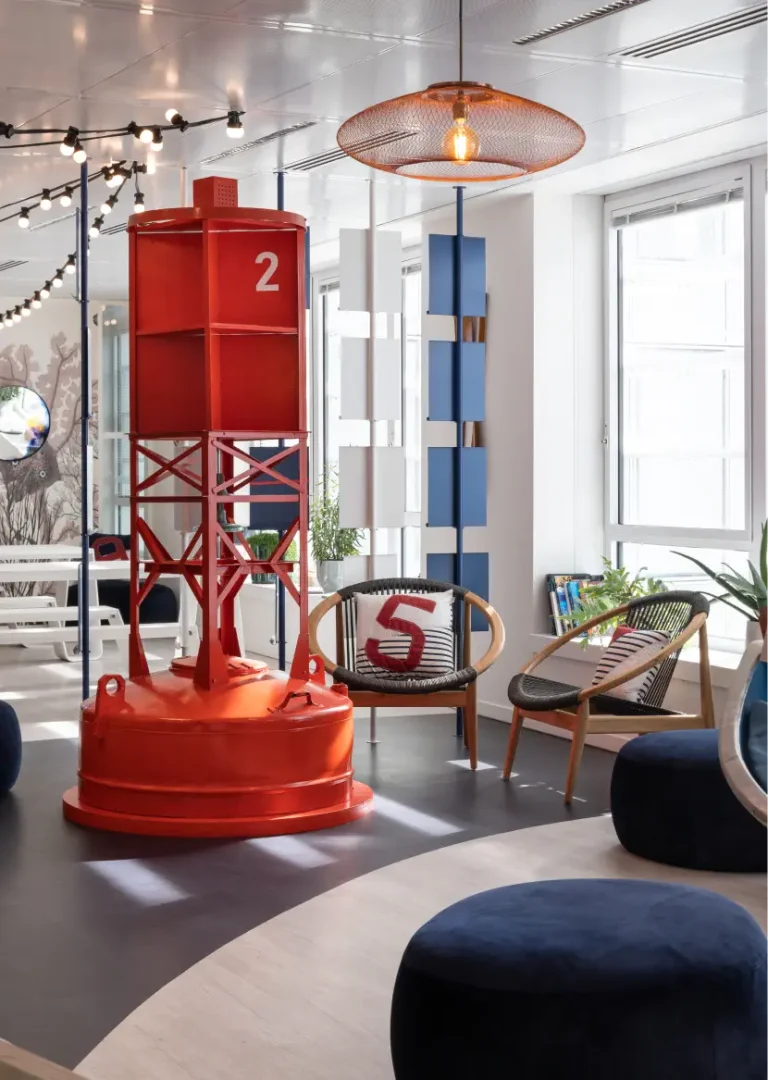
- La Balise Nautique
Like a unifying lighthouse, the beacon is the anchor of the Petit Bateau brand's convivial space." Sourcing quickly identified that restoring a beacon would be incompatible with the constraints of the building, as the weight was too great.

So, with the Parella team, we decided on a made-to-measure solution made entirely from recycled materials."

- Les banquettes barques
The materials were sourced locally. Restoration and transformation work was carried out to meet the comfort objectives.
We also share some ideas to inspire you:

fr

Photo La Balise Nautique at Groupe Rocher by Parella

The Nautical Beacon at Groupe Rocher by Parella

Boat recycled as sofa at Groupe Rochern by Parella

Groupe Rocher's Banquettes Barques by Parella

Her advice on reuse?

- Favoring a local source

Thomas points out that the volume of reusable materials is diversified locally, so it would be a shame to favor a distant source.

For Groupe Rocher, an audit was carried out to identify materials that could be reused locally. This has considerably reduced the environmental impact.

- Take the time to co-construct

Working, designing and manufacturing made-to-measure objects implies a change in working habits to ensure follow-up and co-construction throughout the project."

We don't choose materials from a catalog. Instead, we're involved in the technical decision-making process throughout the production process. This implies co-construction. Made-to-measure is not something you find on the shelf.

It requires adaptability and taking the time to source.
We work on all types of project, new and recycled materials, for all types of sector: luxury, catering, festivals.

To minimize the environmental impact of our creations, we seek, wherever possible, to maximize the use of recycled materials."
- Thomas Bouzanquet

You may also like...

Flex office, coworking, teleworking: what impact on the real estate market?
- Working patterns are changing at an unprecedented pace, influenced by the rise of telecommuting, the...
Increase in ILAT
- With the steady rise in the index of rents for commercial activities (Indice des Loyers des Activités Tertiaires - ILAT), companies...
Active Design
- With the Olympic Games just around the corner, some of our customers are wondering about the benefits of Active Design...

Global Design

Global Design: The Era of Personalization by Parella

"Our mission: to reveal and distill the extra soul emanating from your brand, your DNA and your corporate culture in your living and working spaces."

Our global approach enables us to support brands in the deployment of their identity throughout their real estate project.

Cosy lounge area at Samsung, by Parella

Photo of Thibault Poirier

At Samsung

Nicolas Flachot

Nicolas Flachot

Global Design Director

The creation of a multi-crea

In March 2023, Parella will regroup its creative teams and create the "Global Design" division.

A strategic ambition to respond to the evolution of its market. Increasingly involved in real estate projects, CEOs, HR Directors and Transformation Directors need to tell the story of their brand, their culture, and embody it within their new spaces.Companies are now looking for much more than functional, efficient workspaces.

Driven by Parella's raison d'être, "more than offices...", Global Design imagines ultra-personalized living spaces where people work. Their all-encompassing approach enables them to support brands in the deployment of their identity throughout their real estate projects.

Comprising a multidisciplinary team, the Global Design division brings together 22 talents:

Architectes Dplg . Interior designers . Space-planners . Decorators . Graphic designers . Visual artists . Object Designers . Motion Designers . Sound Designers . Filmmakers . Web & App Designers . Web Developers...

Photo illustration Architecture et Design

the genesis of Global Design at Parella 

For several years now, companies have been going through a period of profound transformation. This transformation began before the Covid pandemic, was exacerbated during the pandemic and then accelerated sharply afterwards.

Companies must respond to new questions and new societal challenges, such as their social and environmental responsibilities, the return to the office, the workplace experience, the meaning given to each individual in the exercise of their professional activity, the hybridization of work, flex-office, their differentiation...

More than ever, companies need to assert their identity, their raison d'être, and make their offices a new attractive land where it's a pleasure to come, to exchange and to collaborate. The office must embody the company and support the identity, personality and expression of the brand and its products. The company headquarters naturally becomes an additional communication medium. Brands become firmly anchored in living and working spaces.We strongly believe in the power of place, and one of our jobs is to make it a showcase for the brand.

To better respond to this challenge, we decided to bring together Parella's creative teams who were already working on the conception (Design) and personalization (Image & Style) of spaces, in order to offer our customers a unique and comprehensive approach, from the outset and throughout all phases of their real estate project. We work on everything from storytelling and branding to communication media and, of course, the architecture and personalization of spaces.

Photo illustration Architecture et Design

The Global Design approach

It enables us to imagine, design, create and tell the story of ultra-personalized places that are totally in line with our customers' brands. Our other asset, when it comes to informing and engaging our customers' employees, is our ability to produce all kinds of communication media, for internal and external use, such as podcasts, videos, newsletters, websites, welcome booklets... all in total harmony with our customers' identities.

Offices: a place to live, a place to work

Since the advent of hybrid working and the widespread adoption of telecommuting, people no longer come to the office simply to work; it must become a landmark, an anchor, and an opportunity to socialize more.

Premises must encourage encounters, exchanges and creativity, facilitate collaboration, reinforce a sense of belonging and pride, and provide well-being for its residents.It's a place to come together, to feel part of a meaningful collective adventure... it becomes a place to live, much more than a simple work tool.

Hero RSE: Cozy space at Groupe Rocher, green sofa, coffee table and low wooden stool

from standard to customized

Our first job is to understand the brands we work for, and then to translate their identities within the spaces. Singularity is one of our core values. Our ambition is to tell stories, to create unique, made-to-measure universes and ambiences, with an artisanal and artistic approach.

We pay particular attention to the selection of decorative objects. Some are found at antique fairs, while others are specifically created by artists or craftsmen.

For the Rémy Cointreau Group headquarters, for example, we combined objects from the heritage of the Group's brands with decorative items. The Remy Cointreau Foundation completed the personalization of the premises with a selection of works by artisans it represents.

For Groupe Rocher, we found hundreds of second-hand objects to meet the company's CSR requirements, had a 2.50 m-high custom-made sea beacon modeled and manufactured, and created recycled wood huts for each of the village squares (informal spaces 80 to 100m long).

The impact of Global Design on employer branding

There is indeed an employer brand issue at stake. In fact, the figures from our latest barometer on the evolution of work modes and spaces confirm this: 75% of employees working in offices believe that the premises contribute to their desire to stay with the company, and for 71%, they are an important or decisive criterion for choosing their future company.

If a company wants its employees to identify with its brand and feel committed to it, they need to be immersed in its corporate culture, its products, its colors, every time they come to the office.

Space is also a competitive advantage for 56% of company managers.

In addition to employees, we also need to think about visitors, suppliers, partners and customers.It's all about the overall storytelling of the brand.

We help companies to make their employees' daily lives more pleasant, to attract talent and retain their best people.

Photo illustration Architecture et Design
Photo of a 4-person team exchanging ideas, in front of a red wall and posters.

This requires listening to the customer

Undoubtedly, yes. This requires a genuine ability to listen to the customer on the one hand, and time on the other. It's essential to understand the customer, its history, its brand, its culture, its identity, its products, but also its ambitions and projects.

We strive to co-construct with our customers, as systematically as possible in a collaborative and participative approach with managers and employees alike.

Whenever possible, we take the time to immerse ourselves in the customer's world. For example, we went to La Gacilly for Groupe Rocher, and spent time at the various addresses of Groupe Rémy Cointreau before embarking on the design of the spaces.

You may also like...

Anticipating the future of office design
― At Parella, we have always sought to design spaces that not only meet the needs...
Conflict-free real estate consulting
- Parella has placed the end-user at the heart of its business model. Through its three divisions...
ART IN THE OFFICE
― I deeply believe that art has this power: to transform the perception of a space, to stimulate...

Offices for your talents

Office space for your talent: A KEY TO RECRUITMENT AND RETENTION

Recruiting and retaining talent are key HR challenges.

The job market is tight, and talent is demanding.
They have a choice, and their expectations are changing. All talent management processes generate significant costs for companies.

Photo of Provaillance reception room by Parella

Provalliance project by Parella

Recruitment, training, integration...

What levers can companies use to face up to this challenge?

75%

of employees say that the layout of their work space plays a key role in their desire to stay with the company.

58%

of employees consider a company's premises to be an important criterion when choosing a job. (Barometer Parella Group x CSA 2022).

A solution for every situation

At Rémy Cointreau, the new head office has been designed to facilitate the introduction of new ways of working. The project was co-constructed with employees. We set up various participative workshops for each stage of the project: study of specific needs, design of the plans, drafting of the life rules charter.

Offices as a performance driver

Offices are a performance driver when they meet business needs. Indeed, when workspaces are designed with business uses in mind, they meet the needs of employees. Hence the importance of dimensioning spaces and their equipment at the design stage: number of workstations, types of seating (high, low, armchairs, benches), standing tables, meeting rooms of different sizes...

In the age of telecommuting, corporate offices are first and foremost a place for socializing. They are the foundation of collaboration and collective intelligence. Thus, meeting rooms equipped for hybrid exchange between present and remote employees, and brainstorming rooms designed to encourage creativity and collaboration, have become essential.

The right size of office space and the degree of partitioning are also key performance drivers. It provides good working conditions and encourages serendipity.

Meeting room at Rémy Cointreau by Parella

You may also like...

THE LENGTH OF STAY IN COMMERCIAL INTERIORS
― For years, dwell time has been a familiar indicator in retail.
Increase in ILAT
- With the steady rise in the index of rents for commercial activities (Indice des Loyers des Activités Tertiaires - ILAT), companies...
OFFICES DESIGNED TO PROMOTE WELL-BEING
― Before 2020, the office was a default location. Today, it is a destination with a specific purpose...

Interview Business Immo

Interview Business Immo

"We are not subject to real estate market cycles.

Parella has positioned the end-user at the heart of its business model.

Through its three divisions - Real Estate Services, Workspace and People & Transformation - the 200-strong company intends to pursue its international expansion over the coming years.

Michael Kaplan and Olivier Neuman, two of the company's partners, shed some light on the subject.

Olivier Neuman, Partner

Olivier Neuman

Associate

Michael Kaplan, Partner

Michael Kaplan

Associate

"This positioning enables us to address most corporate real estate issues without any conflict of interest. Today, 70% of our customers are tenants, while the remaining 30% are owner-users. Over the years, we have built up our expertise in three main areas.

Michael Kaplan, Partner

Paris building photo to illustrate the real estate appraisal section

What is Parella's current position?

Michael Kaplan /

First of all, we're celebrating our 15th anniversary this year, which is no mean feat. Since our creation, we have remained true to our credo: to advise only the end-user. This is what all our associates have in common. Even though we come from a variety of backgrounds (architect, broker, management consultant, ex-lawyer, etc.), what we have in common is that we have all worked for international brokers, and that in the end, we have chosen our camp - that of the end-user.

This positioning enables us to support most corporate real estate issues without any conflict of interest. Today, 70% of our customers are tenants, while the remaining 30% are owner-users. Over the years, we have built up our expertise around three main "universes of expertise".

Olivier Neuman /

To provide real added value to a real estate project, we need to have a 360° vision, so that our multi-disciplinary teams can work together. This is our top priority.

Could you explain these 3 "business worlds" to us?

Michael Kaplan /

There's the Real Estate Services division, which covers not only real estate appraisal, but also real estate strategy and assistance with property searches and transactions: taking on leases, renegotiating leases, selling and buying real estate assets, CPI, Vefa, Befa.

Olivier Neuman /

In 2023, this real estate consultancy division had its best year since our creation! In the Île-de-France region, we are close to 80,000 sq.m. of space transacted by our end-user customers.

While the macroeconomic context is not favorable...

Olivier Neuman /

We are not subject to real estate market cycles. Whether they are growing or not, our customers are always faced with real estate choices and challenges: renegotiating a lease, relocating, downsizing or upsizing, buying a site, selling it, upgrading technical equipment, adopting new ways of working... Parella Group provides solutions to a wide variety of issues.

Michael Kaplan /

Our business is not subject to the dynamics of any particular real estate sub-market. Whether our customers position themselves in La Défense or the center of Paris, it makes no difference to our teams, who are not geographically sectorized and do not engage in rental marketing.

Rising interest rates, which have a major impact on investment volumes, do not affect us, as we do not engage in capital marketing. On the other hand, as Olivier says, our end-user customers always have issues to deal with, such as lease expiry dates drawing nearer, changes in headcount that have an upward or downward impact on floor space requirements, and discussions on the sharing of individual workstations, etc.

What are your customers' expectations today?

Olivier Neuman /

Most of our customers are redefining their post-Covid real estate strategy to take account of the impact of teleworking. In particular, they are looking at the right mix of flex office options to be implemented, the steps to be taken to strengthen collaboration and cohesion within their teams, the impact of digital technology on physical and digital workspaces, and their location and attractiveness.

Overall, they are therefore moving towards a reduction in floor space for the same number of employees. The creation of collaborative spaces is another strong trend. It's a case-by-case approach. We're very agile.

What are your other two "universes"?

Michael Kaplan /

There's the Workspace division, in which you'll find an interior design studio, a technical design office for all trades, which we've beefed up enormously in recent years, and a project management team for construction and interior design projects. This division is often involved in the continuity of a project in the real estate division, but also in stand-alone assignments. Mainly for offices, but increasingly for retail and hotel-restaurant projects.

We also act as project manager, as in the case of Total Energies' The Link tower in La Défense, or as prime contractor or general contractor for design & build, as in the case of Samsung's new headquarters in Saint-Ouen.

The People & Transformation team is made up of consultants from management consultancies and the transformation departments of major groups.


In a context where projects are increasingly focused on people and collective action, this team supports change, facilitates social dialogue and deploys original, high-impact communication tools. Listening, co-creation, communication, onboarding, gamification, training and coaching hold no secrets for them.

How much of your business comes from the Paris region?

Michael Kaplan /

In France, we generate 70% of our business in the Île-de-France region and 30% in the rest of the country. The proportion of regional business is growing steadily. Internationally, around ten years ago we created a global network with partners sharing the same 100% user-dedicated positioning: Exis Global.

Since 2019, with the support of our financial partner (the Qualium Investissement investment fund), we have bought out a number of our European partners. As a result, we now have our own offices in Madrid, Milan, Berlin, Luxembourg, the Netherlands, London and Brussels.

How does Publicis' leasehold interest in Gecina's Mondo illustrate your business model?

Michael Kaplan /

Publicis was looking for a consultancy that was both expert and objective, able to mobilize in a short space of time and implement its recommendations.

Olivier Neuman /

Publicis' strategic thinking had already begun before we started working together. The company was planning to consolidate several sites and was looking for a new building adapted to the deployment of new ways of working; a building that would be more central and more in line with its environmental strategy. We helped Publicis with a multi-dimensional analysis of different buildings, scenario modeling and negotiations.

For Mondo, in the 17th arrondissement of Paris, we carried out spatial and technical analyses, studied the overall cost of the operation and negotiated all the rental conditions with Gecina. Today, we are continuing to work with Publicis on the Mondo development.

What are Parella Group's objectives for the coming years?

Michael Kaplan /

We want to continue our internationalization - which means strengthening our range of businesses in certain countries. We want to bring new associates on board. We want to continue to grow while remaining agile, listening to our customers' expectations and challenges, because that's the key to our business.

© Business Immo for the writing of the article.

You may also like...

PARIS ART WEEK
― Our teams immersed themselves in an inspiring ecosystem, rooted in our daily lives in the 8th arrondissement...
Conflict-free real estate consulting
- Parella has placed the end-user at the heart of its business model. Through its three divisions...
Maison & Objet 2025
Once again present at the Maison & Objet trade show, Parella continues to fuel its thinking by exploring...

THE UNYCK HOUSE

LA MAISON UNYCK: A New Home for Executives.

A few weeks ago, Maison Unyck opened its doors on rue du Faubourg Saint-Honoré to welcome its community of leaders.

On the 8th floor, with views over the rooftops of Paris, these spaces invite you to let go and get inspired.

Unyck desk, royal blue wall, mustard yellow furniture, decoration on top and mirror on the wall.

"Managers, never alone again".

Living spaces imagined, designed and built by Parella to embody the Unyck promise: "Managers, never alone again".

When you walk through the doors of Maison Unyck, you might think you were in an apartment. Yet this is where the most beautiful transformations take place. Because Unyck is not a traditional consulting firm, the company wanted to mark this break with the past in its premises.

In order to offer an environment conducive to exchange and confidence, the layout has been designed to make customers feel at home.

To achieve this, Unyck has adopted the codes of "as at home". No offices as we know them, but an apartment rich in warm, antique objects.

A dining table where we can discuss the most strategic subjects over tea, a library where everyone can help themselves, becoming a player in the place... Proximity is the key word. Customers feel at home at Unyck.

Meeting room at Unyck. Light wood table, white walls, light yellow and blue decoration.

Conclusion

Creating the right conditions for successful support requires a place where change can take place. The Maison Unyck was designed with this in mind.

You may also like...

Flex office, coworking, teleworking: what impact on the real estate market?
- Working patterns are changing at an unprecedented pace, influenced by the rise of telecommuting, the...
Building Change
― Despite decades of advocacy and investment, women remain severely underrepresented...
Anticipating the future of office design
― At Parella, we have always sought to design spaces that not only meet the needs...

Active Design

Active Design: Environment, Health, or Enjoyment: How Does Active Design Engage Employees?

In the run-up to the Olympic Games, some of our customers are wondering about the benefits of Active Design in their workspaces, a method that encourages people to act naturally.

While this practice has been commonplace on our streets for some years now, as a way of combating sedentary lifestyles, it is now taking root on the premises of some companies.

Can it, beyond mobility, move the lines and instill new, more virtuous practices?

For the environment, health or just for fun, how can premises help to carry the environmental commitments, QWL or values of organizations, while taking care of their employees?

Eric Vermande, Image and Style Director and Diane Mendes, People & Transformation Manager, took an interest in the subject.

Eric Vermande, Image & Style Director

Éric Vermande

Image & Style Director

Diane Mendes, Manager People & Transformation

Diane Mendes

People & Transformation Manager

Active Design, the path to new uses (at full speed)

Who hasn't preferred to climb the stairs in the metro rather than take the escalator, seduced by a playful, colorful or interactive challenge? These messages of calories burned, rewarding or educational, even if they make us smile, urge us to act.

Active Design will be able to accompany companies' key messages on a day-to-day basis. It can help all organizations in their practices. CSR implementation, for example. Active Design can help in this direction.

Beyond this, we can imagine pathways contributing to well-being (QCVT), instilling values (employer branding), or new ways of working (flex-office). Active Design is really about the natural adoption of practices whatever they may be.

To combat sedentary lifestyles, Active Design has mainly developed around solutions encouraging sport. However, although athletics tracks are appearing in corridors, their role is to create routes, designed to activate employees in a natural way.

However, the aim is not to get them to run around in suits and arrive at meetings with wet shirts. Physical activity is one of the levers, but not the only one. Brain activity is just as important.

Photo of glass meeting room

Induce to act, from path to experience, everything has to be created

The notion of a journey is important to create an experience and initiate new habits.

This journey must be self-supporting and desirable.

Every user must be able to use it at any time of day, without explanation.

Everything is done to induce and create an incentive environment that will become part of everyday life. The message is positive, educational, consistent with values and rewarding for those who follow it.

Photo illustration Active design

Create a new playground where employees can play together

We start with values and semantics. We move away from calorie counting to play with employees, projecting them into a dynamic.

Graphic design is a real lever : explicit or implicit, it creates flows. Paths with active and directional phases... Beyond physical exertion, the important thing is to encourage contact with as many people as possible.

Posters, signage, frescoes, hijacking of objects, all avenues can be explored: following a blue thread that guides towards activities, for example. Or the misappropriation of objects, where you don't see the same message depending on how you're positioned (sitting, standing), to encourage open-mindedness.
It's also important to work on branding to create a sense of belonging.

While the use of color helps to create a desire for discovery, the ideal is to create itineraries that integrate naturally into the space.

Induce a perennial positioning as well as a more ephemeral perception of events.

Photo illustration Design Actif at Orange Stadium

Steps to long-term commitment

A habit is created after 21 days. In addition, studies carried out by cities show the importance of thinking in terms of evolutionary paths, to avoid abandoning the practice once the discovery phase is over.

- Step 1: Understanding the objectives and challenges. The first step is to identify the objectives. You don't do active design for active design's sake. Are we creating one or more pathways? Are we going to act on CSR, values, QWL?

- Step 2: Analysis of uses and employee needs. We need to adapt to the audience and the corporate culture in order to raise awareness as effectively as possible.

This requires an understanding of what affects them. In the same way as for an employee journey, we're going to look at habits. As experts in space planning, the Parella Group teams analyze the sequencing of the day, needs and movements. This enables us to create active, directional phases. It's important to think things through carefully, to avoid over-solicitation, which would be counter-productive.

But also perhaps to identify those uses which could be diverted, and to give meaning to them, by involving employees in dynamic, unifying and playful workshops.

- Step 3
: Phase of use and evolution. Experimentation could be a first step to understanding the maturity peak and seeing how employees react.

Depending on the challenges and needs detected, managerial support will enable employees to allow themselves more playful moments. The course can also be punctuated with activities (sports coaching, for example).

It is also possible to bring the courses to life in line with important events for the company.

We can also imagine a change of color for Breast Cancer Week. Or a launch with the Olympic Games.

Photo illustration Active design at Orange Stadium

Scalable for lasting change

It must be easy and inexpensive to set up and take down courses, so as to be able to offer new experiences that adapt to the different maturity levels of users.

Relying on change management specialists enables us to create evolving courses that anchor change in the corporate world over the long term.

You may also like...

PARIS ART WEEK
― Our teams immersed themselves in an inspiring ecosystem, rooted in our daily lives in the 8th arrondissement...
Healthy office: the impact of space on employee health
- Today , many companies are focusing on healthier workspaces - and they're right...
Maison & Objet 2025
Once again present at the Maison & Objet trade show, Parella continues to fuel its thinking by exploring...

La Bonne Bulle® (The Good Bubble)

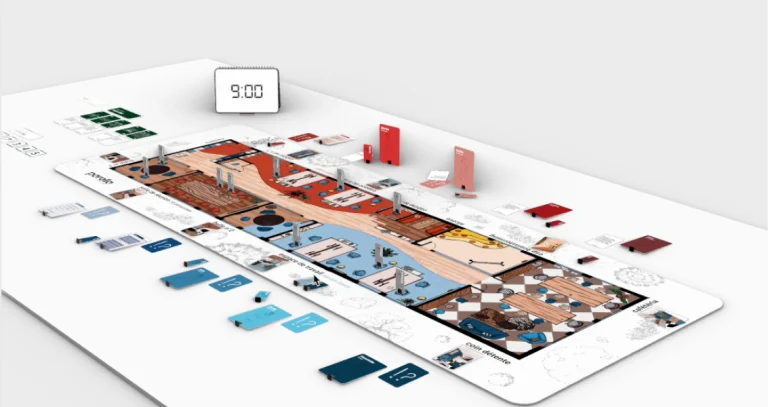
La Bonne Bulle®: a game for flexible workspaces.

Is it okay to play music or take a call at your desk in a shared workspace?

Beware: the melody of hybrid workspaces is not always the melody of happiness.

What if all it took was to co-construct and define, together, the rules of life in your workspaces?

Several people taking part in an animation of the role-playing game La Bonne Bulle de Parella

La Bonne Bulle® session

Parella

La Bonne Bulle de Parella role-playing board
Matthis Petrovick
Expert Parella Valuation

Discover "La Bonne Bulle®", a game designed and developed by Parella to provide companies with a playful way of learning about flexible workspaces and building new rules for living in them.

Gamification is a powerful lever for transformation. Co-constructing one's own rules of life in the workspace in a playful way with one's colleagues ensures a much greater sense of ownership.

"La Bonne Bulle" is a workshop offered as part of the Parella Academy® training catalog.

3D model of the La Bonne Bulle role-playing game board by Parella
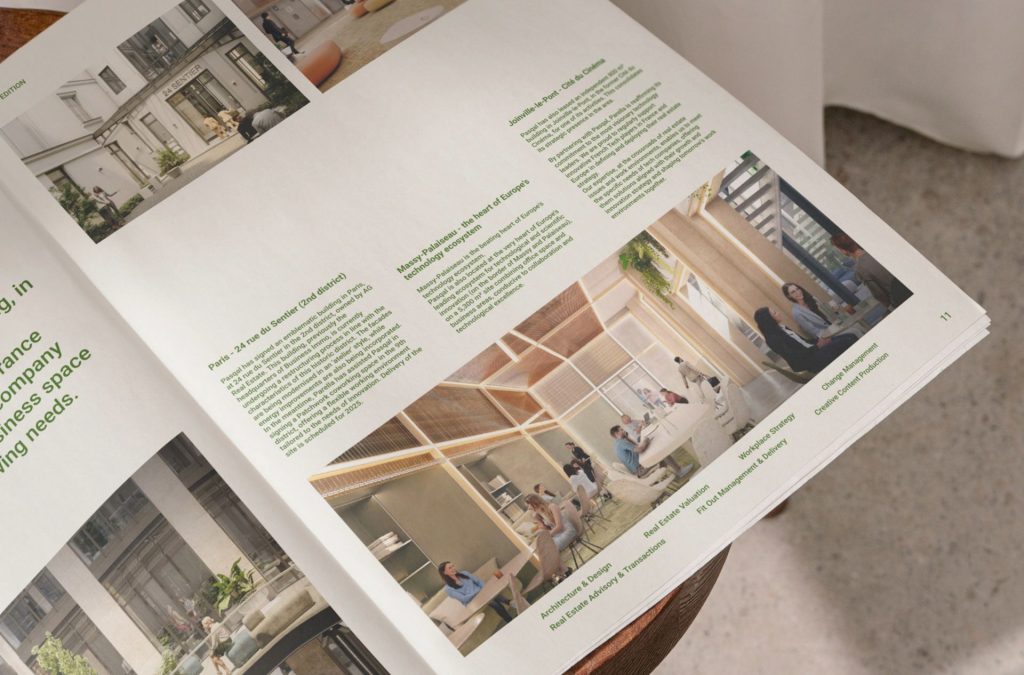
La Bonne Bulle featured in Parella's Office Paper magazine

Discover the page dedicated to the game in the first edition of our Office Paper.

You may also like...

Company removals: mistakes to avoid to optimize your budget
- A company move is a strategic step that involves significant costs and organization...
Proptech: how is technology revolutionizing commercial real estate?
- Commercial real estate is undergoing a profound transformation, driven by new technologies and the...
Active Design
- With the Olympic Games just around the corner, some of our customers are wondering about the benefits of Active Design...

Real estate trends 2024

Real Estate Trends for 2024: What Businesses Need to Anticipate

In an economic climate where cost-cutting is a priority, rental charges represent a major burden for companies.

Yet it is possible to optimize them by adopting a more strategic approach to lease management, adjusting space utilization and controlling energy consumption.

The commercial real estate market is undergoing radical change. Between changing working patterns, environmental demands and economic fluctuations, companies need to adapt to stay competitive. Here are the main trends to watch in 2024.

Several people working in an open space Source: iStock

Flexibility is the watchword

The traditional model of long-term leases is gradually giving way to more adaptable solutions, such as flexible leases, coworking spaces and flex office. Companies are looking for solutions that enable them to adjust their floor space in line with their growth and the needs of their employees. This flexibility is accompanied by an increase in demand for shorter contracts and shared services, offering companies greater flexibility.

Sustainable real estate and the impact of telecommuting

With the French Climate and Resilience Act and carbon neutrality objectives, companies must integrate ecological criteria into their real estate strategy. Certified buildings (HQE, BREEAM, LEED) and eco-responsible developments are becoming a must. The optimization of energy consumption, the use of sustainable materials and green technologies are now key factors in the valuation of real estate assets.

The spread of telecommuting is prompting companies to rethink the design of their workspaces. Offices need to be more collaborative, modular and focused on employee well-being. Demand for coworking spaces and third places is exploding, offering an alternative to traditional offices. The new design solutions incorporate relaxation areas, green spaces and facilities to promote creativity and employee well-being.

Rising costs and their impact on decision-making

With rising interest rates and inflation, companies need to optimize their real estate strategy to cut costs. Renegotiating leases and optimizing floor space are becoming strategic levers. What's more, companies are turning to hybrid solutions, combining physical presence and remote working, to keep their fixed costs under control.

You may also like...

Rendez-Vous de la Matière 2025
A veritable laboratory of creativity and innovation, this trade show has become, in just a few years, an event...
Parella Paris appoints three new Partners
- Parella , a key player in the field of corporate real estate consulting and development...
THE LENGTH OF STAY IN COMMERCIAL INTERIORS
― For years, dwell time has been a familiar indicator in retail.
Article Office Paper

OFFICE PAPERS

Small living room with red and yellow armchairs, light wood coffee table, at NAOS, by Parella

THANK YOU

Your message has been sent.
We'll get back to you shortly!