Career path & VISION
1. Can you tell us about your background and what led you to create the LDG Art & Patrimoine gallery ?
You know, I've always been fascinated by how art can transform a place... and the people who pass through it.
After studying art history and specializing in the art market at the École du Louvre, I had the opportunity to enjoy some wonderful experiences in Rome and Paris—in galleries, on curatorial projects, and above all, through encounters with incredibly talented young artists.
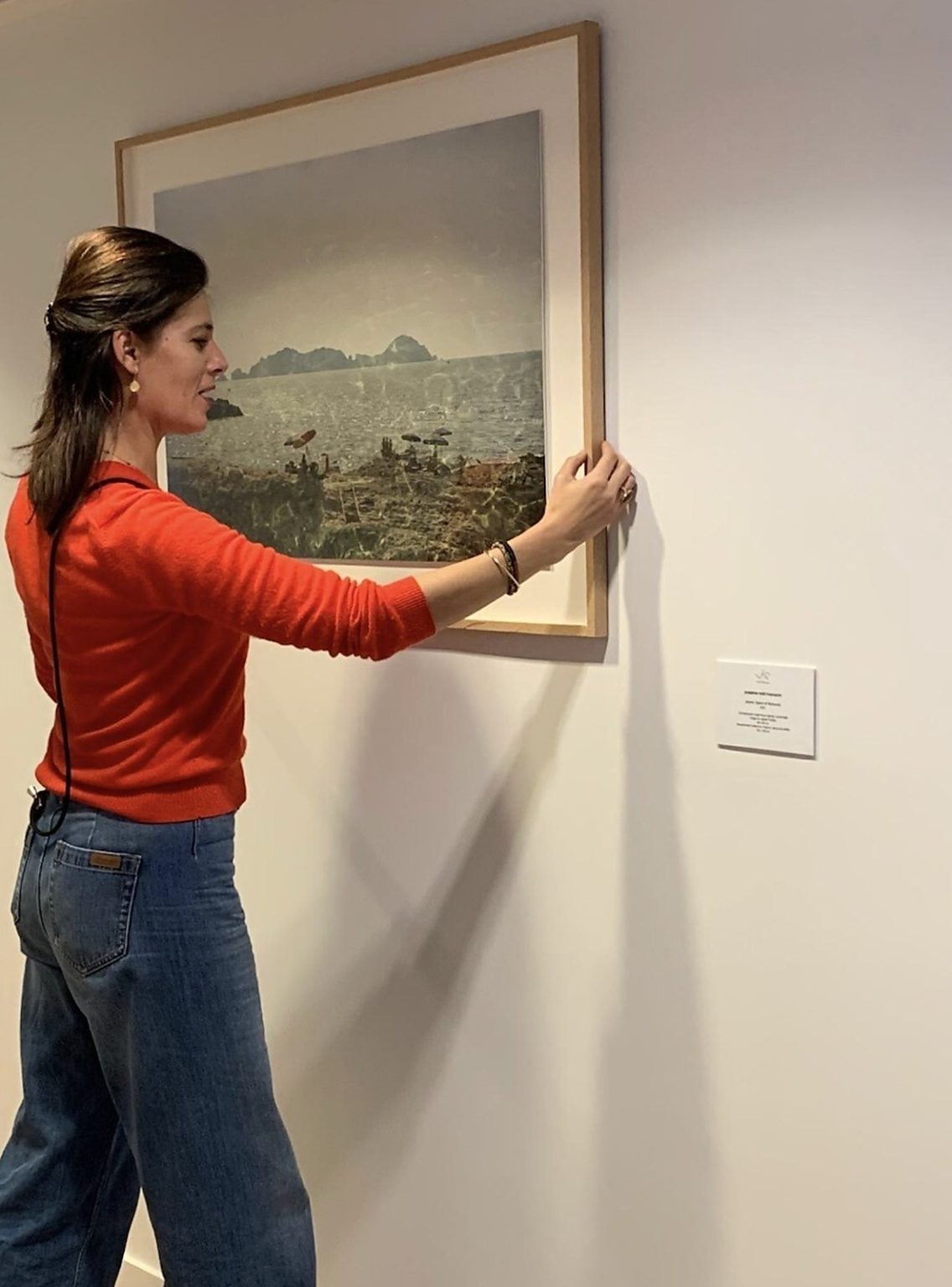
And one day, I thought to myself: what if we rethought the way we experience a work of art?
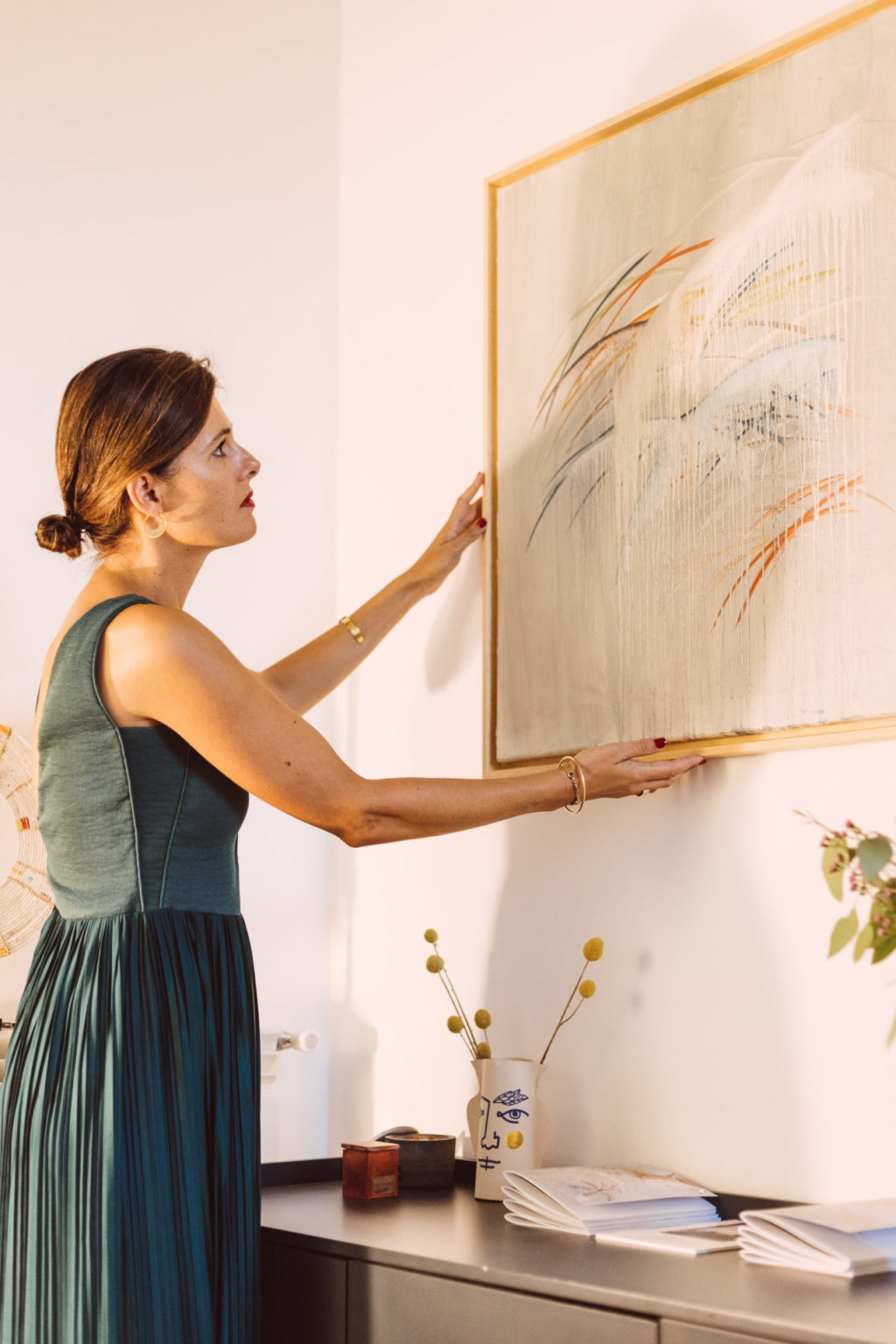
Not just hanging it on a white wall. But a real dialogue: between the work, the architecture, the history of a place, and the daily lives of those who live there.
That's how LDG Art & Patrimoine was born—a nomadic gallery where I combine my passion for curating with tailor-made projects for businesses and individuals alike.
An adventure where each project becomes an encounter... and where beauty is always the guiding thread.
2. What made you want to create a dialogue between art, architecture, and professional spaces?
Architecture creates the framework... and art is its soul.
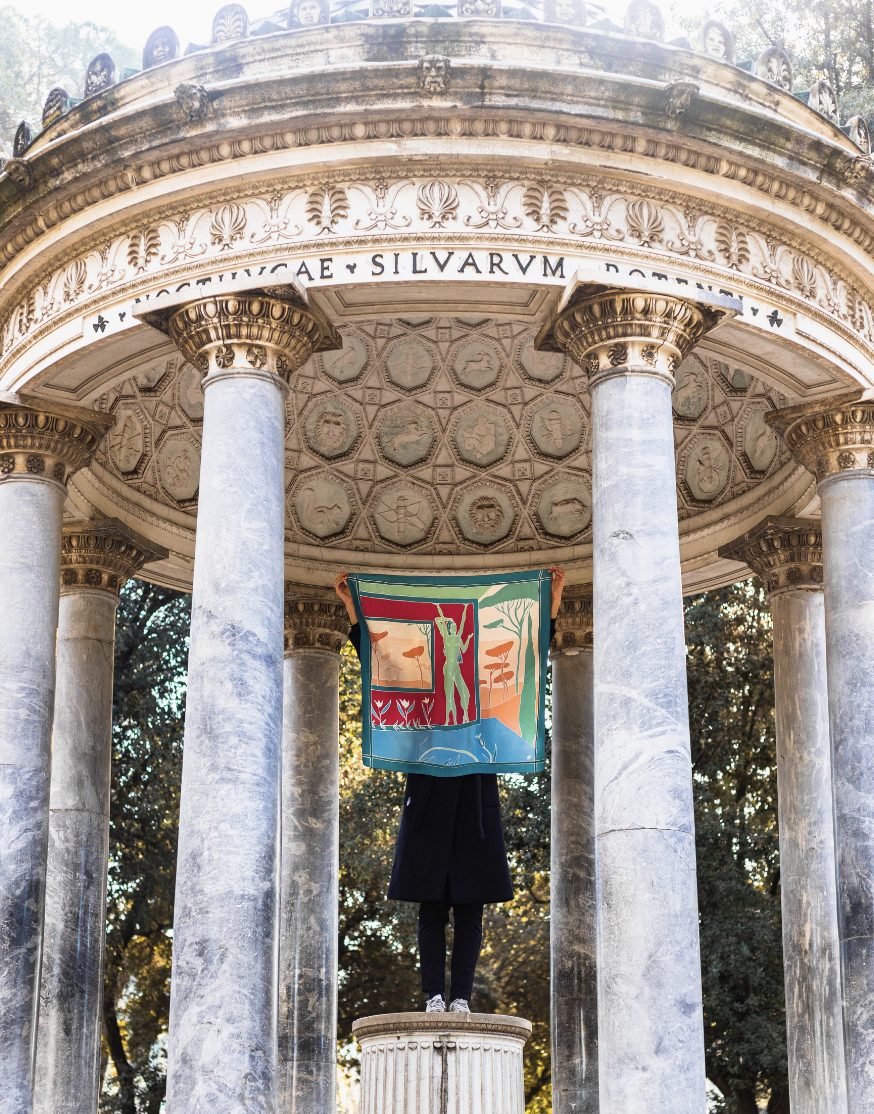
I imagined my first exhibitions in Rome—a city where every stone and every facade tells a story. There, heritage and architecture are not just a backdrop: they become a source of inspiration, a veritable showcase for contemporary art.
I firmly believe that art has this power: to transform the perception of a space, stimulate creativity, and enrich our everyday experience.
When art and architecture interact, something magical happens. We are no longer talking only about function, but about life, emotion, and presence.
I have had the opportunity to exhibit artists in very different venues—from private, intimate spaces to corporate headquarters.
But each time, the idea remains the same: to bring beauty into the places where we spend most of our time.
Because a place can be useful, yes... but when art is involved, it comes alive. And often it takes us by surprise. It amazes us.
3.What are your main missions today, and those of your gallery?
My role is twofold: on the one hand, to assist companies and individuals in selecting and integrating works that are suited to their space and identity; on the other hand, to support and promote artists by connecting them with projects that are meaningful to them and to the space.
Artistic strategy
1. How does integrating art into office spaces go beyond mere decoration?
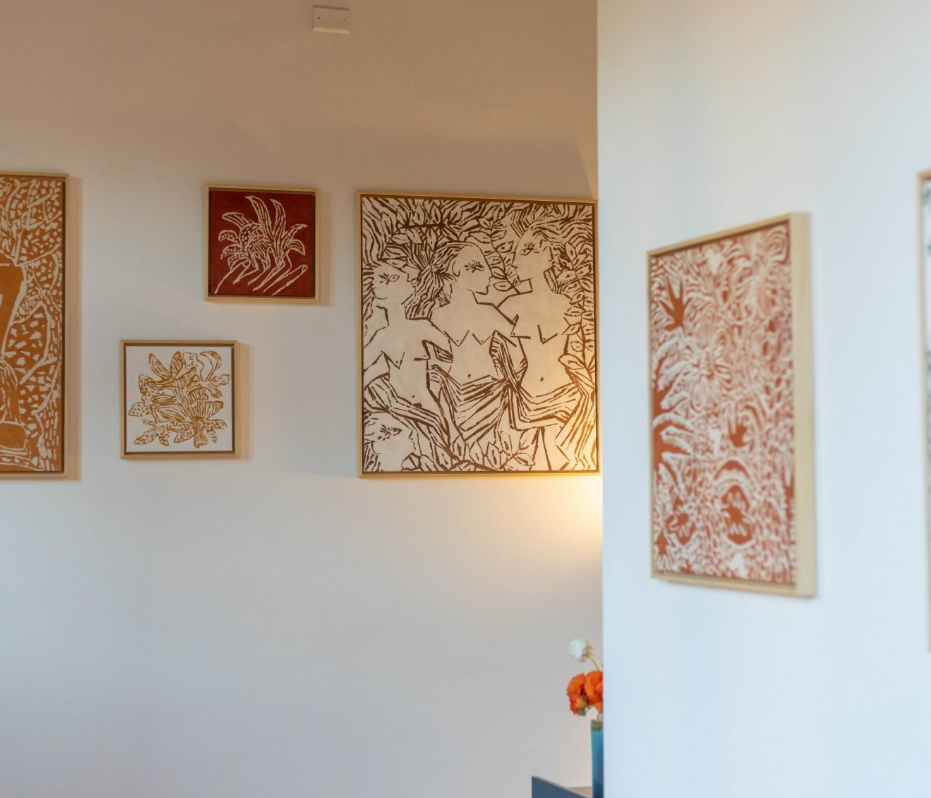
Art enhances workspaces. From an aesthetic point of view, art enhances spaces, creates a unique atmosphere, and gives soul to a workplace that is often too impersonal and standardized.
Art transforms the sensory and emotional experience of a place. It creates connections, arouses curiosity, and can even positively influence the creativity and well-being of employees. It's not just about "filling a wall," but about adding depth and meaning to the professional environment.
2. What are the essential criteria for selecting a work or artist for a design project?
The work must interact with the architecture, the history of the place, and the DNA of the company. But the artist must also have a sincere approach, and their proposal must open up a space for reflection or emotion for those who live or work in that place.
Art, architecture, and the identity of places
1. Your approach is closely linked to the architecture and history of the venues. How does this influence your curatorial work?
Each space has its own identity, proportions, and atmosphere. My job is to listen to these characteristics and find works that will complement them or create a poetic contrast. The history of the venue is an incredible source of inspiration for creating a rich dialogue.
2. How do you create a dialogue between a work of art and a company's identity, DNA, or architectural concept?
I always start by understanding the company: its culture, values, and positioning. Then I look for works that embody these traits and can enrich the experience of employees and visitors by playing with light, color, volume, and spatial layout.
3. Can you give a concrete example of a project where art has truly transformed the perception of a space?
For example, in a recent project for an innovative company, we created a masterful immersive work for their lobby in the form of a glass and brass suspension where the viewer can move around, losing touch with the real world, and place photographs on the walls of other spaces. These works change the perception of open spaces and relaxation areas. Employees begin to interact differently with their environment, and visitors are very surprised and enthusiastic.
CSR, commitment, and employee experience
1. L’art peut-il être un levier pour renforcer la culture d’entreprise et créer du lien entre collaborateurs ?
Absolument.
L’art, c’est avant tout un moyen de créer du lien entre les gens.
C’est un vecteur de rencontres, d’échanges, de conversations qu’on n’aurait peut-être jamais eues autrement.
Quand une entreprise intègre l’art dans ses espaces, elle offre à ses employés, à ses clients, à ses partenaires… une occasion rare : celle d’échanger autrement, de sortir du cadre hiérarchique, de parler d’autre chose que de chiffres ou de dossiers.
Parce que l’art, c’est un langage universel.
Il ouvre le dialogue, stimule la créativité, et favorise l’inclusion.
Une œuvre d’art devient un point de rencontre, un sujet de discussion, une source d’inspiration commune.
Et puis, il y a la rencontre avec les artistes.
Les échanges, les visites d’ateliers, les outils de médiation — tout cela rend l’art accessible, même à ceux qui se disent “pas initiés”.
On ne se contente plus de regarder une œuvre : on découvre sa technique, sa démarche, son intention.
Et c’est là que la magie opère.
Parce que ce moment partagé, entre émotion et curiosité, touche quelque chose de profondément humain.
Face à l’art, on se sent vivant.
2. Comment les entreprises peuvent-elles concilier mécénat artistique, responsabilité sociétale et attractivité de leurs espaces ?
Eh bien, tout commence par le sens.
En soutenant des artistes émergents ou locaux, d’intégrer des œuvres durables, éco-responsables, ou simplement de rendre ses espaces plus agréables, plus inspirants pour tous.
Et puis, rien ne remplace la rencontre : j’encourage souvent les entreprises à aller voir les artistes, à visiter leurs ateliers. Parce que c’est là que naît le lien, la compréhension mutuelle, et finalement, la fierté de s’associer à une démarche artistique.
L’art, c’est bien plus qu’un objet décoratif.
C’est une manière d’exprimer ce qu’est l’entreprise, ses valeurs, sa vision du monde.
C’est un investissement responsable, qui montre une ouverture d’esprit et qui, en plus, vous différencie clairement de vos concurrents.
Quand on entre dans un lieu où l’art est présent, on ressent immédiatement une identité, une atmosphère, un supplément d’âme.
Et puis il y a une vraie mission sociétale derrière tout ça.
Exposer des œuvres, c’est participer à la démocratisation de la culture, encourager la création, et offrir des émotions à ceux qui vivent ou travaillent dans ces espaces.
L’art apporte du plaisir, du bien-être… et souvent, un vrai boost de créativité pour les équipes.
Et cerise sur le gâteau : c’est aussi avantageux sur le plan fiscal.
une entreprise qui achète une œuvre originale d’un artiste vivant pour l’exposer au public peut déduire le prix d’acquisition de son résultat imposable.
À une condition : que l’œuvre soit visible gratuitement pendant au moins cinq ans, dans un lieu accessible au public ou aux salariés.
Autrement dit, c’est bon pour la culture, pour les collaborateurs, pour l’image… et pour les finances !
3. Avez-vous observé une évolution dans la manière dont les collaborateurs et les visiteurs perçoivent l’art au bureau ?
Oui, l’art est de plus en plus perçu comme un élément stratégique et non décoratif. Les collaborateurs apprécient les initiatives qui enrichissent leur quotidien et les visiteurs s’attendent à des espaces qui reflètent la créativité et l’identité de l’entreprise.
De plus, dans un cadre de travail, les cerveaux s’activent, calculent, organisent ; devant une œuvre d’art, ce sont les cœurs qui s’éveillent et les émotions qui parlent. Je pense que les collaborateurs et visiteurs ne peuvent qu’être sensibles à cette proposition qui peut peut-être toucher un peu leur âme.
Je vois de plus en plus d’intérêt dans les entreprises et professions libérales (cabinets d’avocats, médecins…). Certains des patrons sont déjà personnellement attirés par l’art quelquefois déjà collectionneurs. Ils aiment s’entourer d’art et cela dépasse la sphère privé pour s’étendre au domaine pro.
Collaboration with Parella
1. You are starting a collaboration with Parella on an artistic integration project. What appeals to you about this approach?
I was fortunate that Parella asked me to assist them with their art curation services for businesses. Their ability to create immersive and personalized experiences resonates perfectly with my vision: a project where art and architecture come together to transform space.
2. How do you see the complementarity between your expertise and that of Parella?
LDG Art & Patrimoine provides the artistic selection and knowledge of artists, while Parella masters the spatial experience and technical integration. Together, we can create coherent and impactful projects.
3. In your opinion, what does a well-thought-out artistic approach bring to a real estate or development project?
It enriches the space, creates an emotional connection, enhances the company's image, and offers users a unique experience that goes beyond pure functionality.
Trends & future of art in business
1. What major trends do you see emerging today in the integration of art into workspaces?
Immersive, interactive, or modular art that encourages participation and reflection; sustainable and responsible art; and collaborations with emerging artists to make each space unique.
2. How do you imagine the office of tomorrow in terms of artistic experience
?
As a flexible and lively place, where art evolves with usage, stimulates creativity and encounters, and becomes an integral part of the company's identity.
3. Finally, if you had to give one piece of advice to a company wishing to embark on an art curation project, what would it be ?
Take the time to understand your identity and that of your employees, then choose works that create a real dialogue with the space and the people who live in it. I can support them in their approach, from the choice of works to installation and communication.
Final question
If your gallery were a work of art, which one would it be?
I have a particular fondness for Alberto Giacometti's work "The Walking Man." With its elongated, frail, and almost fragile form, it evokes deep emotions related to the human condition. We perceive both the vulnerability, loneliness, and fragility of man, but also his silent strength and perseverance. Despite its apparent fragility, the sculpture exudes a subtle power: the man continues to move forward, reflecting resilience and courage in the face of adversity. This duality between fragility and determination creates an emotion that is both melancholic and inspiring, inviting contemplation and reflection on existence. An optimistic and meaningful work that has left its mark on art history.
It is also an immersive work that can be walked around, a sculpture that can be touched.
You may also like...