Are we really responsible?

If we point that out, are we responsible?

Specifications entail much more than one might think: Matteo Bonotto, Design Manager at Agilité, discusses what responsibility truly means in the real estate sector.

Specifications have always carried considerable weight in the construction industry. Drawings, bill of materials, and performance criteria determine what is manufactured, purchased, and installed. But in an industry facing increasingly tight budgets, fragile supply chains, and growing ethical scrutiny, a more difficult question lies behind the technical details: if we specify it, are we responsible for what follows? 

Earlier this year, Matteo Bonotto, Head of Design at Agilité, joined More The A Building’s NextGen group for a roundtable discussion on this very topic—and here are his key takeaways.

The honest answer is unsettling for many of us. Because responsibility doesn’t end with intent or documentation. It manifests itself in procurement discussions, design review meetings, on-site pressures, and, ultimately, in how a building functions and is treated long after it is completed.

The Specification: A Starting Point—Not an End in Itself

Sustainability is often defined right from the design phase—through material selection, carbon targets, and commitments to ethical sourcing—and, on paper, everything seems to add up. But in reality, that’s where accountability can start to fall apart. 

Program constraints shorten deadlines, costs fluctuate, products become unavailable, and, as a result, specifications are quietly scaled back—sometimes for reasons that seem justified at the time. Ethically sourced wood becomes a less expensive alternative. Locally sourced, handcrafted products are replaced by imported but readily available ones, because this “keeps things moving.” Responsibility is not measured by what we demand; it is measured by what we accept.

When sustainability, cost, and scheduling clash 

Of course, compromises are inevitable, and anyone who claims otherwise hasn’t completed a project recently. The question, then, isn’t whether compromises are made, but to what extent they are visible.  

All too often, the industry treats sustainability as an issue to champion in public but to negotiate discreetly in private. A more responsible approach is simpler, though less comfortable : honesty. If a product cannot be delivered on budget or on schedule, say so—early and clearly. Present the alternatives along with their real-world implications—such as cost, carbon footprint, sustainability, and working conditions—and enable informed decision-making. 

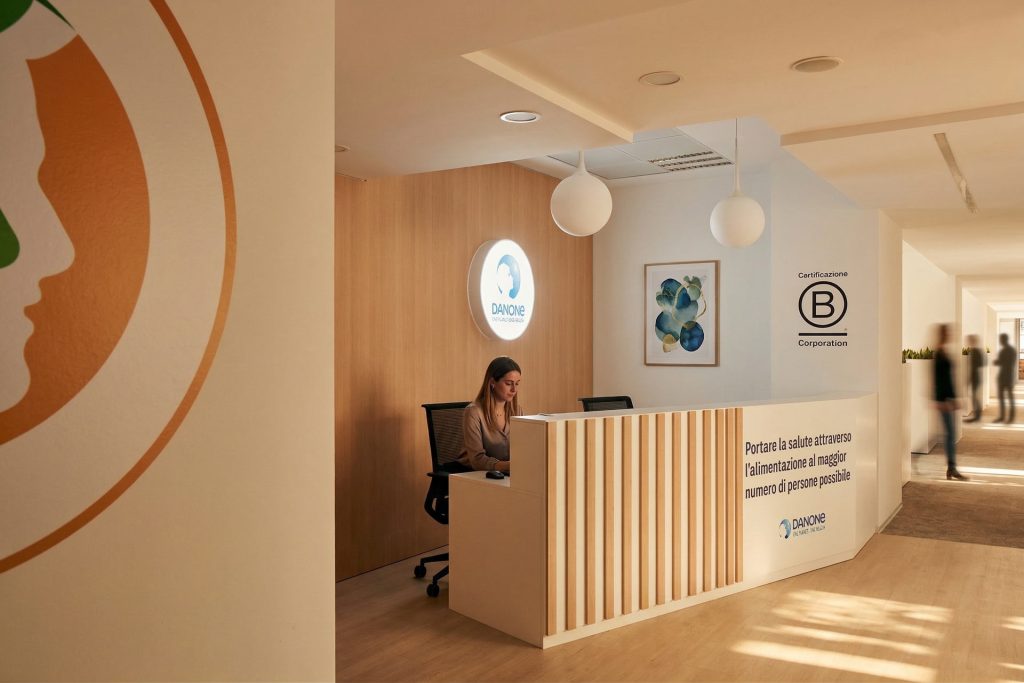
In recent years, certification standards such as B Corp have gained prominence across the industry. When misused, they can be reduced to little more than a token of virtue, but when used wisely, they offer something far more valuable: a way to frame decisions when conflicting pressures come into play. 

The most valuable contribution of frameworks like B Corp isn’t a logo for your website, but the establishment of a discipline focused on asking better questions and striving for continuous improvement. Who bears the risk further down the supply chain? What happens if this material fails prematurely? Are we optimizing for short-term delivery or long-term performance? Who benefits from this decision, and who bears the negative consequences? 

It is important to note that these issues apply just as much to procurement and supplier relationships as they do to the selection of materials. Responsibility is not limited to certificates; it is reflected in behavior, contracts, and the way responsibilities are allocated.

A shared responsibility, not a blame game

The industry has a deeply ingrained tendency to shift responsibility down the chain. The client looks to the designer. The designer looks to the company. The company looks to the supplier. When a problem arises, responsibility is so diluted that no one feels capable of—or obligated to—take action.

At Agilité, we believe in shared influence and responsibility. Designers define the scope of possibilities. Clients set the priorities. Companies translate choices into action. Suppliers determine what can be delivered responsibly. No one controls the outcome alone, but everyone helps shape it. Recognizing this changes the nature of the conversation: teams stop looking for someone to blame and start asking how to make it work in practice.

Suppliers: Partners in Knowledge, Not Just in Supply

If liability extends beyond the statute of limitations, suppliers can no longer be pushed to the bottom of the chain. They are key players who possess valuable knowledge: they know where social risks lie, what deadlines are realistic, and which certifications are robust and which are purely cosmetic. But they must feel empowered to speak up.

If every issue raised is perceived as a weakness or a business risk, suppliers will quickly learn to say what we want to hear. Conversely, early engagement, clear expectations, and open communication allow problems to be brought to light while there is still time to act.

With this in mind, Agilité organizes supplier forums at each of its European locations: spaces where companies and suppliers can freely discuss opportunities, challenges, ideas, and feedback.

Lifespan: A Key Aspect of Sustainability

The most persistent sticking point in the specifications is time. A project can boast excellent environmental metrics yet still be deeply wasteful if it is designed to be dismantled in three to five years. Conversely, simple materials chosen for their durability and adaptability can prove far more sustainable than options marketed as more “sustainable.”

Designing for adaptability, disassembly, and reuse is not a marginal option; it is a matter of fundamental responsibility. If we know that a space is bound to change, to freeze it in place permanently—or in a way that destroys value during transformations—is to betray the very intent of the project.

So, are we responsible? Most likely, but not in the sense that the question is often asked. It is not the act of prescribing a product that makes us responsible. It is failing to track its journey, allowing substitutions to go unnoticed without reacting, accepting compromises without acknowledging them, or designing spaces without considering their use, their evolution, or their end of life.

The specification has an impact. Responsibility lies in how it is exercised: collectively, transparently, and with an eye to the realities on the ground. The sector does not need more grand statements or more elaborate documents. It needs more candid conversations about what really happens when intentions collide with reality.

Because, ultimately, responsibility isn’t demonstrated by what we say we want to build, but by what we’re willing to defend when the pressure mounts.

You may also like...

Company removals: mistakes to avoid to optimize your budget
- A company move is a strategic step that involves significant costs and organization...
La Bonne Bulle® (The Good Bubble)
- A game designed and developed by Parella Group to provide companies with a fun way to learn...
Workspace Expo 2026
As the leading European event for the office sector, Workspace Expo brought together manufacturers, ... from March 24 to 26,

Milan Design Week 2026

MILAN DESIGN WEEK 2026

Milan Design Week once again transformed Milan into its creative laboratory from April 20 to 26, 2026.

Milan Design Week, a must-attend global event for design and interior architecture, once again transformed Milan into a creative hub from April 20 to 26. Over the course of a week, architects, design firms, luxury brands, and commercial real estate professionals gathered to explore new trends in interior design and workplace environments.

As they do every year, the Parella teams traveled to Milan to identify the trends that will shape the offices and workspaces of tomorrow. From Brera to Tortona, this 64th edition confirms a major shift: materials, storytelling, and emotion are becoming the new cornerstones of workplace design.

Trends that are transforming workspaces.

SPATIAL DESIGN AS A STORYTELLING TOOL

Throughout the city, historic swimming pools, cloisters, apartments, and palaces have been transformed into immersive experiences that blur the lines between art and interior design. At Hermès, Gucci, Loewe, and Loro Piana, the installations did more than simply decorate the spaces—they told a story.

Gucci showcased 105 years of history in the cloisters of San Simpliciano through monumental tapestries. Aesop transformed a church into a luminous architectural space, while Margraf, in collaboration with Hannes Peer, recreated an apartment made entirely of marble, bathed in light and water.

An approach that directly addresses the new challenges facing workspaces: today, an office no longer serves just one purpose; it must foster a culture, evoke emotion, and strengthen a sense of belonging.

COLORS AND IDENTITY: TOWARD MORE EMOTIONAL SPACES

Carmine red, deep lilac, olive green, or Klein blue: vibrant colors were everywhere, breaking with the neutral color schemes that had long dominated offices and commercial spaces.

Promoted by brands such as Dedar, cc-tapis, Pierre Frey, and Élitis, they have become powerful drivers of identity and employee experience. Color brings warmth, contrast, and personality to work environments, while fostering more inclusive and engaging spaces.

Sustainable materials and reuse at the heart of design
The “A Matter of Salone” campaign explored the origins and impact of the materials used in objects and spaces. Reclaimed wood, artisanal ceramics, bio-based composites: the materials told the story of the object just as much as its form.

The Salone Raritas section, dedicated to limited-edition pieces that blend design and fine craftsmanship, has reinforced this trend. Reuse, responsible sourcing, and sustainability are no longer secondary concerns; they have become central criteria in the design of spaces.

THE CREATIVE PROCESS BEFORE THE PRODUCT

Under the theme“Essere Progetto”(translated as “Being the Project”), design was shown in motion: prototypes, sketches, and raw materials took center stage over finished objects.

This is a philosophy we share at Parella. The best interior design projects always result from close collaboration with users, with the goal of creating workspaces that are efficient, sustainable, and aligned with the company’s culture.

WHAT PARELLA TAKES AWAY FROM MILAN DESIGN WEEK 2026

These trends directly inform our approach to workplace strategy, office transformation, and space design.

Every project now raises the same questions: Does this space evoke emotion? Does it foster connection and a sense of belonging? Do the materials chosen reflect a commitment to sustainability?

From real estate strategy to space design, Parella helps companies create work environments that are more distinctive, engaging, and sustainable.

And we can’t wait to write this new chapter in design together with you.

You may also like...

THE LENGTH OF STAY IN COMMERCIAL INTERIORS
― For years, dwell time has been a familiar indicator in retail.
How to negotiate a commercial lease in 2024?
- Against an economic backdrop marked by rising interest rates, changing working patterns...
Parella in Copenhagen for 3daysofdesign 2025: KEEP IT REAL
- Like every year, Parella was in Copenhagen for the 3 daysofdesign, a not-to-be-missed event...

Workspace Expo 2026

Workspace Expo 2026

The Workspace Expo, a leading European event for design and interior design, once again lived up to expectations from March 24 to 26.

Over the course of three days, the event brought together the entire ecosystem—visionary manufacturers, bold designers, technical experts, and strategic decision-makers—to shape the office of tomorrow. Against a backdrop of constantly evolving attitudes toward work, this edition highlighted concrete solutions that combine collective performance, individual well-being, and an increasingly refined aesthetic.

As we do every year, the Parella teams were on hand to explore these new frontiers in commercial real estate. Our presence is essential to decipher the transformations underway, pick up on emerging trends, and test the innovations that will fuel our future projects. Fully immersed in the latest trends, we refined our perspective on sustainable solutions and collaborative technologies, with a clear goal: to continue guiding our clients toward workspaces that are no longer merely places of transit, but true destinations with high added value.

The takeaway: The history of the office needs to be rewritten.

It’s becoming clear what employees are looking for in the office: learning, connecting, and creating together.

1. AI is reshaping work; the office fosters community
AI automates, accelerates, and takes over certain tasks. What it cannot do, however, is foster community. The office remains the place where collective intelligence is built, where knowledge is shared through physical presence, and where social connections cannot be delegated to a tool.

2. The Learning Space: A Central Focus
While the office should foster learning, it must also create the right conditions for it. In an environment where demands are constant and the flow of information is continuous, concentration has become a challenge in itself. Acoustics, booths, quiet zones, air quality: these factors, prominently featured at the trade show, are what make the office a place where people can truly learn.

3. A space where everyone feels at home
Disabilities, mental load, sensory sensitivities, and the need for solitude: inclusion in the workplace goes far beyond what meets the eye. Between 15% and 20% of the population has a neuroatypical profile. For these employees, the work environment can make all the difference.  Designing with everyone in mind from the start means creating a better space for everyone—a place where people feel safe, at home, and fully able to work.

4. Circular Furniture: From Concept to Practice
A section dedicated to the circular economy confirms that reuse is here to stay. Secondhand furniture, recycled materials: responsible sourcing is now integrated from the design stage.

For Parella, these findings directly inform our recommendations.

What we’ve seen fuels the questions we ask ourselves with every project: Is this space designed for learning, connecting, and growing?

From real estate strategy to space design, from project management to change management, we are involved at every stage of your project, guided by a steadfast belief: a well-designed space is a driver of performance and culture.

And we can’t wait to write this new chapter of our office’s story together with you.

You may also like...

Milan Design Week 2025
- Every year, Milan Design Week reinvents the way we perceive space, materials and uses....
Changing employee expectations regarding their work environment
― The world of work is undergoing a profound transformation, driven by the rise of remote work, digitalization...
Olympic & Paralympic inspirations
- This weekend I received my souvenir tickets for the Olympic and Paralympic Games.

Neurodiversity in Design

Neurodiversity in Design: How the Workplace Is Adapting to Its Employees

For years, workplace design has emphasized collaboration, culture, and experience.

More recently, he has turned his attention to well-being, flexibility, and choice. But one of the most important debates regarding the built environment is just beginning to gain traction: neurodiversity. Andrew Zacharias, National Director of Agilité Luxembourg, explores this topic in greater detail.

According to the CIPD, neurodiversity refers to natural differences in how the human brain functions and in behavioral traits, and estimates suggest that up to 20% of the population may exhibit some form of neurodiversity. Meanwhile, BSI’s PAS 6463 standard, the UK guide on neurodiversity and the built environment, clearly states that design must meet the needs of a neurodiverse society and create places that are “more inclusive for everyone.”

Workstation | Workspace Design Show 2026

Rethinking the Workplace: Why Is Neurodiversity So Important Today?

This last point is important because neurodiversity in the field of design is often portrayed as a niche issue, or a topic that concerns only a specific minority group. In practice, this frame of reference can be part of the problem. It makes the subject seem too specialized before people have even had a chance to understand it.

What is clear, both in research and in practice, is that it is not simply a matter of designing for a label. It is a matter of designing for people as they truly are: different from one another, different from one task to the next, and often different from one day to the next.

Create work environments that reflect the way people actually work

Offices have traditionally been designed according to a one-size-fits-all model, but many of the features now associated with neuro-inclusive design—such as quieter zones, clearer spatial cues, improved acoustics, and a wider range of layouts—benefit far more than just a single group of users.

This is consistent with the available data. Research on workplace design has repeatedly shown that there is no such thing as a truly “off-the-shelf” office, and that personality, preferences, and tasks all influence how people perceive a space and work within it. A 2018 research collaboration between the University of Bath, Bath Spa University, and Atkins specifically supported this thesis, highlighting that different spatial and environmental qualities—including density, views, and noise levels—shape the experience in different ways, and that activity-based environments can help support different tasks and user profiles.

Perhaps the best place to start, then, isn’t “How can we design for neurodivergent people?” but “Why have we accepted workplaces that require everyone to work under exactly the same conditions?”

Open-plan offices are a good example. For certain tasks and certain personalities, they can foster energy, interaction, and visibility. For others, they are a constant source of distraction that hinders concentration. A recent systematic review of 55 studies (Design Research Society Digital Library) found that background noise and open-plan workspaces have a negative impact on workplace well-being, while views of plants and natural elements can improve it. Another 2025 study of 971 employees working in activity-based offices found that a greater sense of task privacy, a better fit between the individual and their environment, higher satisfaction with the work environment, and greater ease in changing workspaces were associated with better recovery, greater work capacity, a lower risk of burnout, and fewer symptoms of insomnia.

This helps explain why the debate over neurodiversity in design is gaining momentum today—not in isolation, but alongside broader questions about the future of the office itself. Since the pandemic, organizations have spent a lot of time wondering how to encourage people to return to the workplace. Generally, this debate centers on collaboration, hospitality, and community. These elements are important. But they are not the whole answer.

People don’t come to the office just for the atmosphere. They come for different reasons, depending on the day. Sometimes they need to connect with others. Sometimes they need to focus. Sometimes they need a sense of belonging. Sometimes they need a quieter place than their home. Sometimes they need a quieter place than the office where they already work.

That is why neuro-inclusive design should not be reduced to a simple list of technical specifications. It is not simply a matter of adding a rest room and considering the job done. It is about recognizing that everyone perceives space differently, and that good design offers them multiple ways to thrive within that space.

The BSI’s PAS 6463 standard reflects this diversity. It covers lighting, acoustics, thermal comfort, and wayfinding, but the fundamental principle is that poorly designed environments can cause avoidable stress and exclusion, while the best ones reduce friction and facilitate participation. This is not just a social argument; it is also a business argument. The World Health Organization notes that safe and healthy work environments are more likely to minimize workplace tensions and conflicts and improve staff retention, performance, and productivity. The CIPD also highlights the importance of neuro-inclusion for well-being, performance, and retention.

This is where the topic becomes particularly interesting from a conceptual standpoint. Because once we stop viewing it as merely an addition to inclusion, it begins to refine the entire set of specifications.

From Compliance to Experience: A New Approach to Inclusive Design

Workplace Lighting | Workplace Design Expo 2026

Lighting is no longer just a matter of compliance and lux levels. It is now about control, glare, contrast, and the impact of different types of light on attention and fatigue. Acoustics is no longer a secondary technical consideration. It is now essential for enabling people to think effectively. Wayfinding is not limited to signage. It is about reducing cognitive load and making a space legible. Space planning is not just about density and headcount. It is about offering both a refuge and opportunities for interaction, predictability, and stimulation.

If we collectively accept that different tasks require different environments, and that hybrid work has changed employees’ expectations regarding autonomy and concentration, it follows that the most resilient workplaces will be those that offer people more choice, greater clarity, and less unnecessary stress. This is certainly a good thing for neurodivergent colleagues. But it’s also beneficial for the finance manager trying to work on numbers without being interrupted, for the project team reviewing plans in a lively group setting, or for the person who simply arrived that morning feeling overstimulated.

This distinction is important because it shifts our perspective away from viewing design as something intended for a small group of people, and instead sees it as a response to the reality of human diversity. Our moods change. Our tasks change. Our abilities change. We are not robots, and our workplaces should stop acting as if we were. Some people prefer to be in the thick of things, others need a quieter environment, and many of us shift between these states depending on the day and the task at hand.

One of the challenges for clients is that neuro-inclusive design is ahead of the market in some respects. The intent is there, but the data is only just beginning to emerge. Compared to sustainability, where benchmarks and cost overruns are better understood, neurodiversity in design can still feel like venturing into uncharted territory. Clients understand the logic behind it, but it is harder to quantify the return on investment in the same way when the outcomes are human, behavioral, and long-term.

That is why this discussion is so important to us today. We are working on a major project in Luxembourg where neurodiversity is not an afterthought, but a fundamental design principle. This is already changing the nature of the questions we ask—and rightly so. Not “What does a standard office look like?” but “What kind of environment helps more people perform at their best?” Not “What is the bare minimum we need to provide?” but “How can we design a workplace that is intuitive, supportive, and accessible to as many people as possible?”

In fact, this is a question that strikes me as particularly relevant to the future of work, because in reality, the office is no longer just competing with other offices, but also with the home, autonomy, comfort, and people’s growing willingness to say—quite reasonably—“This environment isn’t right for me.”

What I’ve learned over the past few months is that neurodiversity in design isn’t about creating special accommodations, but about taking into account what people have been telling us—both directly and indirectly—for years: the environment shapes behavior, concentration, mood, and a sense of belonging.

Workplaces that take this reality into account will not only be more inclusive; they will be better.

You may also like...

Flexibility in your rental commitments
- Do you know how many m² will be needed to support your growth in 3, 6 or 9 years' time?
the Climate and Resilience Act
- Adopted in 2021, the Climate and Resilience Act imposes new environmental requirements on companies,...
Anticipating the future of office design
― At Parella, we have always sought to design spaces that not only meet the needs...

OFFICES DESIGNED TO PROMOTE WELL-BEING

Why "dwell time" has become the new currency in commercial interiors

Hybrid work has transformed offices across Europe.

Most organizations now accept that employees don’t come to the office simply because the space exists, but because it offers them something worth the trip. As a result, “time spent in the office” has quietly become one of the most revealing indicators in workplace design.

However, it is not a question of keeping employees on the premises longer, but of understanding why they stay there.


interior view of the grand palais, white wall, central canvas

Before 2020, the office was a default location. Today, it is a destination with a specific purpose. Employees choose to go there when this space allows them to accomplish tasks that they cannot do as effectively at home, such as collaboration, socializing, team building, and intense concentration without domestic distractions.

Attendance time reveals when these needs are being met. For example, if colleagues arrive for a meeting and leave immediately, the workplace does not seem to be suited to ongoing engagement. If people linger after face-to-face sessions to have an informal coffee or use the office as a space for reflection, you can be sure that the environment is fulfilling its function.

© Ceremony of Roses Offices by 22RE

What motivates people to linger in modern workplaces?

In short, it's a combination of environmental, emotional, and social factors, which may include: 

  • Comfort and calm – Acoustics that promote privacy, natural (rather than clinical) lighting, and spaces that reduce the fatigue associated with being "always connected."

  • Sense of belonging – Design that reflects identity and culture (colors, materials, and layout) is an excellent way to encourage people to linger by giving them a sense of belonging.
  • Flexible zones – Relaxation areas, quiet corners, reading corners, creative spaces, and project rooms that can adapt to the needs of a hybrid workforce are essential.


  • Analog balance – Tactile and sensory materials that compensate for intensive screen work take the form of natural textures, soft surfaces, and even biophilic moments.


  • Micro-hospitality – Coffee areas should not be an afterthought, but a place that encourages conversation and relaxation. Careful consideration should also be given to the types of seating, as their comfort can make all the difference between staying and leaving.

Well-being at work has evolved from a simple perk to a goal in its own right, with neuroscience and environmental psychology constantly highlighting the impact of materials, light, acoustics, and sensory comfort on cognitive performance and emotional well-being. If the office does not promote well-being, employees will not linger there and will not want to return day after day.  

Even the best workplace strategy can fail if its implementation is poor. That's why organizations that design their spaces with the goal of fostering intentional presence, rather than achieving attendance targets, will naturally create spaces that attract people for the right reasons.

This theme is explored in our latest guide, written in collaboration with IA, entitled "Designing for Well-Being: Why Time, Trust, and Tangibility Define the Next Generation of Interiors." 

© Ceremony of Roses Offices by 22RE

You may also like...

Healthy office: the impact of space on employee health
- Today , many companies are focusing on healthier workspaces - and they're right...
Global Design
- Our mission: to reveal and distill the extra soul emanating from your brand, your DNA and your...
PARIS ART WEEK 2025
― Our teams immersed themselves in an inspiring ecosystem, rooted in our daily lives in the 8th arrondissement...

Parella Paris appoints a new Partner

Parella Paris appoints a new Partner

Parella, a leading player in the field of real estate consulting and professional space planning, announces the appointment of YounesAlla as Partner in its Paris office.

"At Parella, our partnership model is based on high standards, long-term commitment, and a strong belief that the most successful careers are built over time. We take real pleasure in seeing talented individuals like Younes Alla grow, expand their areas of responsibility, and become partners within our organization. This internal dynamic is not exclusive: it is greatly enriched by the regular arrival of new partners from outside the firm, who bring complementary perspectives and new expertise and fuel our capacity for innovation. It is this harmonious coexistence of continuity and openness that makes our collective so strong and unique," explains Olivier Neuman,President of Parella.

YOUNES ALLA

Younes joined Parella France's Workspace department in 2015, after building his career at several architecture and project management firms (including SCAU and JLL). Since then, he has played a key role in the completion of numerous commercial projects, including several complex and iconic operations, carried out on vacant and occupied sites, on existing buildings and buildings under construction.

His mastery of technical, strategic, and architectural issues, combined with a global vision of the project, has enabled him to establish himself as a leader in the management of projects as a general contractor (design and build), project manager, and project management consultant. His high standards, team spirit, and ability to secure projects for clients in all sectors make him a natural partner to support the development and excellence of the Workspace division.

You may also like...

Flex office, coworking, teleworking: what impact on the real estate market?
- Working patterns are changing at an unprecedented pace, influenced by the rise of telecommuting, the...
Post-Covid office layout
- Today's offices don't look like those of yesterday. The health crisis has profoundly transformed...
Changing employee expectations regarding their work environment
― The world of work is undergoing a profound transformation, driven by the rise of remote work, digitalization...

THE LENGTH OF STAY IN COMMERCIAL INTERIORS

Why "dwell time" has become the new currency in commercial interiors

For years, dwell time has been a familiar metric in the retail industry—a simple equation that links “time spent” to “probability of purchase.”

Recently, however, dwell time has evolved into something much more powerful: a measure of emotional connection, comfort, and a sense of belonging.

Photo with a gray sofa and a red armchair, with a wooden coffee table in the center, topped by flowers in a glass bottle.

Over the past decade, environments have been optimized for speed. Seamless digital journeys, one-click transactions, agile workplaces. Yet human behavior has changed, and consumers and colleagues alike now seek spaces that allow them to slow down while offering respite, a tactile dimension, and room to form authentic connections.


Length of stay
© Ceremony of Roses Offices by 22RE

As highlighted in Deloitte's study on consumer trends for 2025, people are increasingly drawn to sensory and analog experiences that counterbalance digital overload. For example, retail is shifting from an organizational layout to experiential flagship stores that encourage exploration and social interaction. We are seeing workplaces rethink their purpose, with time spent on site becoming an indicator of engagement, belonging, and well-being. And the hospitality industry, which has always been the benchmark for emotional connection, continues to shape expectations for comfort, attention, and service design.

However, living space is not solely the result of design, but rather the result of design and execution: the quality of the woodwork, the responsiveness of the lighting, the acoustic comfort, and the comfort underfoot. And to top it all off, trust between architects, clients, and contractors is the secret ingredient that ensures that the vision is transformed into a lived experience.

Square footage, financial plans, and schedules remain essential, but the spaces that will succeed are those that respect people's time and will be rewarded with more time. To learn more, check out our latest guide, "Designing for Well-Being: Why Time, Trust, and Tangibility Define the Next Era of Interior Design." 

You may also like...

Outlook and transformation of the Spanish labor landscape
- The labor landscape in Spain, as elsewhere in Europe, has undergone a number of changes in recent years...
Milan Design Week 2025
- Every year, Milan Design Week reinvents the way we perceive space, materials and uses....
How does well-being at work boost productivity and talent retention?
- In a world where innovation and competitiveness are essential, well-being in the workplace must not...

WHY SOME STORES KEEP CUSTOMERS

Why retailers design stores that customers want to linger in

For some major retail chains, the time has come to enter a new era.

While online shopping wins out in terms of speed, brick-and-mortar stores win the battle for the customer experience, because today, the most successful stores aren’t the fastest or the ones with the highest transaction volumes, but the ones where customers choose to linger.

Time spent in a store has long been associated with conversion in terms of sales, but its role now extends to measuring emotional connection, brand memory, and sensory satisfaction. When customers linger, they explore more, engage more deeply, and, most importantly, want to come back.

Retailers recognize that people don't just want "things"—yes, sometimes people go to a store to buy something specific and leave right away—but often, shoppers take advantage of the opportunity to spend the day and seek out environments that evoke emotions.

Stores retain customers
© Berg & Ridge Helsinki Office by Fyra Design Agency

It is this emotional resonance that determines the amount of time spent in the store, but what tools and tactics can we use to create such a feeling? 

  • Materiality and atmosphere – Natural finishes, warm lighting, and soft acoustics give the impression that the spaces were designed with care rather than built for commercial purposes.

  • Breaks – Moments to sit down and breathe, or a stroll through the store that encourages customers to linger quietly and admire the carefully arranged displays.
  • Sensory balance – Scents (even outside the store), touch, quiet areas, and visual clarity can all help counterbalance digital overload.

  • Telling a story through space – Brands that express their identity through materials, layout, and product display create environments that feel meaningful rather than generic.

  • Influence of the hotel industry – From attentive service to comfortable spaces where customers can take a break, the retail sector draws much of its inspiration from the hotel industry.

Of course, the living room is not only a design challenge, it is also a delivery challenge, and commercial interiors must meet higher standards in terms of finish, durability, and consistency to ensure that the atmosphere remains welcoming long after opening day.  

With every detail contributing to the emotional ambiance of the store, spaces that provide a sense of well-being are prime candidates for becoming part of shoppers' daily habits and weekend rituals. So much so that it could be argued that time spent in-store is no longer about retaining customers, but about earning a place in their lives.

This theme is explored in our latest guide, written in collaboration with IA, entitled "Designing for Dwell(being): Why time, trust, and tangibility define the next era of interiors."

You may also like...

Flex office, coworking, teleworking: what impact on the real estate market?
- Working patterns are changing at an unprecedented pace, influenced by the rise of telecommuting, the...
Commercial or professional lease: which should you choose for your business?
- When starting up or expanding a business, choosing the right lease for your premises is a key step that...
Olympic & Paralympic inspirations
- This weekend I received my souvenir tickets for the Olympic and Paralympic Games.

THE RISE OF ANALOG SPACES

The Rise of Analog Spaces: Why the Future Seems More Human

The past decade has been marked by the rapid advancement of digital technology. Artificial intelligence, automation, and virtual environments are transforming the way we work, shop, and socialize, but as the world speeds up, the places where people gather are slowing down.

From trowel-applied plaster to natural light and imperfect textures, analog details have become a hallmark of quality. People are tired of seamless spaces that all look the same. They want contrast, authenticity, and a tactile experience.

A bright living room featuring a sculptural, organically shaped central table, surrounded by white armchairs and a floating light fixture, all set against a refined Parisian backdrop.

Harvard’s Healthy Buildings team notes that sensory richness is closely linked to well-being, cognitive focus, and emotional satisfaction—all indicators of the kinds of environments where people want to spend time. But why is the analog experience so important today?

The answer may lie in its ability to:

  • Keep people grounded in reality


  • To provide a sensory contrast to life spent in front of screens


  • Reduce cognitive fatigue


  • Encourage presence and taking breaks


  • Create emotional memories.
A view of an artistic pendant light made of amber-colored glass pebbles, suspended in front of large windows overlooking Haussmann-style facades.

In retail, this often translates to minimalist, honest materials, while in workplaces, we see warm, comforting finishes, soft acoustics, and nature-inspired design. In the hospitality sector, this has long been the norm. The common theme, however, is that in 2026, analog isn’t nostalgic—it’s essential.

And this is the theme that runs throughout our latest guide, written in collaboration with AI, “Designing for Dwell(being): Why time, trust, and tangibility define the next era of interiors.”

You may also like...

Company removals: mistakes to avoid to optimize your budget
- A company move is a strategic step that involves significant costs and organization...
Are we really responsible?
― Specifications involve much more than one might think: Matteo Bonotto, Design Manager at Agilité, discusses...
Conflict-free real estate consulting
- Parella has placed the end-user at the heart of its business model. Through its three divisions...
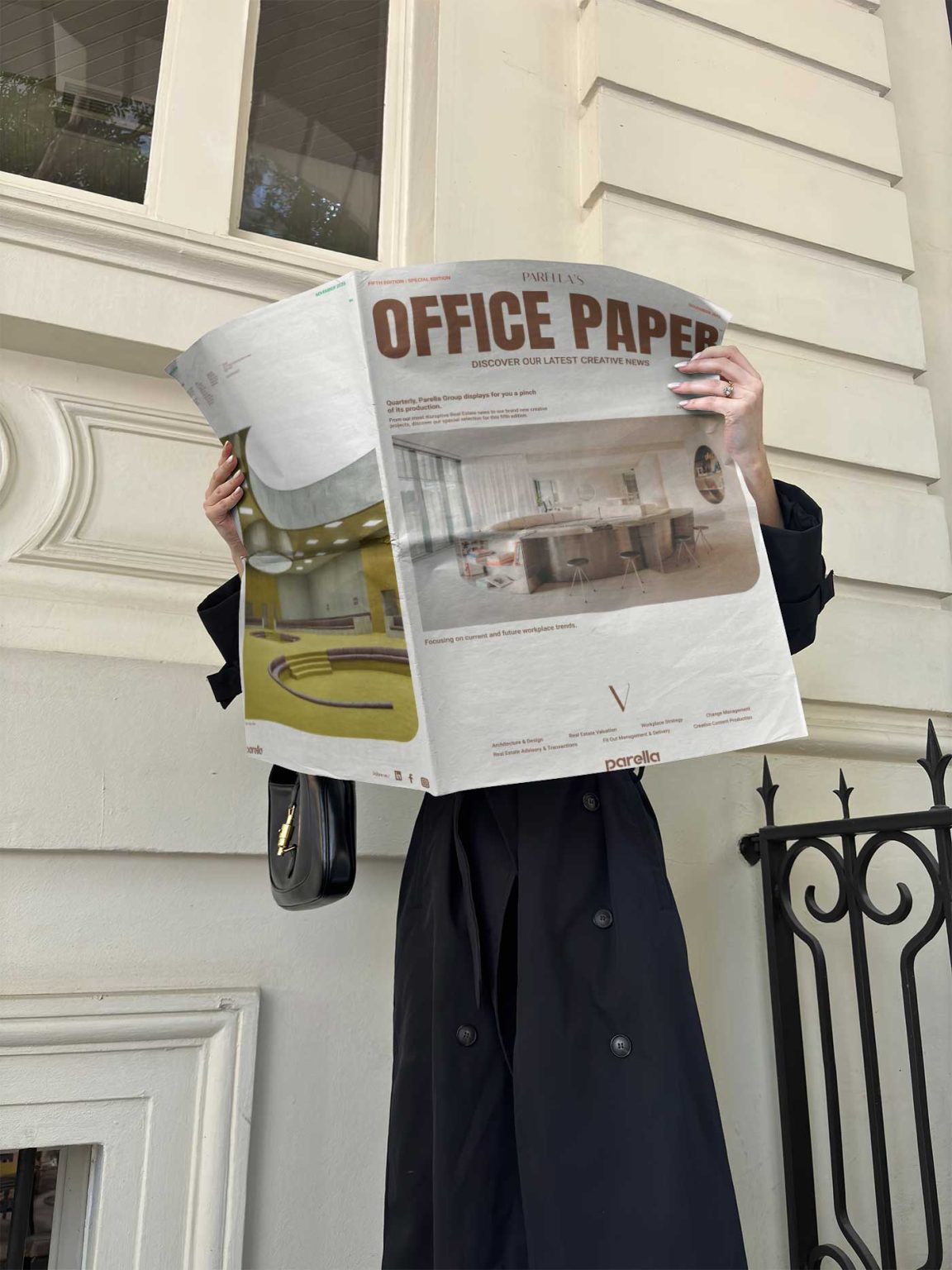
Article Office Paper

OFFICE PAPERS

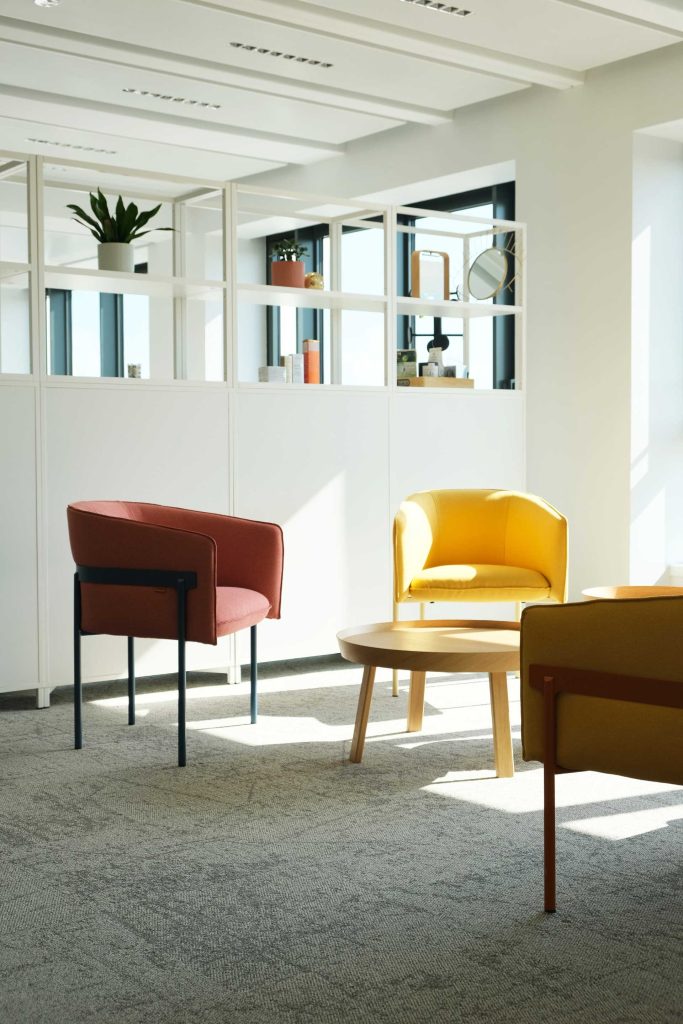
Small living room with red and yellow armchairs, light wood coffee table, at NAOS, by Parella

THANK YOU

Your message has been sent.
We'll get back to you shortly!