

Active Design

Active Design: Environment, Health, or Enjoyment: How Does Active Design Engage Employees?

In the run-up to the Olympic Games, some of our customers are wondering about the benefits of Active Design in their workspaces, a method that encourages people to act naturally.

While this practice has been commonplace on our streets for some years now, as a way of combating sedentary lifestyles, it is now taking root on the premises of some companies.

Can it, beyond mobility, move the lines and instill new, more virtuous practices?

For the environment, health or just for fun, how can premises help to carry the environmental commitments, QWL or values of organizations, while taking care of their employees?

Eric Vermande, Image and Style Director and Diane Mendes, People & Transformation Manager, took an interest in the subject.

Eric Vermande, Image & Style Director

Éric Vermande

Image & Style Director

Diane Mendes, Manager People & Transformation

Diane Mendes

People & Transformation Manager

Active Design, the path to new uses (at full speed)

Who hasn't preferred to climb the stairs in the metro rather than take the escalator, seduced by a playful, colorful or interactive challenge? These messages of calories burned, rewarding or educational, even if they make us smile, urge us to act.

Active Design will be able to accompany companies' key messages on a day-to-day basis. It can help all organizations in their practices. CSR implementation, for example. Active Design can help in this direction.

Beyond this, we can imagine pathways contributing to well-being (QCVT), instilling values (employer branding), or new ways of working (flex-office). Active Design is really about the natural adoption of practices whatever they may be.

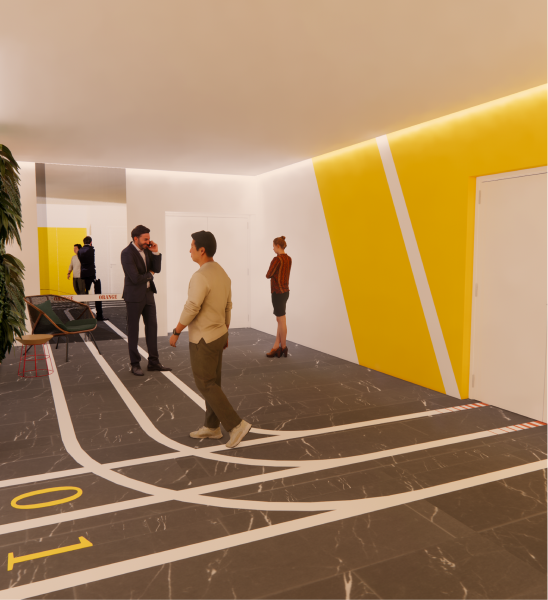
To combat sedentary lifestyles, Active Design has mainly developed around solutions encouraging sport. However, although athletics tracks are appearing in corridors, their role is to create routes, designed to activate employees in a natural way.

However, the aim is not to get them to run around in suits and arrive at meetings with wet shirts. Physical activity is one of the levers, but not the only one. Brain activity is just as important.

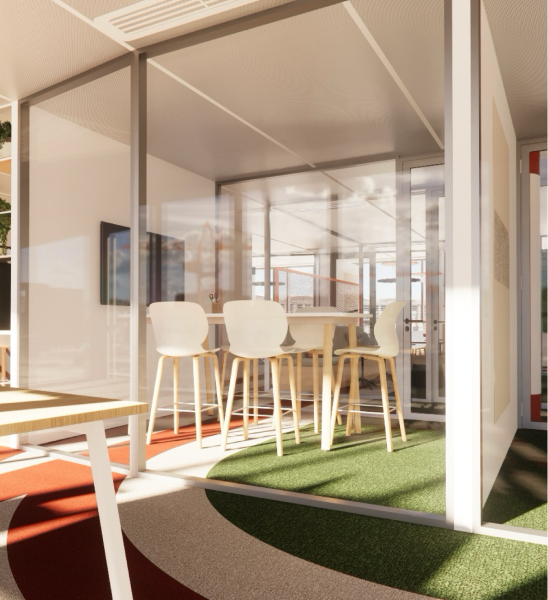
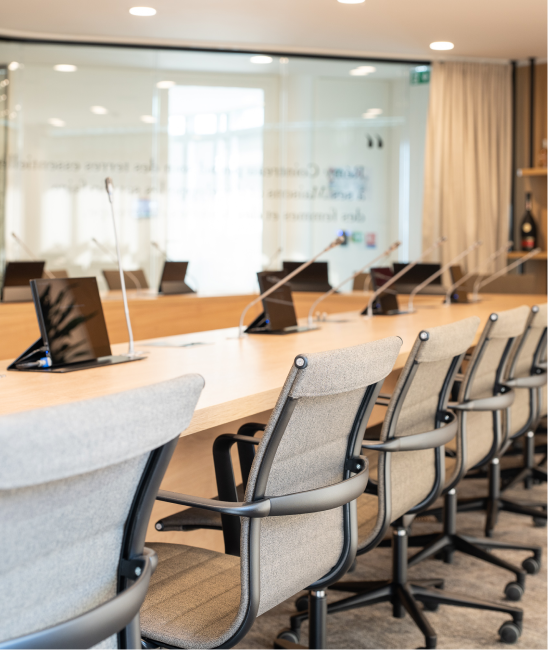
Photo of glass meeting room

Induce to act, from path to experience, everything has to be created

The notion of a journey is important to create an experience and initiate new habits.

This journey must be self-supporting and desirable.

Every user must be able to use it at any time of day, without explanation.

Everything is done to induce and create an incentive environment that will become part of everyday life. The message is positive, educational, consistent with values and rewarding for those who follow it.

Photo illustration Active design

Create a new playground where employees can play together

We start with values and semantics. We move away from calorie counting to play with employees, projecting them into a dynamic.

Graphic design is a real lever : explicit or implicit, it creates flows. Paths with active and directional phases... Beyond physical exertion, the important thing is to encourage contact with as many people as possible.

Posters, signage, frescoes, hijacking of objects, all avenues can be explored: following a blue thread that guides towards activities, for example. Or the misappropriation of objects, where you don't see the same message depending on how you're positioned (sitting, standing), to encourage open-mindedness.
It's also important to work on branding to create a sense of belonging.

While the use of color helps to create a desire for discovery, the ideal is to create itineraries that integrate naturally into the space.

Induce a perennial positioning as well as a more ephemeral perception of events.

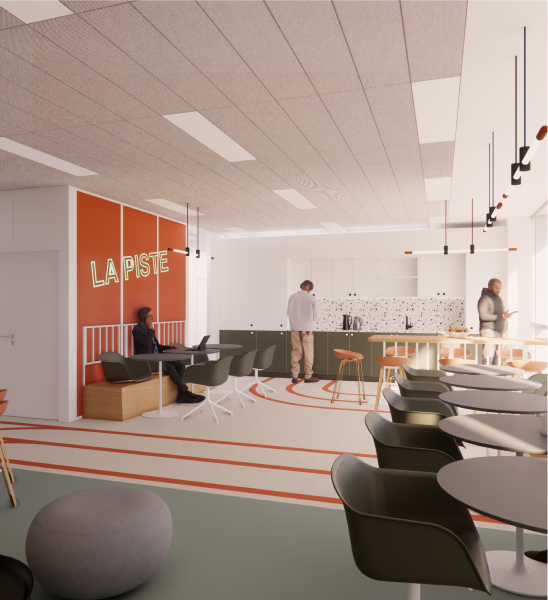
Photo illustration Design Actif at Orange Stadium

Steps to long-term commitment

A habit is created after 21 days. In addition, studies carried out by cities show the importance of thinking in terms of evolutionary paths, to avoid abandoning the practice once the discovery phase is over.

- Step 1: Understanding the objectives and challenges. The first step is to identify the objectives. You don't do active design for active design's sake. Are we creating one or more pathways? Are we going to act on CSR, values, QWL?

- Step 2: Analysis of uses and employee needs. We need to adapt to the audience and the corporate culture in order to raise awareness as effectively as possible.

This requires an understanding of what affects them. In the same way as for an employee journey, we're going to look at habits. As experts in space planning, the Parella Group teams analyze the sequencing of the day, needs and movements. This enables us to create active, directional phases. It's important to think things through carefully, to avoid over-solicitation, which would be counter-productive.

But also perhaps to identify those uses which could be diverted, and to give meaning to them, by involving employees in dynamic, unifying and playful workshops.

- Step 3
: Phase of use and evolution. Experimentation could be a first step to understanding the maturity peak and seeing how employees react.

Depending on the challenges and needs detected, managerial support will enable employees to allow themselves more playful moments. The course can also be punctuated with activities (sports coaching, for example).

It is also possible to bring the courses to life in line with important events for the company.

We can also imagine a change of color for Breast Cancer Week. Or a launch with the Olympic Games.

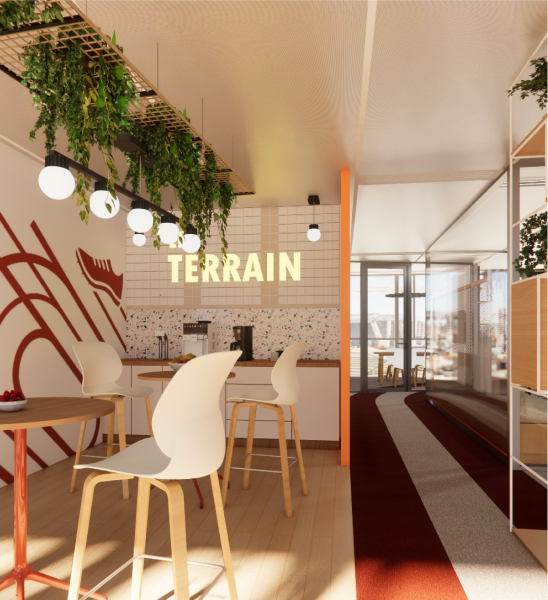
Photo illustration Active design at Orange Stadium

Scalable for lasting change

It must be easy and inexpensive to set up and take down courses, so as to be able to offer new experiences that adapt to the different maturity levels of users.

Relying on change management specialists enables us to create evolving courses that anchor change in the corporate world over the long term.

You may also like...

Offices for your talents
- Parella has placed the end-user at the heart of its business model. Through its three divisions...
Global Design
Global Design
- Our mission: to reveal and distill the extra soul emanating from your brand, your DNA and your...
Anticipating the future of office design
― At Parella, we have always sought to design spaces that not only meet the needs...
La Bonne Bulle® (The Good Bubble)

La Bonne Bulle®: a game for flexible workspaces.

Is it okay to play music or take a call at your desk in a shared workspace?

Beware: the melody of hybrid workspaces is not always the melody of happiness.

What if all it took was to co-construct and define, together, the rules of life in your workspaces?

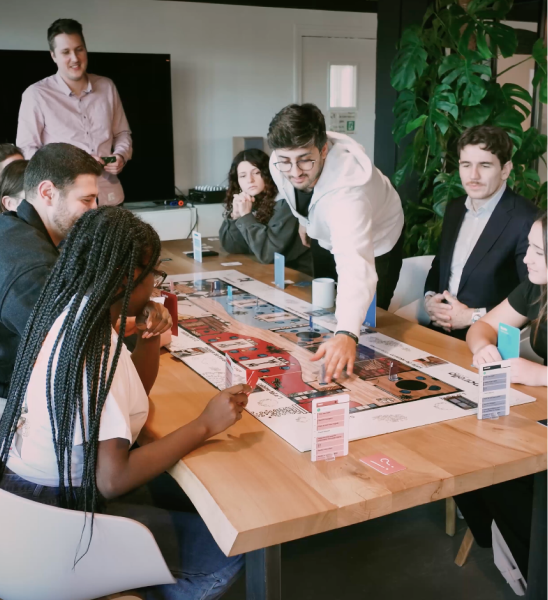
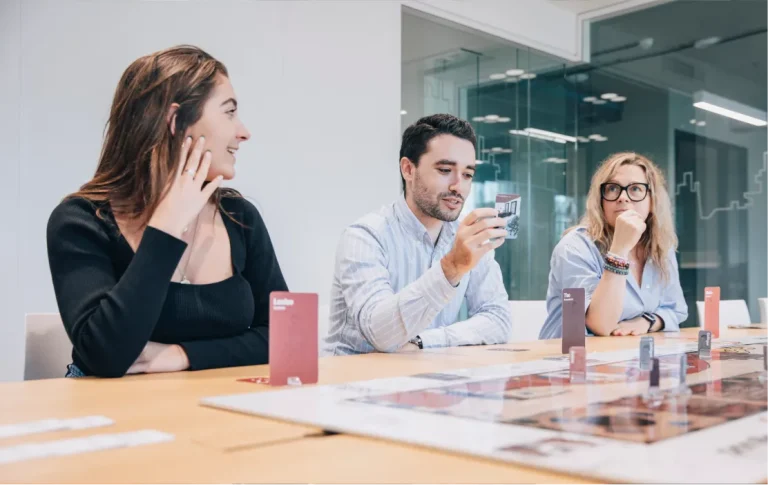
Several people taking part in an animation of the role-playing game La Bonne Bulle de Parella

La Bonne Bulle® session

Parella

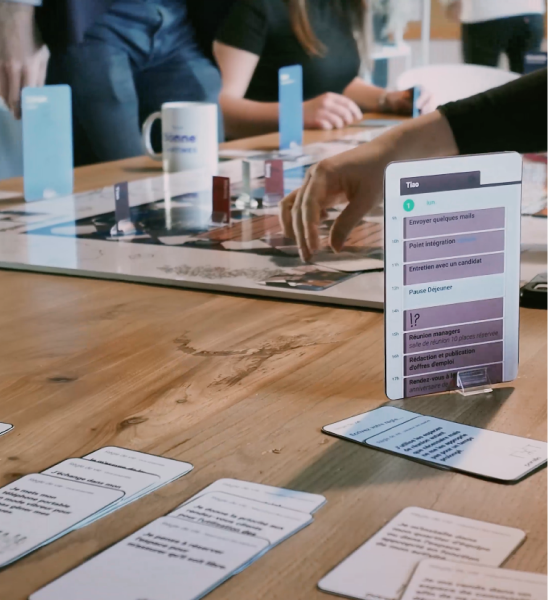
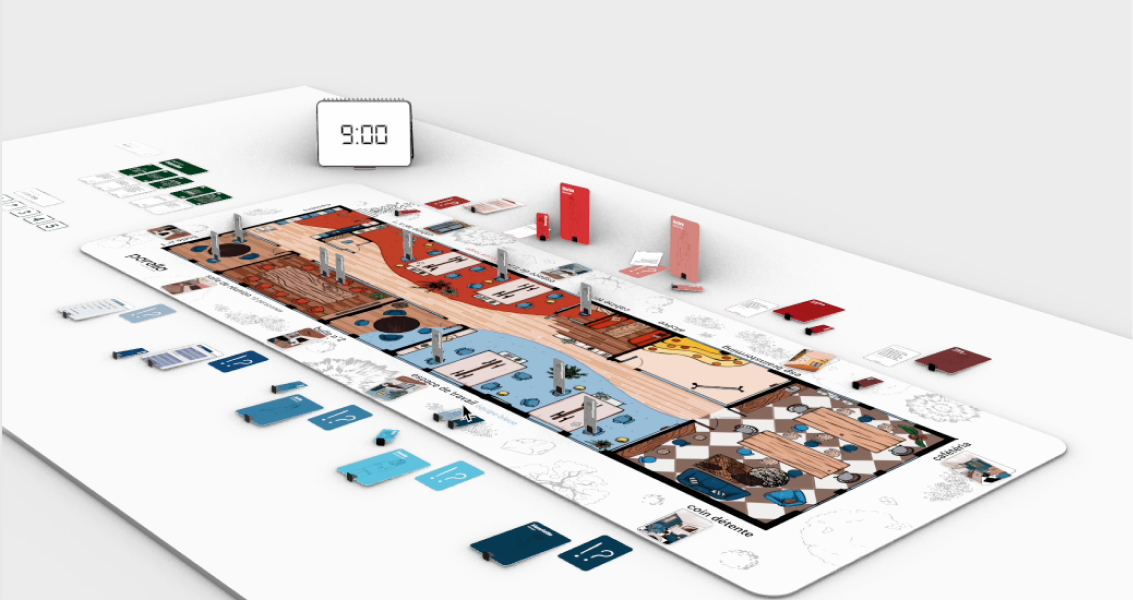
La Bonne Bulle de Parella role-playing board
Matthis Petrovick
Expert Parella Valuation

Discover "La Bonne Bulle®", a game designed and developed by Parella to provide companies with a playful way of learning about flexible workspaces and building new rules for living in them.

Gamification is a powerful lever for transformation. Co-constructing one's own rules of life in the workspace in a playful way with one's colleagues ensures a much greater sense of ownership.

"La Bonne Bulle" is a workshop offered as part of the Parella Academy® training catalog.

3D model of the La Bonne Bulle role-playing game board by Parella
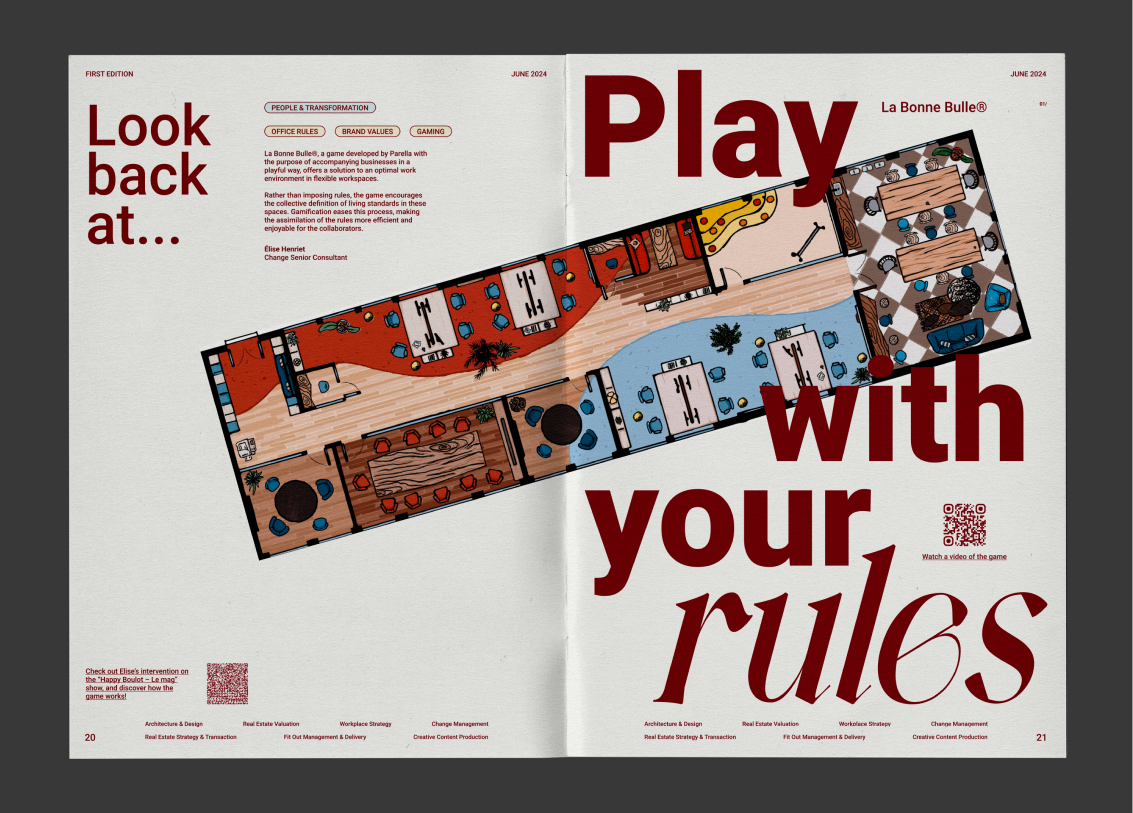
La Bonne Bulle featured in Parella's Office Paper magazine

Discover the page dedicated to the game in the first edition of our Office Paper.

You may also like...

Flex office, coworking, teleworking: what impact on the real estate market?
- Working patterns are changing at an unprecedented pace, influenced by the rise of telecommuting, the...
Workspace Expo 2026
Workspace Expo 2026
As the leading European event for the office sector, Workspace Expo brought together manufacturers, ... from March 24 to 26,
Parella in Copenhagen for 3daysofdesign 2025: KEEP IT REAL
- Like every year, Parella was in Copenhagen for the 3 daysofdesign, a not-to-be-missed event...

Real estate trends 2024

Real Estate Trends for 2024: What Businesses Need to Anticipate

In an economic climate where cost-cutting is a priority, rental charges represent a major burden for companies.

Yet it is possible to optimize them by adopting a more strategic approach to lease management, adjusting space utilization and controlling energy consumption.

The commercial real estate market is undergoing radical change. Between changing working patterns, environmental demands and economic fluctuations, companies need to adapt to stay competitive. Here are the main trends to watch in 2024.

Several people working in an open space Source: iStock

Flexibility is the watchword

The traditional model of long-term leases is gradually giving way to more adaptable solutions, such as flexible leases, coworking spaces and flex office. Companies are looking for solutions that enable them to adjust their floor space in line with their growth and the needs of their employees. This flexibility is accompanied by an increase in demand for shorter contracts and shared services, offering companies greater flexibility.

Sustainable real estate and the impact of telecommuting

With the French Climate and Resilience Act and carbon neutrality objectives, companies must integrate ecological criteria into their real estate strategy. Certified buildings (HQE, BREEAM, LEED) and eco-responsible developments are becoming a must. The optimization of energy consumption, the use of sustainable materials and green technologies are now key factors in the valuation of real estate assets.

The spread of telecommuting is prompting companies to rethink the design of their workspaces. Offices need to be more collaborative, modular and focused on employee well-being. Demand for coworking spaces and third places is exploding, offering an alternative to traditional offices. The new design solutions incorporate relaxation areas, green spaces and facilities to promote creativity and employee well-being.

Rising costs and their impact on decision-making

With rising interest rates and inflation, companies need to optimize their real estate strategy to cut costs. Renegotiating leases and optimizing floor space are becoming strategic levers. What's more, companies are turning to hybrid solutions, combining physical presence and remote working, to keep their fixed costs under control.

You may also like...

Changing employee expectations regarding their work environment
― The world of work is undergoing a profound transformation, driven by the rise of remote work, digitalization...
Offices for your talents
- Parella has placed the end-user at the heart of its business model. Through its three divisions...
Maison & Objet 2025
Maison & Objet 2025
Once again present at the Maison & Objet trade show, Parella continues to fuel its thinking by exploring...

How to negotiate a commercial lease in 2024?

Negotiating a lease: How to effectively negotiate a commercial lease in 2024?

In an economic climate marked by rising interest rates, changing work patterns and new business expectations, negotiating a commercial lease is becoming a strategic challenge.

In 2024, companies must anticipate these changes in order to secure more flexible and favorable terms. Here are the key factors to consider. 

Illustration Photo 4

Greater flexibility in commercial leases

The traditional 3/6/9 lease model is increasingly being called into question. Companies are looking for solutions adapted to their activity and to economic uncertainty. Negotiations must incorporate a number of levers, such as lease duration and termination conditions, adaptability of space, or shared offices.

Needs fluctuate more rapidly than ever before, and so shorter leases, early exit clauses, the possibility of extending surface areas or coworking offices are emerging options that facilitate not only the rapid growth of companies and the consequent impact on their offices, but also unforeseen events that reduce budgets.

But it's also important to keep a close eye on rent review conditions, and on less visible factors such as building energy performance, to avoid unpleasant surprises.

Securing your commercial lease: essential clauses and new obligations to anticipate

A good negotiation is based on a careful analysis of the contract. Certain points are essential to prevent exorbitant hidden costs, whether due to excessive rent increases, charges that should fall to the lessor, or renovations to bring the property up to standard. It is therefore essential to analyze the rent and its indexation, as well as the breakdown of charges, works and maintenance obligations.

With regulatory changes, companies need to pay close attention to environmental and contractual obligations:
-The Climate and Resilience Act: check that the building complies with new energy standards and that the lessor is committed to environmental improvements.
-Green Lease: Certain clauses impose commitments in terms of energy management and sustainable development.
-Compliance with new safety and accessibility standards: Check obligations relating to public access and health regulations.

Effective negotiation: best practices

To optimize your commercial lease, it's essential to prepare the discussion with the lessor - by conducting a market study to compare to compare competing offers and determine whether the proposed conditions are advantageous, by anticipating future needs and thus foreseeing the company's evolution and ensuring that the lease will be able to meet them. It's also a good idea to enlist the help of an expert: a legal advisor or real estate specialist can provide a strategic perspective and identify any areas of concern.

You may also like...

Parella Paris appoints a new Partner
― " This appointment reflects the great ambitions of our Paris office as well as the strength...
PARIS ART WEEK 2025
PARIS ART WEEK 2025
― Our teams immersed themselves in an inspiring ecosystem, rooted in our daily lives in the 8th arrondissement...
PARIS DESIGN WEEK 2025
― For this 15th edition, the capital was transformed for ten days into a living laboratory of trends...

How does well-being at work boost productivity and talent retention?

well-being at work?

How does well-being at work boost productivity and talent retention?

In a world where innovation and competitiveness are essential, well-being at work should not be a mere option.

We have made this a priority, convinced that a healthy and fulfilling work environment is the key to a successful and sustainable company. We firmly believe that a happy employee is a committed employee.

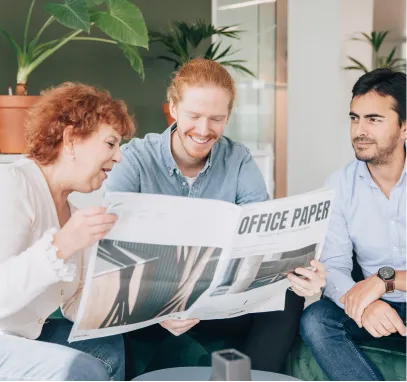
Photo of smiling people reading Parella's Office Paper together.

Well-being boosts motivation and productivity

Well-being at work is not just about stress reduction or flexible working hours. It's a global commitment to providing our employees with an environment where they feel good, listened to and valued. A caring environment reduces absenteeism and prevents burnout. Fulfilled employees are naturally more involved and committed. This translates into communicative energy, better quality of work and greater capacity for innovation. A climate of trust and respect fosters harmonious working relationships and fluid collaboration, essential for moving forward together.

Retaining talent through personal development

Attracting top talent is great. Keeping them over the long term is even better. We are convinced that a happy employee is a loyal employee. A stimulating, well-balanced working environment enables everyone to flourish and look to the future with confidence. The opportunity to develop professionally, acquire new skills and maintain a good work-life balance all contribute to this fulfillment.

Investing in the well-being of our teams is not just a question of goodwill, it's a genuine corporate strategy. By cultivating a positive dynamic, we strengthen our performance and our collective success.

You may also like...

Our favorite Paris Workspace Expo 2025
- Parella has placed the end-user at the heart of its business model. Through its three divisions...
Workspace Expo 2026
Workspace Expo 2026
As the leading European event for the office sector, Workspace Expo brought together manufacturers, ... from March 24 to 26,
Parella Paris appoints a new Partner
― " This appointment reflects the great ambitions of our Paris office as well as the strength...
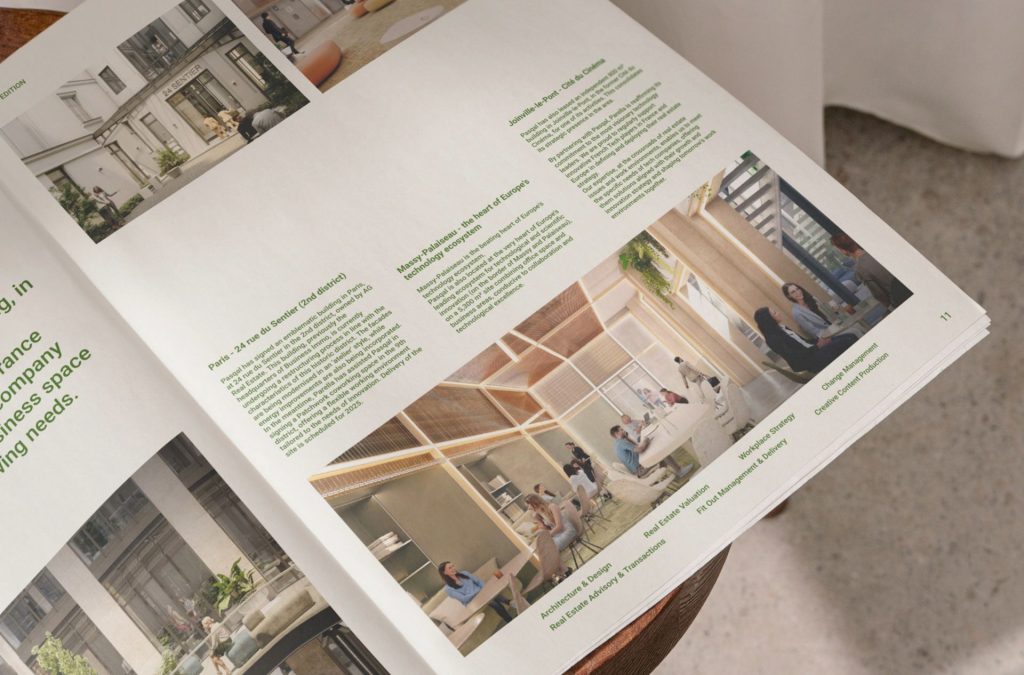
Article Office Paper

OFFICE PAPERS

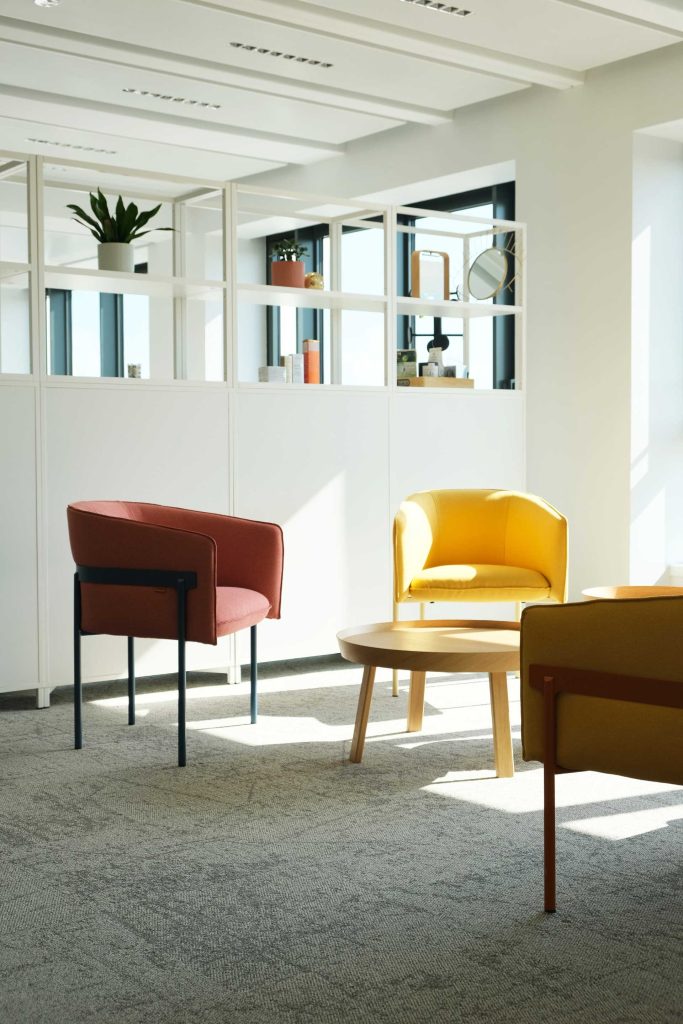
Small living room with red and yellow armchairs, light wood coffee table, at NAOS, by Parella

THANK YOU

Your message has been sent.
We'll get back to you shortly!