Are we really responsible?

If we point that out, are we responsible?

Specifications entail much more than one might think: Matteo Bonotto, Design Manager at Agilité, discusses what responsibility truly means in the real estate sector.

Specifications have always carried considerable weight in the construction industry. Drawings, bill of materials, and performance criteria determine what is manufactured, purchased, and installed. But in an industry facing increasingly tight budgets, fragile supply chains, and growing ethical scrutiny, a more difficult question lies behind the technical details: if we specify it, are we responsible for what follows? 

Earlier this year, Matteo Bonotto, Head of Design at Agilité, joined More The A Building’s NextGen group for a roundtable discussion on this very topic—and here are his key takeaways.

The honest answer is unsettling for many of us. Because responsibility doesn’t end with intent or documentation. It manifests itself in procurement discussions, design review meetings, on-site pressures, and, ultimately, in how a building functions and is treated long after it is completed.

The Specification: A Starting Point—Not an End in Itself

Sustainability is often defined right from the design phase—through material selection, carbon targets, and commitments to ethical sourcing—and, on paper, everything seems to add up. But in reality, that’s where accountability can start to fall apart. 

Program constraints shorten deadlines, costs fluctuate, products become unavailable, and, as a result, specifications are quietly scaled back—sometimes for reasons that seem justified at the time. Ethically sourced wood becomes a less expensive alternative. Locally sourced, handcrafted products are replaced by imported but readily available ones, because this “keeps things moving.” Responsibility is not measured by what we demand; it is measured by what we accept.

When sustainability, cost, and scheduling clash 

Of course, compromises are inevitable, and anyone who claims otherwise hasn’t completed a project recently. The question, then, isn’t whether compromises are made, but to what extent they are visible.  

All too often, the industry treats sustainability as an issue to champion in public but to negotiate discreetly in private. A more responsible approach is simpler, though less comfortable : honesty. If a product cannot be delivered on budget or on schedule, say so—early and clearly. Present the alternatives along with their real-world implications—such as cost, carbon footprint, sustainability, and working conditions—and enable informed decision-making. 

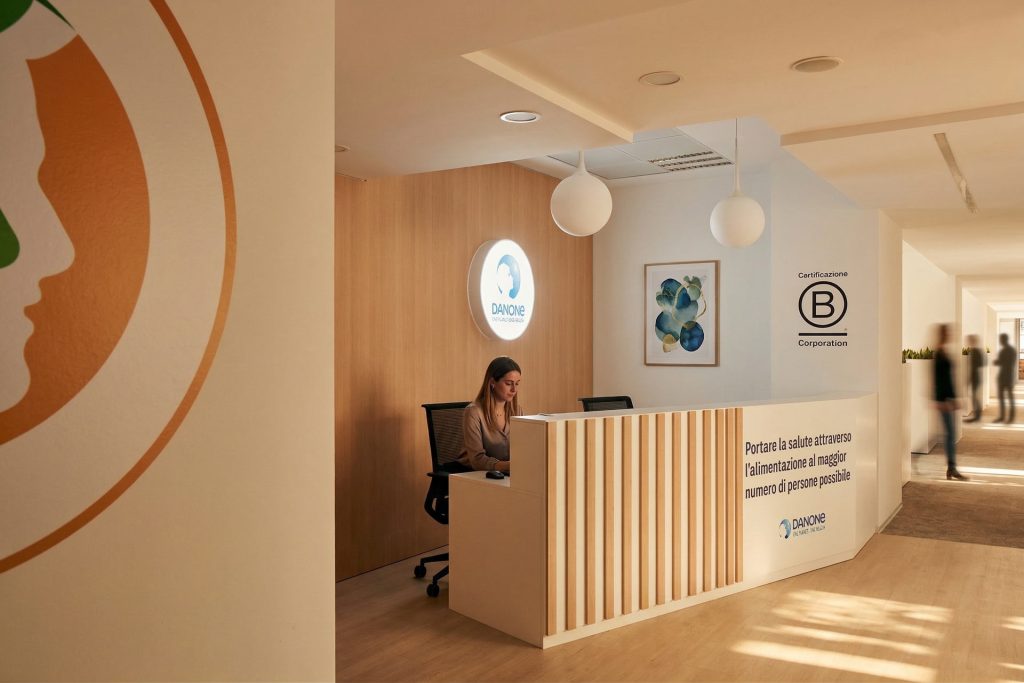
In recent years, certification standards such as B Corp have gained prominence across the industry. When misused, they can be reduced to little more than a token of virtue, but when used wisely, they offer something far more valuable: a way to frame decisions when conflicting pressures come into play. 

The most valuable contribution of frameworks like B Corp isn’t a logo for your website, but the establishment of a discipline focused on asking better questions and striving for continuous improvement. Who bears the risk further down the supply chain? What happens if this material fails prematurely? Are we optimizing for short-term delivery or long-term performance? Who benefits from this decision, and who bears the negative consequences? 

It is important to note that these issues apply just as much to procurement and supplier relationships as they do to the selection of materials. Responsibility is not limited to certificates; it is reflected in behavior, contracts, and the way responsibilities are allocated.

A shared responsibility, not a blame game

The industry has a deeply ingrained tendency to shift responsibility down the chain. The client looks to the designer. The designer looks to the company. The company looks to the supplier. When a problem arises, responsibility is so diluted that no one feels capable of—or obligated to—take action.

At Agilité, we believe in shared influence and responsibility. Designers define the scope of possibilities. Clients set the priorities. Companies translate choices into action. Suppliers determine what can be delivered responsibly. No one controls the outcome alone, but everyone helps shape it. Recognizing this changes the nature of the conversation: teams stop looking for someone to blame and start asking how to make it work in practice.

Suppliers: Partners in Knowledge, Not Just in Supply

If liability extends beyond the statute of limitations, suppliers can no longer be pushed to the bottom of the chain. They are key players who possess valuable knowledge: they know where social risks lie, what deadlines are realistic, and which certifications are robust and which are purely cosmetic. But they must feel empowered to speak up.

If every issue raised is perceived as a weakness or a business risk, suppliers will quickly learn to say what we want to hear. Conversely, early engagement, clear expectations, and open communication allow problems to be brought to light while there is still time to act.

With this in mind, Agilité organizes supplier forums at each of its European locations: spaces where companies and suppliers can freely discuss opportunities, challenges, ideas, and feedback.

Lifespan: A Key Aspect of Sustainability

The most persistent sticking point in the specifications is time. A project can boast excellent environmental metrics yet still be deeply wasteful if it is designed to be dismantled in three to five years. Conversely, simple materials chosen for their durability and adaptability can prove far more sustainable than options marketed as more “sustainable.”

Designing for adaptability, disassembly, and reuse is not a marginal option; it is a matter of fundamental responsibility. If we know that a space is bound to change, to freeze it in place permanently—or in a way that destroys value during transformations—is to betray the very intent of the project.

So, are we responsible? Most likely, but not in the sense that the question is often asked. It is not the act of prescribing a product that makes us responsible. It is failing to track its journey, allowing substitutions to go unnoticed without reacting, accepting compromises without acknowledging them, or designing spaces without considering their use, their evolution, or their end of life.

The specification has an impact. Responsibility lies in how it is exercised: collectively, transparently, and with an eye to the realities on the ground. The sector does not need more grand statements or more elaborate documents. It needs more candid conversations about what really happens when intentions collide with reality.

Because, ultimately, responsibility isn’t demonstrated by what we say we want to build, but by what we’re willing to defend when the pressure mounts.

You may also like...

Real estate and sustainable development: how can you make your offices greener?
- Faced with new regulations and growing employee expectations, companies need to...
Neurodiversity in Design
― For years, workplace design has emphasized collaboration, culture...
Olympic & Paralympic inspirations
- This weekend I received my souvenir tickets for the Olympic and Paralympic Games.

Milan Design Week 2026

MILAN DESIGN WEEK 2026

Milan Design Week once again transformed Milan into its creative laboratory from April 20 to 26, 2026.

Milan Design Week, a must-attend global event for design and interior architecture, once again transformed Milan into a creative hub from April 20 to 26. Over the course of a week, architects, design firms, luxury brands, and commercial real estate professionals gathered to explore new trends in interior design and workplace environments.

As they do every year, the Parella teams traveled to Milan to identify the trends that will shape the offices and workspaces of tomorrow. From Brera to Tortona, this 64th edition confirms a major shift: materials, storytelling, and emotion are becoming the new cornerstones of workplace design.

Trends that are transforming workspaces.

SPATIAL DESIGN AS A STORYTELLING TOOL

Throughout the city, historic swimming pools, cloisters, apartments, and palaces have been transformed into immersive experiences that blur the lines between art and interior design. At Hermès, Gucci, Loewe, and Loro Piana, the installations did more than simply decorate the spaces—they told a story.

Gucci showcased 105 years of history in the cloisters of San Simpliciano through monumental tapestries. Aesop transformed a church into a luminous architectural space, while Margraf, in collaboration with Hannes Peer, recreated an apartment made entirely of marble, bathed in light and water.

An approach that directly addresses the new challenges facing workspaces: today, an office no longer serves just one purpose; it must foster a culture, evoke emotion, and strengthen a sense of belonging.

COLORS AND IDENTITY: TOWARD MORE EMOTIONAL SPACES

Carmine red, deep lilac, olive green, or Klein blue: vibrant colors were everywhere, breaking with the neutral color schemes that had long dominated offices and commercial spaces.

Promoted by brands such as Dedar, cc-tapis, Pierre Frey, and Élitis, they have become powerful drivers of identity and employee experience. Color brings warmth, contrast, and personality to work environments, while fostering more inclusive and engaging spaces.

Sustainable materials and reuse at the heart of design
The “A Matter of Salone” campaign explored the origins and impact of the materials used in objects and spaces. Reclaimed wood, artisanal ceramics, bio-based composites: the materials told the story of the object just as much as its form.

The Salone Raritas section, dedicated to limited-edition pieces that blend design and fine craftsmanship, has reinforced this trend. Reuse, responsible sourcing, and sustainability are no longer secondary concerns; they have become central criteria in the design of spaces.

THE CREATIVE PROCESS BEFORE THE PRODUCT

Under the theme“Essere Progetto”(translated as “Being the Project”), design was shown in motion: prototypes, sketches, and raw materials took center stage over finished objects.

This is a philosophy we share at Parella. The best interior design projects always result from close collaboration with users, with the goal of creating workspaces that are efficient, sustainable, and aligned with the company’s culture.

WHAT PARELLA TAKES AWAY FROM MILAN DESIGN WEEK 2026

These trends directly inform our approach to workplace strategy, office transformation, and space design.

Every project now raises the same questions: Does this space evoke emotion? Does it foster connection and a sense of belonging? Do the materials chosen reflect a commitment to sustainability?

From real estate strategy to space design, Parella helps companies create work environments that are more distinctive, engaging, and sustainable.

And we can’t wait to write this new chapter in design together with you.

You may also like...

Proptech: how is technology revolutionizing commercial real estate?
- Commercial real estate is undergoing a profound transformation, driven by new technologies and the...
Rendez-Vous de la Matière 2025
A veritable laboratory of creativity and innovation, this trade show has become, in just a few years, an event...
Isabel Llano: "Working for users means connecting with their real needs".
- Isabel Llano, Senior Consultant at Parella | The New TTS, is convinced that listening to and understanding the...
Article Office Paper

OFFICE PAPERS

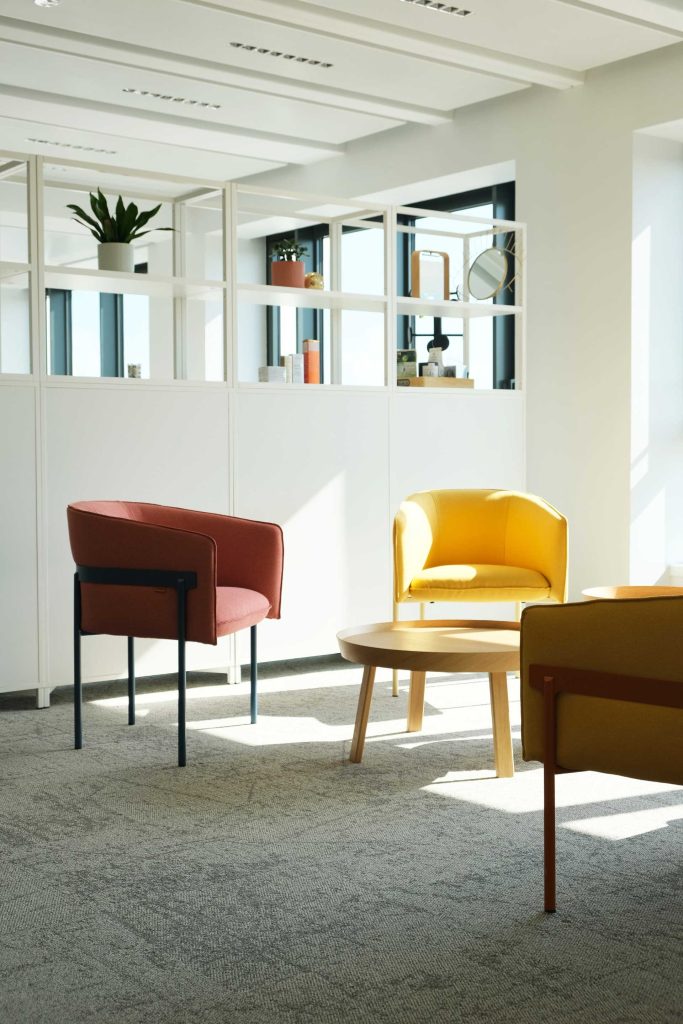
Small living room with red and yellow armchairs, light wood coffee table, at NAOS, by Parella

THANK YOU

Your message has been sent.
We'll get back to you shortly!