Commercial or professional lease: which should you choose for your business?

Commercial lease or professional lease? Which one should you choose for your business?

When launching or expanding a business, choosing the right lease for your premises is a key step that directly influences the stability and development of your business.

Should you choose a commercial lease or a professional lease? Each type meets specific needs and is suited to very specific types of businesses.

Exchange and discussion around a legal document Credit: iStock

the commercial lease

Commercial leases are intended for companies engaged in commercial, industrial or craft activities. It is governed by strict rules that protect both lessee and lessor. This type of contract is concluded for a minimum term of nine years, enabling the company to secure its location for the long term. This stability is a major asset for businesses needing a fixed location to attract and retain customers. Despite this relatively long term, tenants have the option of terminating their lease every three years, giving them a degree of flexibility while maintaining a structured framework.

One of the main advantages of a commercial lease is the right to renew, guaranteeing tenants the possibility of extending their contract on expiry, except in certain exceptional cases. It also allows for sub-letting or assignment under certain conditions, giving businesses additional room for manoeuvre. Rent is generally reviewed every three years, based on a specific index, to ensure that it reflects market realities, although this review can sometimes lead to significant increases, particularly during periods of inflation.

professional leases

The professional lease, on the other hand, is intended for liberal professions such as doctors, lawyers, architects or consultants. It is designed for non-commercial activities requiring premises for the exercise of the profession, but without the specific requirements associated with commerce.

Unlike a commercial lease, the lease term is generally six years, providing greater flexibility for professionals whose business may evolve rapidly. This flexibility is reinforced by the possibility of terminating the lease at any time, provided six months' notice is given. Another advantage of a professional lease is its more stable financial framework, since the rent is not systematically subject to a three-yearly review. However, it can be readjusted if a specific clause so authorizes, although this situation is less frequent and less restrictive than for a commercial lease.
Less legally regulated, this type of lease nevertheless offers fewer guarantees for the tenant, who does not benefit from an automatic right to renewal or the same protections in the event of a dispute with the lessor.

The choice between a commercial and a professional lease depends on the activity carried out and the specific needs of the business. Commercial, industrial or craft businesses will prefer a commercial lease for its legal protection and stability, while the liberal professions will opt for the more flexible professional lease. Before signing, it's essential to anticipate your objectives and check that the contract matches your strategy. The assistance of a legal expert is recommended to secure your commitment. 

You may also like...

Green Lease: everything you need to know about green leases and their advantages
- Green Lease is more than a lease: it's a shared commitment to a more eco-responsible building....
Milan Design Week 2025
- Every year, Milan Design Week reinvents the way we perceive space, materials and uses....
THE RISE OF ANALOG SPACES
― Our teams immersed themselves in an inspiring ecosystem, rooted in our daily lives in the 8th arrondissement...

Green Lease: everything you need to know about green leases and their advantages

THE GREEN LEASE: Everything You Need to Know About Green Leases and Their Benefits

Green Lease is more than a lease: it's a shared commitment to a more eco-responsible building. It includes clauses on energy performance, reduction of CO2 emissions and optimization of resources.

This collaboration enables us to limit our ecological footprint while cutting costs thanks to high-performance equipment and sustainable practices.

Illustration of a modern, green reception area Credit: iStock

Strategic leverage for companies

Opting for a Green Lease offers several advantages. Firstly, it enables a significant reduction in energy and resource management costs, while facilitating compliance with constantly evolving environmental standards.

Secondly, it improves the company's image in the eyes of consumers, partners and investors who are sensitive to ecological issues. Finally, a more environmentally-friendly working environment, with better air quality and healthy materials, promotes employee satisfaction and productivity. This type of lease is based on measurable commitments, often verified by audits and certifications such as BREEAM or LEED, guaranteeing compliance with sustainability criteria.

An investment in the future

Green Leasing is much more than just a trend: it's a sustainable strategy for companies wishing to combine environmental responsibility, cost optimization and attractiveness.

At Parella, we support our customers in this transition, offering them real estate solutions tailored to their ecological and economic ambitions. Adopting a Green Lease means investing in a more responsible and competitive future.

You may also like...

THE RISE OF ANALOG SPACES
― Our teams immersed themselves in an inspiring ecosystem, rooted in our daily lives in the 8th arrondissement...
Optimizing real estate costs: how to reduce your rental charges?
- In an economic context where cost reduction is a priority, rental expenses represent a significant...
Hybrid workspaces: finding the right balance?
- As working patterns evolve, the hybrid model, combining remote and face-to-face working,...

How are rising interest rates affecting commercial real estate?

Rising interest rates

How do rising interest rates affect commercial real estate? Rising interest rates are profoundly changing the commercial real estate landscape.

As borrowing costs rise, investors are facing a more expensive market and tighter financing conditions.

Tenant companies, meanwhile, are seeing their charges rise, as these costs are passed on by lessors. Faced with these economic challenges, a strategic, agile approach is essential. 

Photo illustration Home Parella + About + Workplace + articles

Reducing demand and adjusting rents

Rising interest rates have a direct impact on demand for commercial real estate. Indeed, companies are more reluctant to commit to new acquisitions or sign new leases, as the cost of credit has become higher.

This slowdown particularly affects sectors such as office property and retail, which are more sensitive to these fluctuations. The logistics sector, on the other hand, seems to be holding up better, buoyed by the continuing growth of e-commerce.

At the same time, rising interest rates are leading to a readjustment in rents. In high-demand areas, rents continue to rise, while in less attractive sectors, landlords sometimes have to adjust their expectations to attract new tenants.

Development project delays and adaptation strategies

Rising interest rates are also having an impact on real estate development projects. Access to financing is becoming more restrictive, and many developers are forced to delay certain projects or revise their profitability targets downwards.

The valuation of real estate assets may also be revised, as investors now factor higher financing costs into their calculations. For tenant companies, this translates into a reassessment of space requirements, with an increased tendency to look for more flexible solutions, such as shorter leases or shared space.

Faced with this new situation, investors need to diversify their assets and explore alternative financing methods to reduce their exposure to risks linked to interest rate fluctuations. In this context, an agile, well-thought-out strategy is essential to secure investments and control costs.

You may also like...

Isabel Llano: "Working for users means connecting with their real needs".
- Isabel Llano, Senior Consultant at Parella | The New TTS, is convinced that listening to and understanding the...
Outlook and transformation of the Spanish labor landscape
- The labor landscape in Spain, as elsewhere in Europe, has undergone a number of changes in recent years...
Real estate and sustainable development: how can you make your offices greener?
- Faced with new regulations and growing employee expectations, companies need to...

Hybrid workspaces: finding the right balance?

Hybrid workspaces: finding the right balance?

As working patterns evolve, the hybrid model, combining remote and face-to-face working, is emerging as an effective solution for meeting employee expectations while maintaining business performance.

This model offers greater flexibility, allowing employees to choose when and where to work, improving their satisfaction and work-life balance. It also helps to reduce operating costs, by reducing the amount of office space required and optimizing resource management.

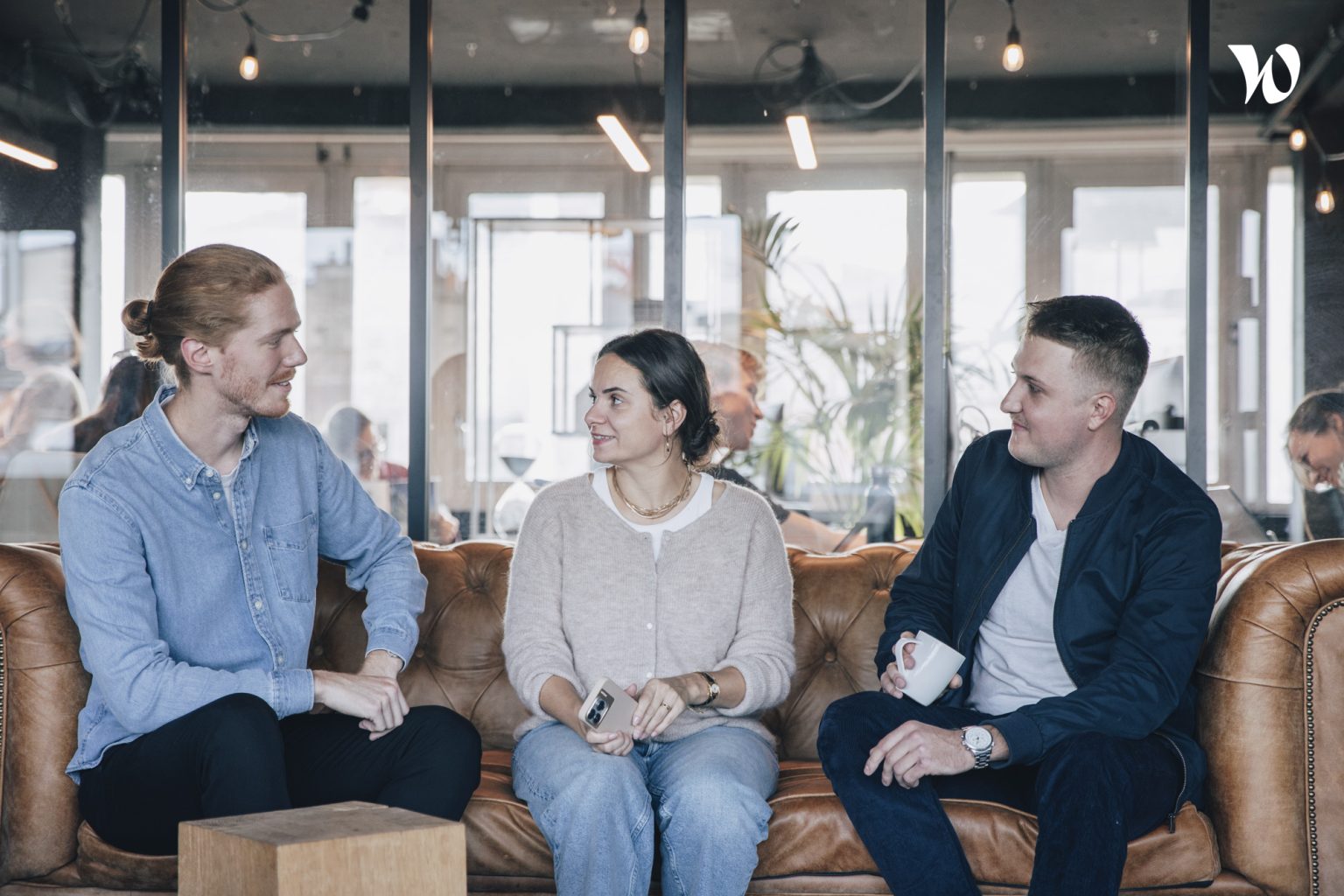
Photo of a 4-person team exchanging ideas, in front of a red wall and posters.

Hybrid working offers flexibility that boosts productivity by allowing employees to choose the workplace best suited to their needs. Remotely, they benefit from a calmer environment in which to concentrate on complex tasks, while in the office, direct interaction fosters collaboration and reinforces the corporate culture.

To optimize this model, it is essential to adopt high-performance technological solutions, such as videoconferencing tools and project management platforms, while designing flexible workspaces. Companies also need to train their managers to manage hybrid teams, in order to maintain cohesion, encourage communication and ensure that all employees, regardless of their working mode, feel included.

Hybrid working thus represents a strategic opportunity to combine flexibility, performance and employee well-being. It enables companies to meet the expectations of today's talent while optimizing their efficiency and enhancing their attractiveness.

At Parella, we help our customers create hybrid work environments that meet the new challenges of the world of work.

Photo of a 4-person team exchanging ideas, in front of a red wall and posters.

You may also like...

Company removals: mistakes to avoid to optimize your budget
- A company move is a strategic step that involves significant costs and organization...
Parella in Copenhagen for 3daysofdesign 2025: KEEP IT REAL
- Like every year, Parella was in Copenhagen for the 3 daysofdesign, a not-to-be-missed event...
Offices for your talents
- Parella has placed the end-user at the heart of its business model. Through its three divisions...

Optimizing real estate costs: how to reduce your rental charges?

Optimizing Real Estate Costs: How Can You Reduce Your Rental Expenses?

In an economic climate where cost-cutting is a priority, rental charges represent a major burden for companies.

Yet it is possible to optimize them by adopting a more strategic approach to lease management, adjusting space utilization and controlling energy consumption.

Changing working patterns, with the spread of telecommuting and co-working, are also prompting companies to rethink how they occupy their premises, in order to limit unused floor space and increase flexibility.

By combining these approaches, they can reduce costs while maintaining a functional, high-performance work environment.

Photo of a street in Paris, a luxury district with Haussmann buildings. Credits: iStock

 Efficient lease and space management

Optimizing rental charges starts with rigorous negotiation of the commercial lease. It is essential to analyze rent review clauses to avoid excessive increases, and to check that recoverable charges are justified.

Regular assessment of space requirements is also a key lever: with the rise of hybrid working, many companies can reduce their real estate footprint without compromising their operations. Opting for flexible solutions, such as flexible leases or shared offices, means that premises can be occupied in line with actual needs, and avoiding overly restrictive commitments.

Optimized control of consumption and services

Rental costs are strongly influenced by energy consumption and the management of common services. Installing smart sensors to regulate lighting and heating, improving thermal insulation or integrating renewable energies such as solar panels can help to reduce costs over the long term. In addition, a detailed analysis of shared services, such as maintenance or security, helps to ensure their relevance and to renegotiate their frequency if necessary.

By combining optimized lease management, better use of space and reduced consumption, companies can significantly reduce their rental charges while maintaining a functional and pleasant working environment.

You may also like...

Post-Covid office layout
- Today's offices don't look like those of yesterday. The health crisis has profoundly transformed...
Building Change
― Despite decades of advocacy and investment, women remain severely underrepresented...
Isabel Llano: "Working for users means connecting with their real needs".
- Isabel Llano, Senior Consultant at Parella | The New TTS, is convinced that listening to and understanding the...

Changing employee expectations regarding their work environment

Changing employee expectations regarding their work environment.

A new balance between flexibility and well-being. The world of work is undergoing a profound transformation, driven by the rise of remote work, digitalization, and a growing awareness of the importance of well-being in the workplace.

Employee expectations are changing, and companies must adapt to provide workspaces that are flexible, comfortable, and inspiring. This shift affects not only the layout of offices but also the way employees perceive their work environment. 

Today, they seek a balance between freedom and comfort, performance and peace of mind, interaction and concentration.

3 people playing the role-playing game La Bonne Bulle created by Parella.

A growing demand for flexibility in space planning

Employees no longer want to be confined to a rigid model where every day is the same. Remote work, which has become widely accepted, has shown that it is possible to be productive outside the office. As a result, they no longer want a forced return to the old ways, but rather a hybrid approach where they can choose their workplace based on their needs and tasks. Companies must therefore rethink office design by offering spaces tailored to different purposes: open collaboration zones to foster interaction, private spaces to facilitate concentration, and relaxation areas to promote well-being.

Furthermore, the concept of assigned desks is fading in favor of flexible, adaptable workspaces. Traditional open-plan offices, often criticized for their lack of privacy and ambient noise, are being redesigned to be more flexible and pleasant to work in. The key is to provide an environment that makes employees want to come to the office not out of obligation, but by choice, finding genuine added value compared to working from home.

Well-being in the workplace: a key factor in employee engagement

Employees’ expectations go beyond a simple reorganization of workspaces. Well-being at work is now a priority, and companies must incorporate this aspect to boost their teams’ motivation and productivity. An office should no longer be merely a temporary stop where people sit down to perform tasks, but a true living space where comfort and health are prioritized.

Well-being at work depends largely on the layout of the spaces and the atmosphere within them. An oppressive, noisy, or impersonal environment can quickly undermine employee motivation and concentration. To foster a positive dynamic, companies are increasingly focusing on spaces that promote social interaction, areas conducive to relaxation, and initiatives that encourage a balance between performance and personal fulfillment. Far from being a mere luxury, these arrangements have a direct impact on employee engagement and their ability to work effectively and calmly.

By creating a more human work environment centered on employees’ needs, companies not only become more attractive but also improve their performance. Fulfilled employees are more motivated, more creative, and more committed to their work.

You may also like...

Workspace Expo 2026
As the leading European event for the office sector, Workspace Expo brought together manufacturers, ... from March 24 to 26,

Neurodiversity in Design
― For years, workplace design has emphasized collaboration, culture...
Building Change
― Despite decades of advocacy and investment, women remain severely underrepresented...
Article Office Paper

OFFICE PAPERS

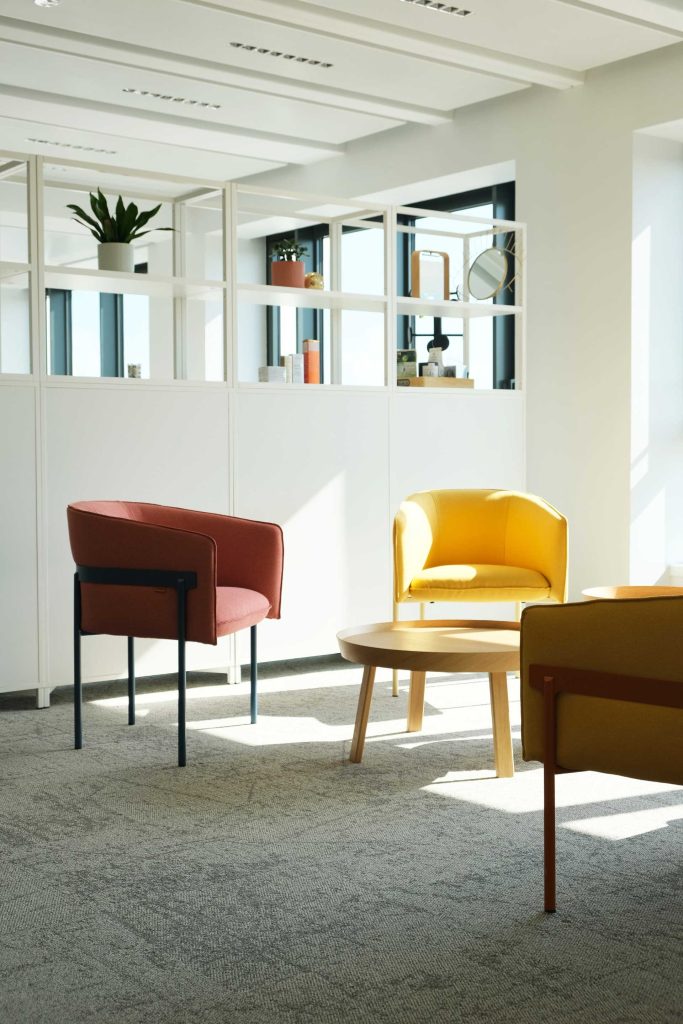
Small living room with red and yellow armchairs, light wood coffee table, at NAOS, by Parella

THANK YOU

Your message has been sent.
We'll get back to you shortly!